How to choose
Rome's main sights are spread across a fairly compact historic centre, but the city's metro network barely touches it, because tunnelling under layers of archaeology is slow and expensive. That makes location more important than in many capitals: staying within walking distance of what you want to see saves a lot of time.
Ask yourself three questions before booking:
- Do you want to walk everywhere, or are you happy to use the metro or tram?
- How much evening noise can you tolerate?
- Will you arrive with heavy luggage? Many old-centre streets are cobbled, and many buildings have no lift.
In short:
- Walk everywhere: Centro Storico.
- Ancient Rome and neighbourhood feel: Monti.
- Evenings out: Trastevere.
- Quiet with metro access: Prati or the Tridente.
- Food and local life: Testaccio.
- Transport and budget: Termini area.
Wherever you stay, Rome charges a city tourist tax per person per night, set by accommodation category and collected by your host, usually on top of the room price.
Centro Storico and the Tridente
The historic centre inside the bend of the Tiber contains the Pantheon, Piazza Navona, Campo de' Fiori and dozens of churches within a few minutes' walk of each other. Staying here means you can walk to most major sights, including the Trevi Fountain and, in about 20 to 30 minutes, the Colosseum or St Peter's.
Trade-offs: prices are the highest in the city, rooms are often small, and there is no metro station. Squares such as Campo de' Fiori are lively and noisy late at night. Ask for a room facing a courtyard.
Best for: first-time visitors on a short stay who want to walk everywhere.
The Tridente, the triangle of streets between Piazza del Popolo, the Spanish Steps and Via del Corso, is Rome's upmarket shopping area, with Via dei Condotti at its heart. It has the Spagna and Flaminio stops on metro line A, which runs to Termini and towards the Vatican.
Trade-offs: expensive, and quiet in the evening once the shops close.
Best for: comfortable stays with good metro links, shopping, and the Villa Borghese park nearby.
Monti: between the Colosseum and Termini
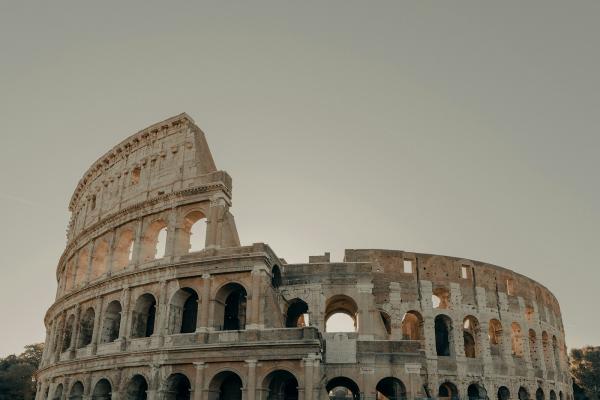
Monti is one of Rome's oldest residential districts, set between the Roman Forum, the Colosseum and Via Nazionale. Its sloping streets have independent shops, wine bars and restaurants, and the square around the fountain of Piazza della Madonna dei Monti is a local meeting point. The Cavour stop on metro line B is in the neighbourhood, and the Colosseum and Forum are a short walk away.
Trade-offs: smaller choice of hotels than the centre; streets are steep in places.
Best for: visitors who want a neighbourhood feel close to ancient Rome.
Trastevere
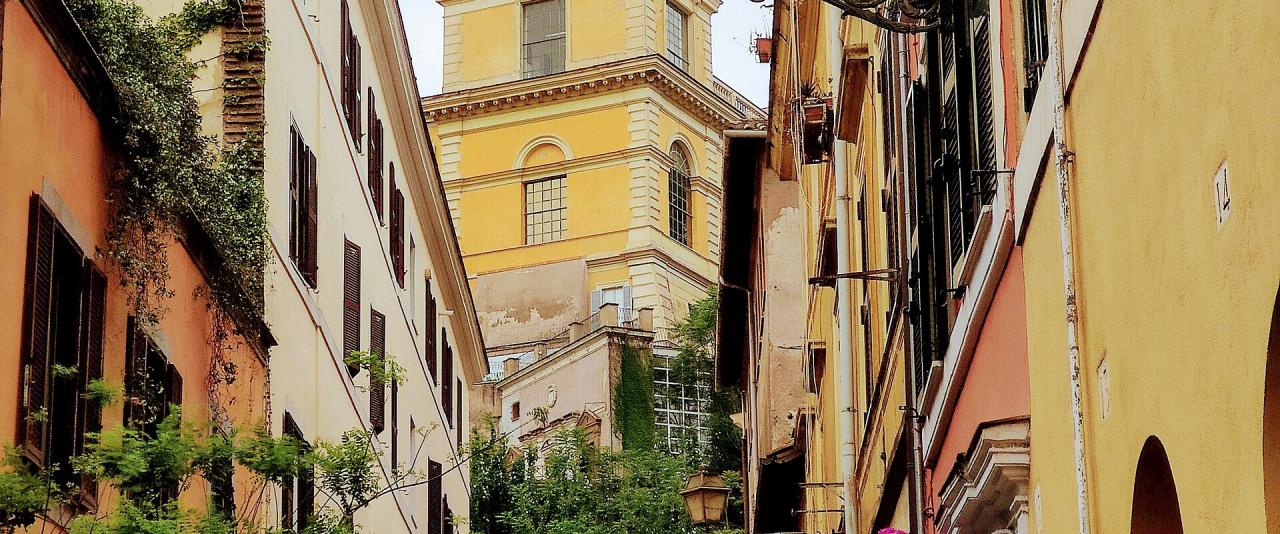
Across the Tiber, Trastevere has cobbled lanes, ivy-covered houses and some of the city's busiest restaurant streets. It is about a 15-minute walk from Campo de' Fiori over Ponte Sisto, and tram 8 runs from Largo di Torre Argentina. Roma Trastevere station, at its southern edge, has regional trains including the FL1 towards Fiumicino Airport.
Trade-offs: no metro, crowded and loud on weekend nights, and luggage is awkward on the cobbles.
Best for: travellers who prioritise atmosphere and evening dining.
Prati: near the Vatican
Prati is a late 19th-century district of wide, straight streets north of Castel Sant'Angelo, close to St Peter's and the Vatican Museums. It has the Ottaviano and Lepanto stops on metro line A, plenty of everyday restaurants and shops along Via Cola di Rienzo, and is quieter at night than the centre.
Trade-offs: less historic atmosphere; a 20 to 30 minute walk across the river to the Pantheon and Navona.
Best for: families, longer stays, early Vatican visits and travellers who want calm evenings.
Testaccio and the Aventine
Testaccio, south of the centre, is a traditional working-class district known for Roman cooking, its covered food market and Monte Testaccio, a hill made of ancient broken amphorae. The Piramide stop on metro line B and Roma Ostiense station, on the FL1 airport line, are close by. The neighbouring Aventine Hill is quiet, green and residential, with the Orange Garden viewpoint and the famous keyhole view of St Peter's dome at the Priory of the Knights of Malta.
Trade-offs: further from the Pantheon and Vatican; fewer hotels.
Best for: food-focused travellers, repeat visitors and anyone seeking quiet.
Termini and Esquilino: convenient but mixed
The area around Roma Termini station has a large number of budget hotels and the best transport links in the city: both main metro lines, many bus routes and the non-stop Leonardo Express train to Fiumicino Airport. Parts of the area, especially immediately around the station at night, are less pleasant than other districts, though the streets towards Monti and Santa Maria Maggiore are fine.
Best for: short stays, early departures and tight budgets. Check reviews and the exact street before booking.