







- Admission
- €18 full price
- Free on the first Sunday of the month. Audio guides and guided tours cost extra
- Hours
- Tue-Sun 9:00 AM-7:30 PM (last entry 6:00-6:30 PM); Closed Mon, Jan 1, May 1, Dec 25
- Where
- Rome, Lazio
- Directions
- Directions
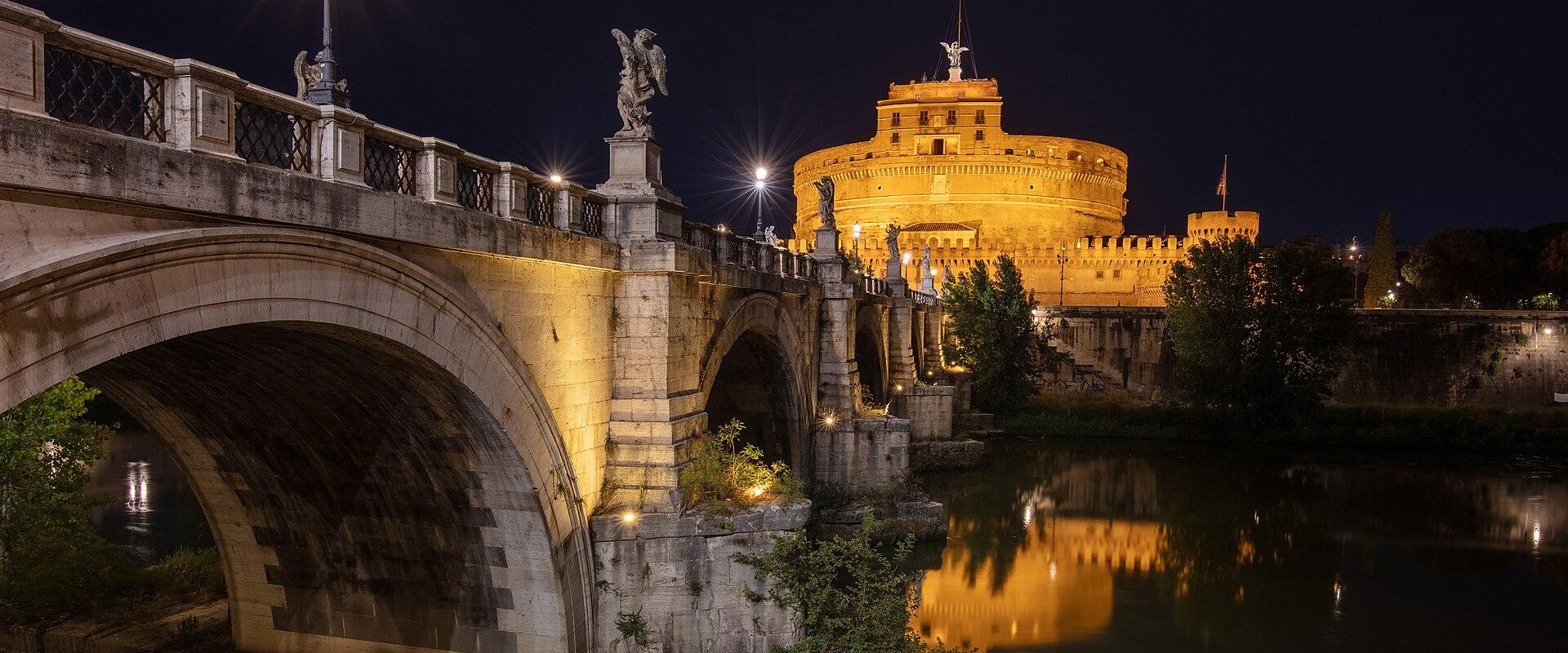
Castel Sant'Angelo is a massive round fortress on the east bank of the Tiber River, linked to the Vatican by a fortified corridor and approached from the old city by the Ponte Sant'Angelo. It began as a tomb. Hadrian’s Mausoleum was ordered by the emperor for himself and his family, built between about 123 and 139 AD and finished under his successor Antoninus Pius, and it was the burial place of emperors until the early third century. The marble covering and statues are long gone, but the heavy drum of the building remains.
In the late Roman period the mausoleum was brought into the Aurelian Walls as a fortification, and in the Middle Ages it became a papal stronghold. The present name comes from a story from the year 590, when Pope Gregory the Great saw a vision of the archangel Michael sheathing his sword over the building at the end of a plague. A bronze statue of the angel, made in the eighteenth century, now crowns the top. Popes later added the heavy bastions and strengthened the walls, and rooms inside were turned into prison cells, treasuries and splendid papal apartments.
The Passetto di Borgo, the elevated passage that connects the castle to the Vatican, was built in the 1200s and gave the popes a way to retreat when Rome was threatened. Clement VII used it in 1527, during the Sack of Rome by imperial troops, and he sheltered in the castle for weeks. Inside, the upper floors have frescoed rooms, most notably the Sala Paolina, decorated for Pope Paul III, while the lower levels still have the spiral ramp from the Roman tomb and dark storerooms. The prison held, among others, the philosopher Giordano Bruno, and the goldsmith Benvenuto Cellini was imprisoned here too. The last act of Puccini's opera Tosca is set on the terrace.
Visitors will find the terrace at the top the highlight of the visit. From the Terrace of the Angel you can see St. Peter's dome, the bends of the Tiber and a good part of the historic centre, a view that is especially fine in late afternoon. A small cafe sits on one of the upper levels. The museum collections inside include weapons and military items and artworks in the papal apartments.
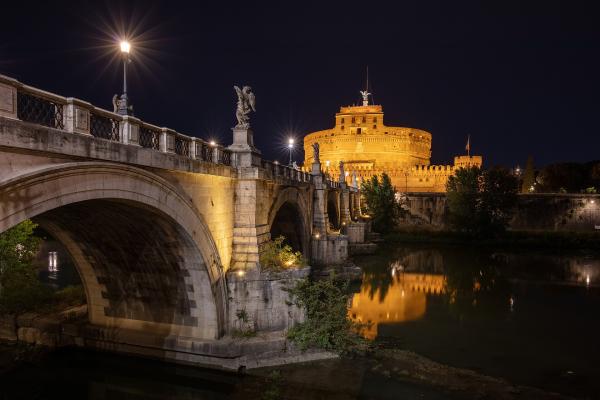
The bridge in front, the Ponte Sant'Angelo, goes back to Hadrian as well, and its stone angels, designed under Gian Lorenzo Bernini in the 1600s, make a short walk worthwhile in itself. Booking a ticket ahead helps with the queue, and the castle is a natural stop on the way to or from St. Peter's Basilica.
Categories
More photos coming soon
Hours & Fees
- Open
- Tue-Sun 9:00 AM-7:30 PM (last entry 6:00-6:30 PM); Closed Mon, Jan 1, May 1, Dec 25
- Admission
- €18 full price; free on the first Sunday of the month. Audio guides and guided tours cost extra.
Hours and prices change, especially out of season. Check with the venue before you go.
Nearby Attractions
Other places to visit in Rome
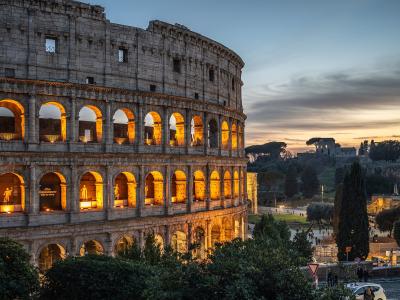
The Colosseum
Largest ancient amphitheater, built 70-80 AD
Ancient Ruins · Architectural Monuments
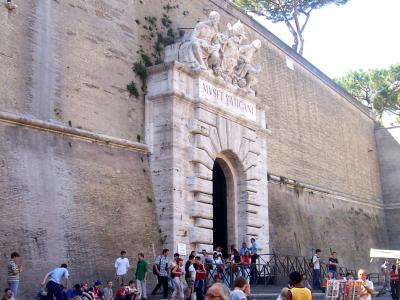
Vatican Museums
Papal museums housing Renaissance masterpieces
From €5 History & Heritage · Museums & Culture
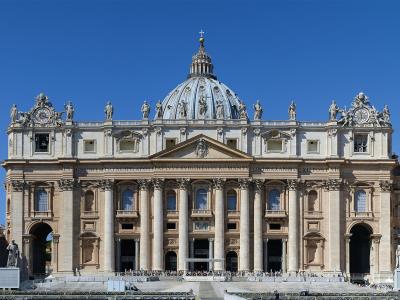
Vatican City (St. Peter's Basilica)
Renaissance basilica on Saint Peter's burial site
Architectural Monuments · Art Museums
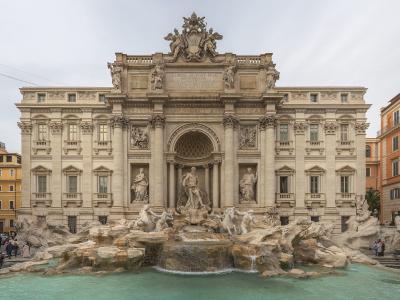
Trevi Fountain
18th-century Baroque fountain in Rome
From €2 Architectural Monuments · Historic Fountains
Questions people ask
Quick Facts
€18 full price
Free on the first Sunday of the month. Audio guides and guided tours cost extra.
Best Time to Visit
Visit in April to June or September to October for mild temperatures and fewer crowds.