
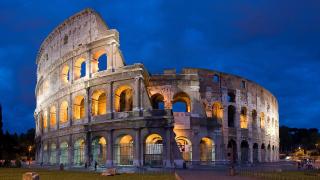

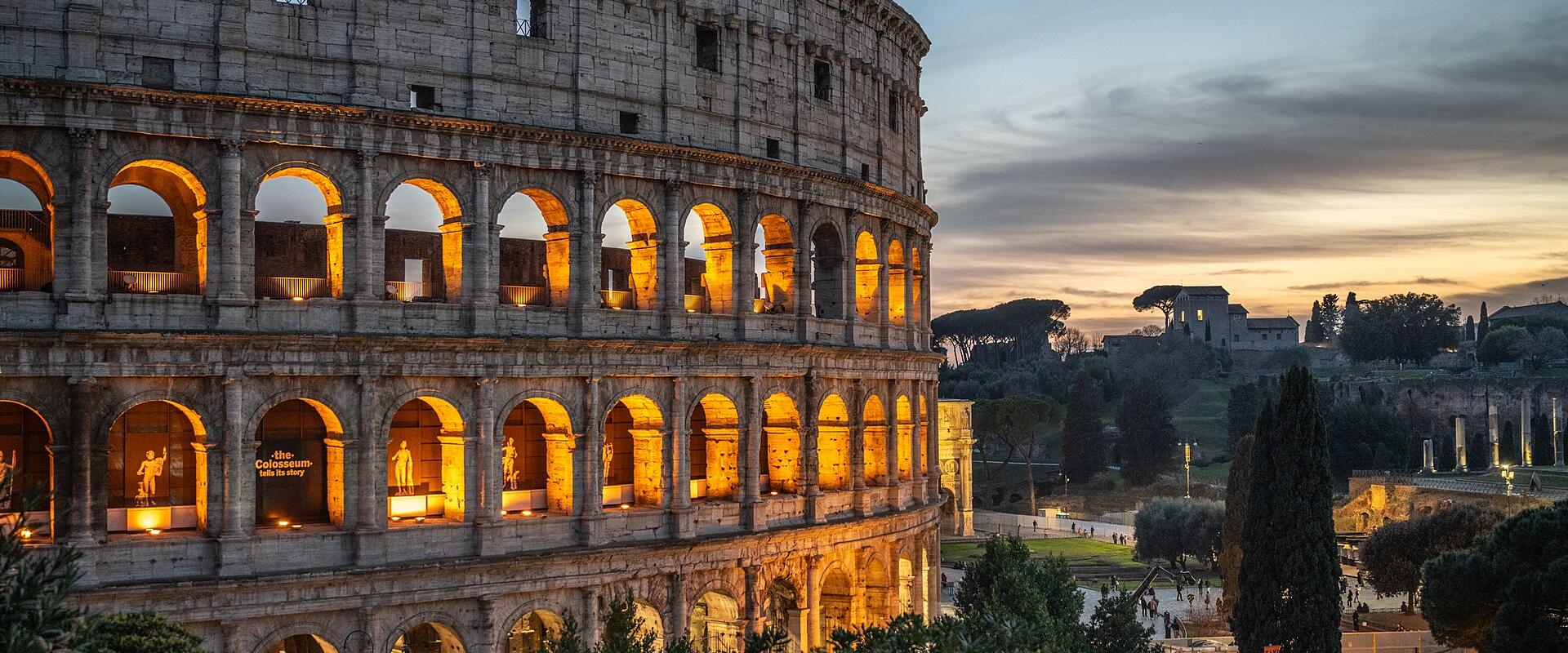
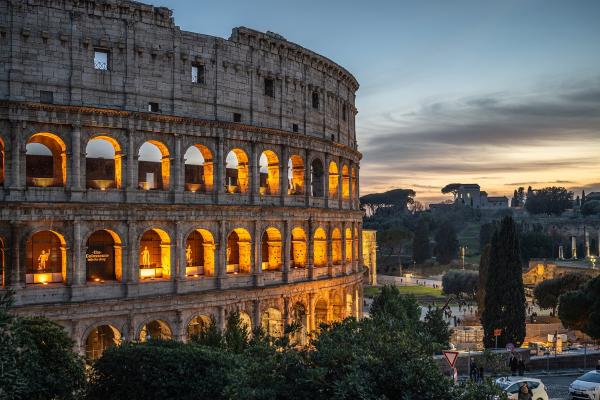
The Colosseum, officially known as the Flavian Amphitheatre, stands as a monumental symbol of ancient Rome in the city’s archaeological heart. Located just east of the Roman Forum, this elliptical structure is the largest ancient amphitheater ever constructed and remains the largest standing one in the world today. Built primarily of travertine limestone, tuff, and brick-faced concrete, its construction began under Emperor Vespasian in 72 AD and was completed in 80 AD under his son Titus, with further modifications by Domitian.
Visitors entering the site are greeted by the massive exterior walls, which once housed an intricate system of vaults and arches. Inside, the arena floor and tiered seating areas offer a glimpse into the scale of public spectacles that once took place here. Historically, the structure could accommodate between 50,000 and 80,000 spectators who gathered to watch gladiatorial contests, animal hunts, and executions. The engineering marvel of the Colosseum included a complex network of underground tunnels, known as the hypogeum, where animals and gladiators waited before emerging into the arena.
Today, the Colosseum serves as a powerful reminder of Roman architectural and engineering prowess. Travelers can explore the upper tiers for panoramic views of the surrounding ruins and the modern city. The site is accessible to the public, though advance ticketing is often required to manage the large daily crowds. The experience combines historical education with awe-inspiring visuals, allowing visitors to connect with the past through the enduring stone structure. While the interior shows signs of age and damage from earthquakes and stone robbers, its grandeur remains intact, offering a profound cultural experience for anyone visiting Rome.
Categories
More photos coming soon
Nearby Attractions
Other places to visit in Rome
Frequently Asked Questions
Quick Facts
Best Time to Visit
Visit in April to June or September to October for mild temperatures and fewer crowds.