







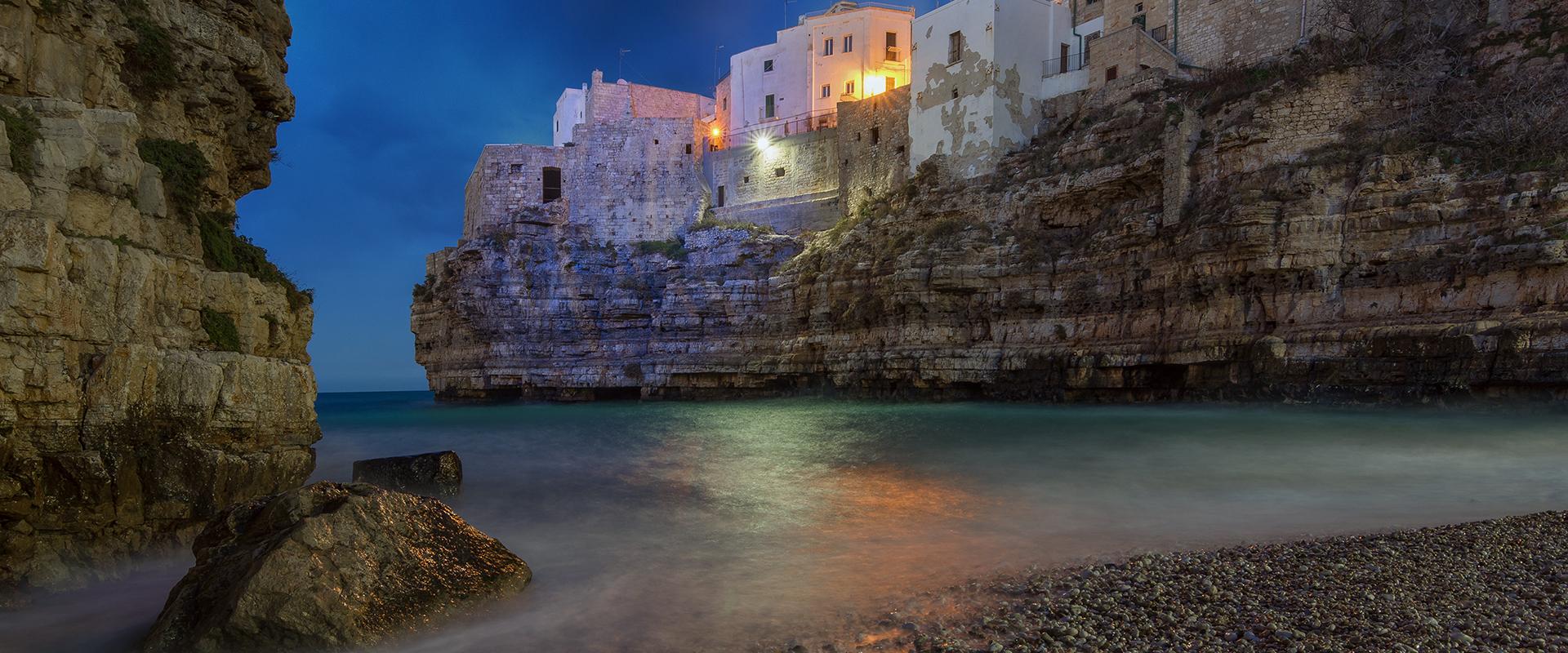
Polignano a Mare’s history goes back to pre-Roman times, with evidence of Messapian and Greek settlements. The town grew in importance in the Roman era, when the Via Traiana crossed the cove of the Lama Monachile on a bridge, and later became a strategic point for defence against pirate attacks, which led to the construction of towers and fortifications. In the Middle Ages it was ruled by various powers, including the Normans and the Aragonese. The historic centre, built on the cliff above the Lama Monachile, keeps its medieval character, with narrow alleys and ancient houses built into the cliffside. The town’s economy was traditionally based on fishing and agriculture, particularly olive oil and wine. In the 20th century Polignano a Mare became a popular tourist destination, preserving its historic architecture while developing modern amenities. The town has kept its authentic character, avoiding excessive commercialization, and remains a favourite among visitors seeking a genuine Italian coastal experience.
The main attractions are centred on the natural landmarks and the historic centre. The Lama Monachile beach is the town’s most famous spot, a small pebble beach set between two cliffs, reached by a staircase, with a Roman bridge above it. The view from the cliffs above the beach is iconic and a favourite for photographs. The Old Town (Centro Storico) is a labyrinth of narrow streets lined with boutiques, cafes, and restaurants, entered through an old gate, and its main space is Piazza Vittorio Emanuele II, the lively square at the centre. The main church, the Matrice, is a notable religious site in the upper part of the town. The Grotta Palazzese, a large sea cave under the cliffs, houses a restaurant that has operated in a cave since the 18th century. The Via Cristoforo Colombo leads to the seafront and the Lungomare. The town also hosts the Polignano a Mare Film Festival, celebrating cinema and culture, and cliff diving competitions have been held off the rocks.
Activities in Polignano a Mare include swimming, sunbathing, and exploring the historic centre. Visitors can take boat tours to see the sea caves, including the Grotta Palazzese, which is reached by boat and holds a famous restaurant. Hiking trails along the coast give views of the Adriatic Sea. Dining features fresh seafood and traditional Puglian dishes, with many restaurants offering cliffside views, and the town is known for a coffee-based granita with lemon and cream. Shopping includes local ceramics, textiles, and food products. The town also hosts festivals and events through the year, celebrating its artistic heritage. For those interested in history, guided tours explore the town’s medieval past and its role in maritime defence. The nearby towns of Monopoli and Bari are easy day trips.
Getting to Polignano a Mare is convenient by rail and road. The town is reached by car from Bari, about 30 kilometres away, via the SS16 highway. Polignano a Mare has a railway station with connections to Bari and other major cities in Apulia. For those flying, the nearest airport is Bari Karol Wojtyła Airport.
The best time to visit Polignano a Mare is from April to June or September to October, when the weather is mild and pleasant, ideal for outdoor attractions and historic sites. July and August are peak tourist months, with higher temperatures and larger crowds. Winter is mild but can be windy. Despite the seasonal variations, Polignano a Mare’s natural beauty and cultural heritage make it a rewarding destination year-round.
Best time to visit
Visit between April and June or September and October for mild temperatures and fewer crowds.
What to see in Polignano A Mare
Our picks first.
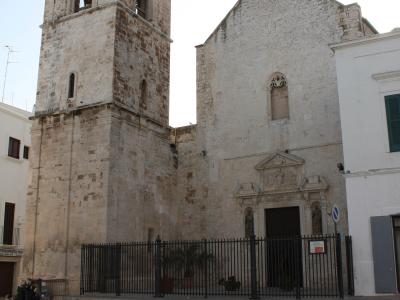
Chiesa Matrice di Santa Maria Assunta
Former cathedral of Polignano, consecrated 1295, with San Vito relics
History & Heritage · Historic Churches
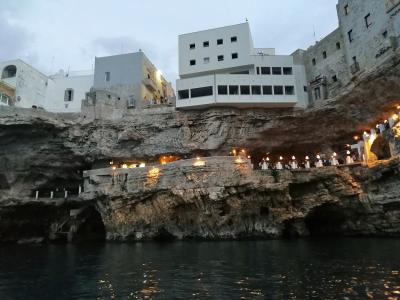
Grotta Palazzese
Seafood restaurant inside a limestone sea cave
Coastal & Maritime · Food & Gastronomy
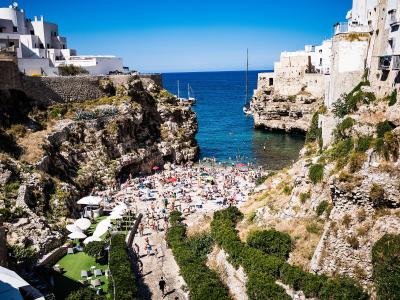
Lama Monachile
Pebble cove in Polignano A Mare cliffs
Beaches · Scenic Viewpoints
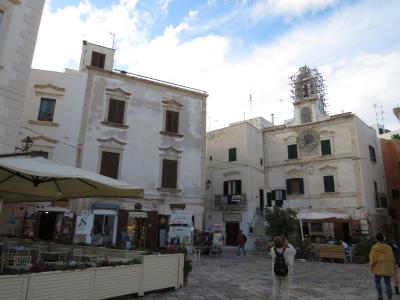
Piazza Vittorio Emanuele II
Historic square with clock tower and cliff views
Free Historic Districts · Local Cuisine
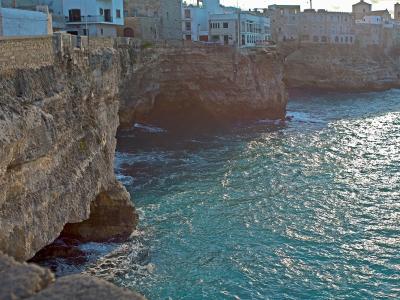
Via Cristoforo Colombo
Picturesque coastal promenade with sea views
Free City Promenades · Coastal Walks
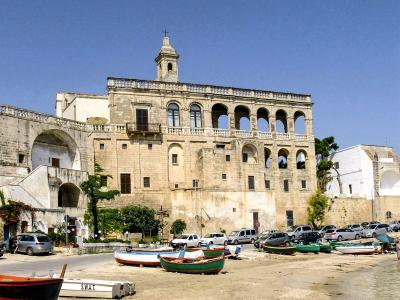
Abbazia di San Vito
Benedictine abbey above a tiny harbour, 3 km north of Polignano
Coastal & Maritime · Harbor Views
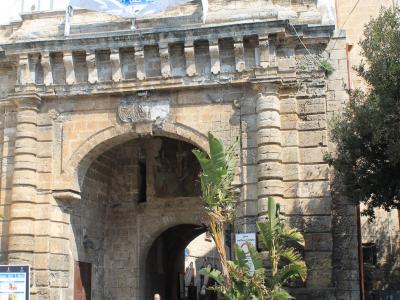
Arco Marchesale (Porta Grande)
1530 gateway, once the only way into Polignano's old town
Historic Districts · Historic Gates
Polignano A Mare by interest
The same sights, grouped by what you came for.
Planning a visit to Polignano A Mare
Itineraries that include Polignano A Mare
Good to know
- Currency
- EUR
- Language
- Italian
Quick Facts
Book your stay
Questions people ask
More places in Apulia
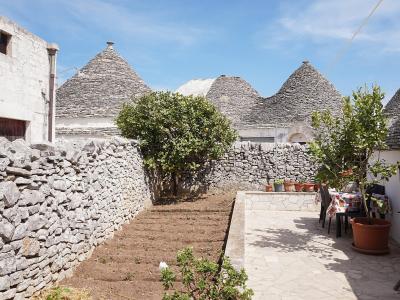
Apulia
Alberobello
UNESCO-listed town in Puglia famous for unique conical trulli houses
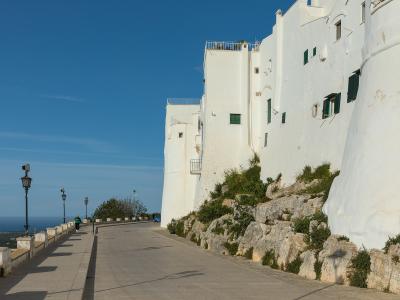
Apulia
Ostuni
Whitewashed hill town in Apulia known as the White City
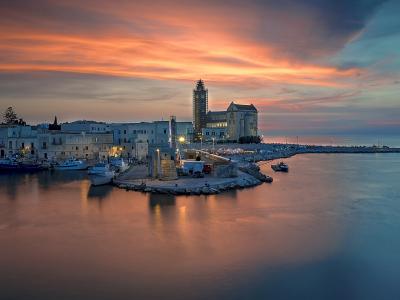
Apulia
Trani
Adriatic coastal city with Norman cathedral and historic port
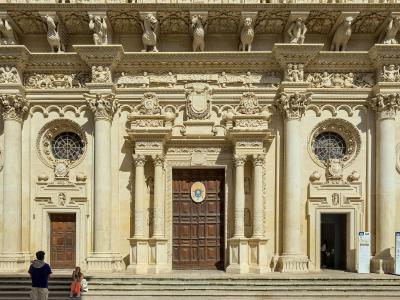
Apulia
Lecce
Baroque capital of Salento with golden stone architecture and history