







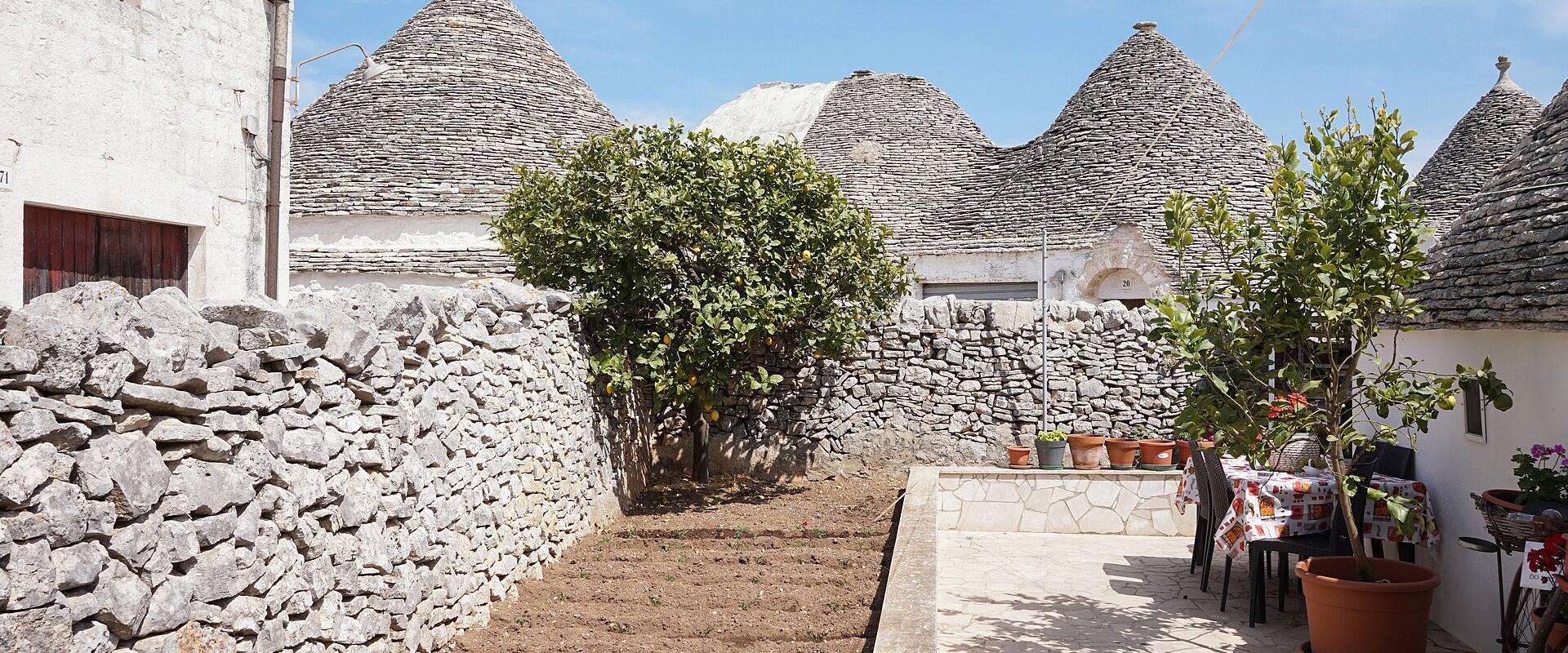
Alberobello’s history is deeply rooted in the agricultural traditions of the Itria Valley. The town grew from the settlement of peasants by the feudal counts of Conversano on their land in the 16th century. The distinctive trulli were developed as a practical answer to the dry landscape of Puglia, built from stone gathered in the fields without mortar. According to local legend the conical roofs were designed to be dismantled quickly to avoid property taxes imposed by the Aragonese kings, because structures without permanent foundations were not taxable. This history has preserved a unique urban landscape that has remained largely unchanged for centuries. In 1996 the trulli of Alberobello were inscribed as a UNESCO World Heritage Site, recognizing their outstanding universal value as an example of traditional building techniques and social organization. The town has preserved its historic centre, with narrow streets, whitewashed walls, and the characteristic trulli, reflecting its agricultural past and resilience.
The main attractions are centred on the trulli and the historic districts. The Rione Monti is the most famous district, with a dense cluster of trulli on a steep hillside, lined with shops and restaurants. The Trullo Sovrano, the only two-storey trullo and the largest in Alberobello, now houses a museum of life in the old town. The Aia Piccola district gives a more residential view of trulli life, with many still used as homes. The Church of Sant’Antonio da Padova, the Church of Saint Anthony of Padua, built in a trullo style, is a significant religious site, and the town’s main churches are also worth seeing. The Museo del Territorio, in a group of linked trulli, explains the history and construction techniques. The historic centre is filled with artisan shops, cafes, and restaurants serving traditional Puglian cuisine. The surrounding countryside offers views of olive groves and vineyards, with the nearby towns of Locorotondo and Cisternino a short drive away. The town hosts festivals and events through the year, celebrating its cultural heritage.
Activities in Alberobello include exploring the trulli districts, visiting museums, and enjoying the local cuisine. The town is known for traditional Puglian dishes, including orecchiette pasta, burrata cheese, and wines such as Primitivo. Visitors can take guided tours to learn about the history and construction of trulli. The area offers hiking and cycling, with scenic routes through the Itria Valley. Alberobello also hosts cultural events, including the Feast of Sant’Antonio, and the feast of the town’s patron saints, Cosmas and Damian, in late September. Shopping includes local ceramics, textiles, and food products. For those interested in history, guided tours explore the town’s peasant heritage and architectural significance.
Getting to Alberobello is convenient by rail and road. The town is reached by train from Bari, about 55 kilometres away, with frequent services of the Ferrovie del Sud Est to Alberobello station. By car, the A14 motorway provides easy access from Bari and other major cities. The nearest airport is Bari Karol Wojtyła Airport, about 50 kilometres away.
The best time to visit Alberobello is from April to June or September to October, when the weather is mild and pleasant, ideal for outdoor attractions and historic sites. July and August are peak tourist months, with higher temperatures and larger crowds. Winter is cool but offers a quieter experience, with the town’s museums and cafes providing cultural entertainment. Despite the seasonal variations, Alberobello’s unique architecture and cultural heritage make it a rewarding destination year-round.
Best time to visit
Visit between April and June or September and October for mild temperatures and fewer crowds.
What to see in Alberobello
Our picks first.
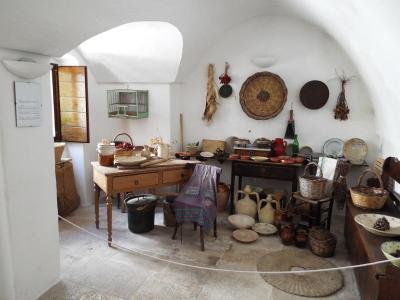
Museo del Territorio
15 interconnected trulli showcasing local history
History & Heritage · Museums & Culture
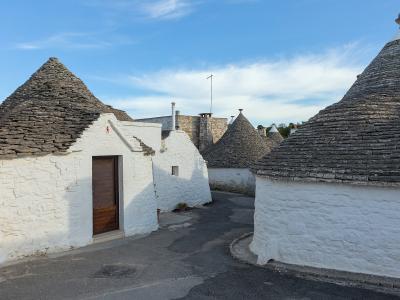
Rione Aia Piccola
Historic trulli district on Alberobello's southeastern slope
Cultural Tours · Historic Districts
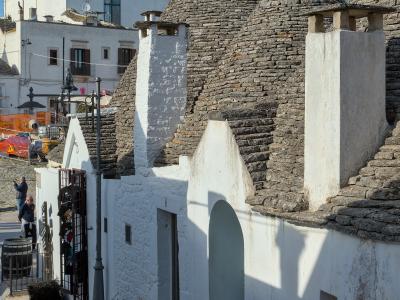
Rione Monti
UNESCO-listed district of 1,000 dry-stone trulli
Architectural Monuments · Cultural Tours
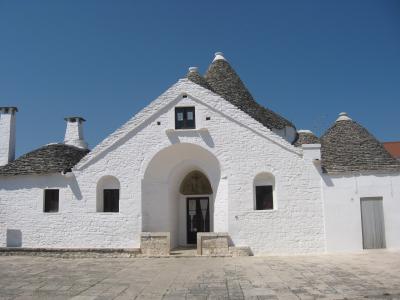
Trullo Sovrano Excursions
14m conical dome, raised floor, mortar-built trullo
Architectural Monuments · Cultural Tours
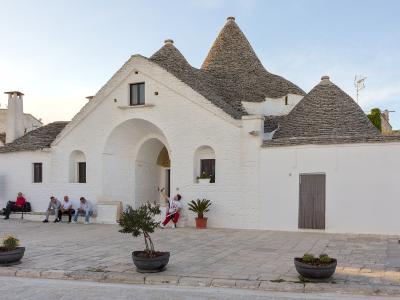
Trullo Sovrano
Italy's only two-storey trullo, a UNESCO house museum.
From €2.50 History & Heritage · Museums & Culture
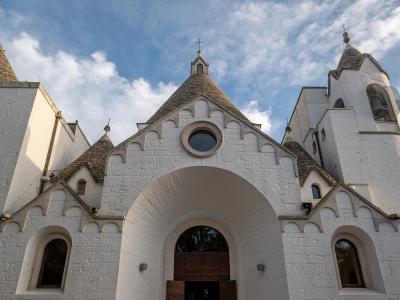
Church of Saint Anthony of Padua
World's only trullo-style church in Alberobello
Architectural Monuments · Historic Churches
Alberobello by interest
The same sights, grouped by what you came for.
Did you know?
Checked facts about Alberobello, each with its source.
-
Record
Alberobello's Trulli Have Been UNESCO-Listed Since 1996
Alberobello's trulli, dry-stone houses built without mortar and topped with conical limestone roofs, have been on the UNESCO World Heritage List since 1996.
Source: Visit Italy
Planning a visit to Alberobello
Good to know
- Currency
- EUR
- Language
- Italian
Quick Facts
Book your stay
Questions people ask
More places in Apulia
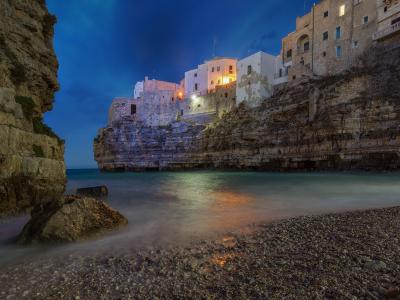
Apulia
Polignano A Mare
Dramatic cliffside town in Puglia with iconic caves and beaches
Apulia
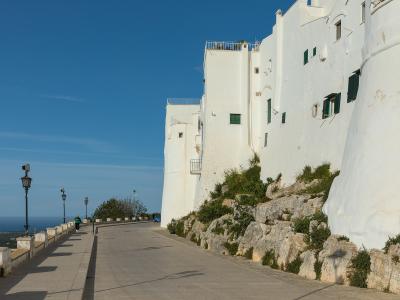
Ostuni
Whitewashed hill town in Apulia known as the White City
Apulia
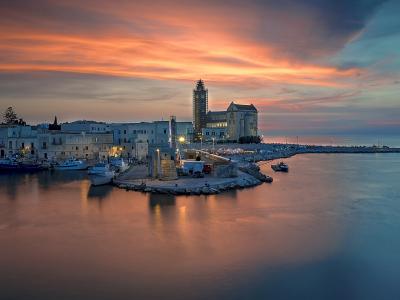
Trani
Adriatic coastal city with Norman cathedral and historic port
Apulia
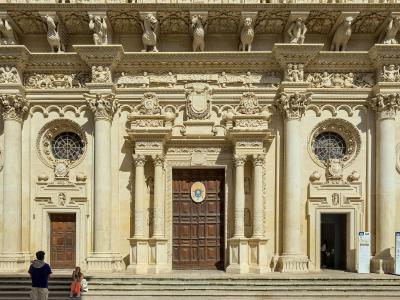
Lecce
Baroque capital of Salento with golden stone architecture and history