







- Where
- Polignano A Mare, Apulia
- Directions
- Directions
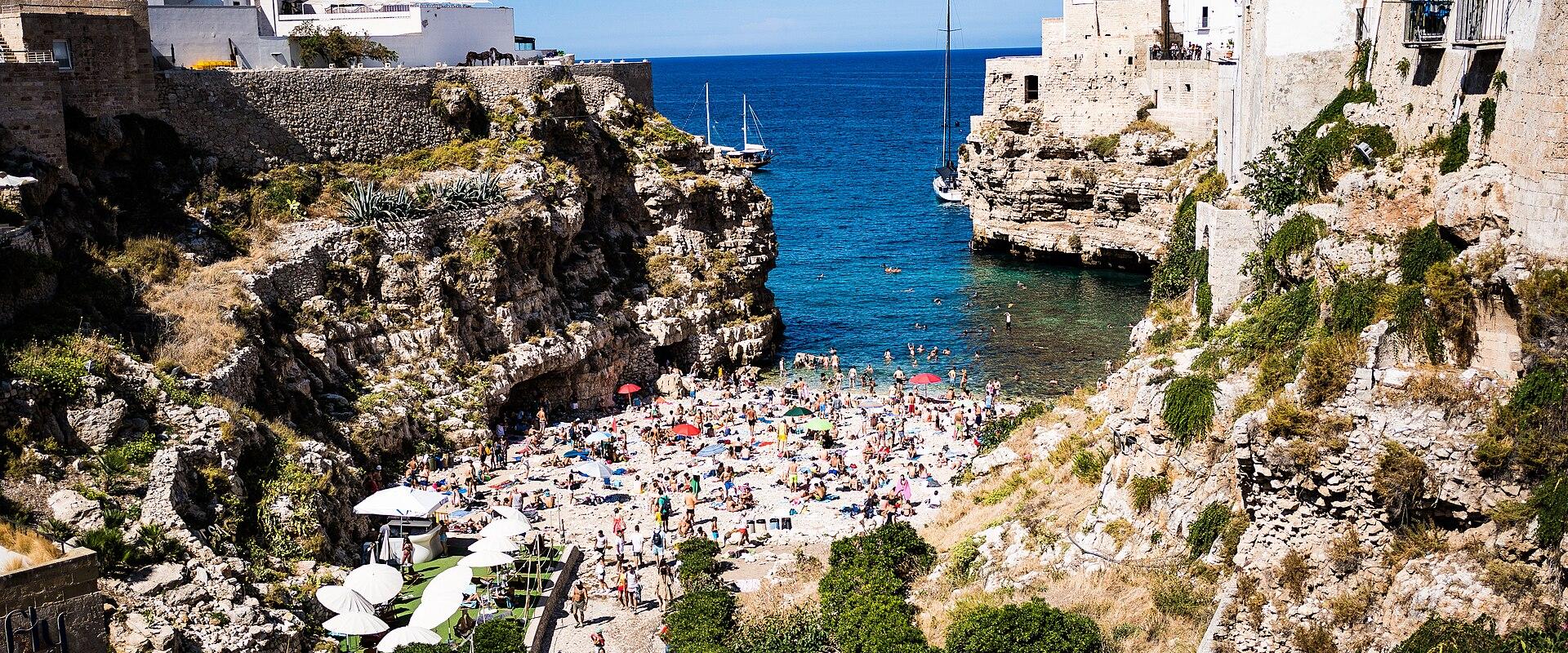
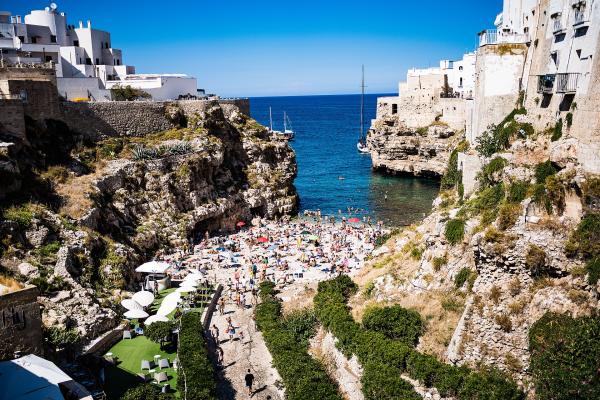
Lama Monachile is a small pebble cove in Polignano a Mare, on the Adriatic coast of Apulia, in southern Italy, and it is one of the most photographed beaches in Puglia, in Apulian country. It occupies a narrow inlet, a lama, the local word for a dry riverbed that reaches the sea, which here is cut between two high limestone cliffs. The beach sits between tall rock faces, which creates a secluded and intimate atmosphere, and the contrast between the deep blue of the Adriatic Sea and the white stone of the cliffs is one of the most striking sights on the coast.
Above the cove stands a single-arch stone bridge that carried the Via Traiana, the Roman road built by the emperor Trajan, across the gully. The bridge was rebuilt over the centuries, and it is an unmistakable sight from the beach, with houses of the old town rising on the cliffs on either side. The beach itself is made of white pebbles, smoothed by the sea, and the water is clear and cold. The place is popular for swimming and sunbathing, though the pebble surface requires appropriate footwear, and in the high season it is crowded, since the space is small.
Access to the beach is typically by a path and steps leading down from the bridge area, though boats and kayaks also arrive from the sea. Nearby is Cala Porto, another small cove, which allows visitors to explore multiple coastal gems within a short distance. The history of the area is tied to the maritime traditions of Polignano a Mare, with the cliffs serving as a natural defence and the coves providing shelter for small fishing boats. In some years the cliffs around the cove host a diving competition, in which athletes jump from platforms above the sea, and the cove is a spectacular amphitheatre for the event.
Behind the beach, the old town is only a short walk away, and the viewpoint on the bridge is the place to take the classic photographs. A statue of the singer Domenico Modugno, who was born in Polignano, stands on the seafront, and the famous restaurant in a sea cave, the Grotta Palazzese, is on the cliffs nearby. Piazza Vittorio Emanuele II is the natural starting point for a visit.
It is advisable to arrive early, since the beach fills quickly in summer, and to bring water shoes, a towel and water, since there are few facilities. The swimming is good, though the water can be rough after storms, and the sea conditions should be checked before entering. The cove is often best in the evening, when the day-trippers have gone and the cliffs glow in the late light. Visit in late spring or early autumn for a calmer experience.
Categories
More photos coming soon
Nearby Attractions
Other places to visit in Polignano A Mare
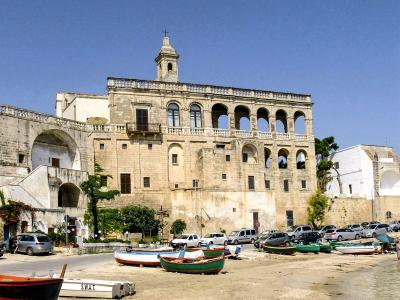
Abbazia di San Vito
Benedictine abbey above a tiny harbour, 3 km north of Polignano
Coastal & Maritime · Harbor Views
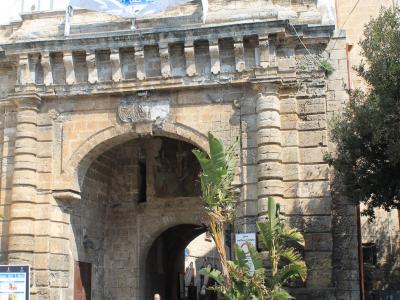
Arco Marchesale (Porta Grande)
1530 gateway, once the only way into Polignano's old town
Historic Districts · Historic Gates
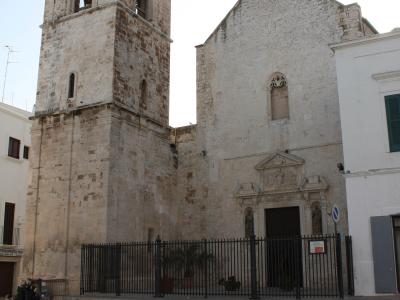
Chiesa Matrice di Santa Maria Assunta
Former cathedral of Polignano, consecrated 1295, with San Vito relics
History & Heritage · Historic Churches
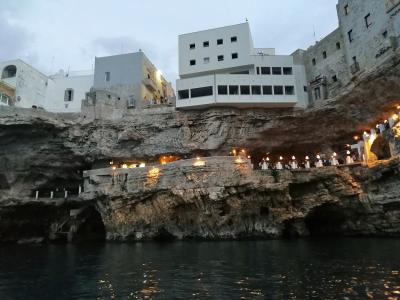
Grotta Palazzese
Seafood restaurant inside a limestone sea cave
Coastal & Maritime · Food & Gastronomy
Questions people ask
Quick Facts
Best Time to Visit
Visit between April and June or September and October for mild temperatures and fewer crowds.