







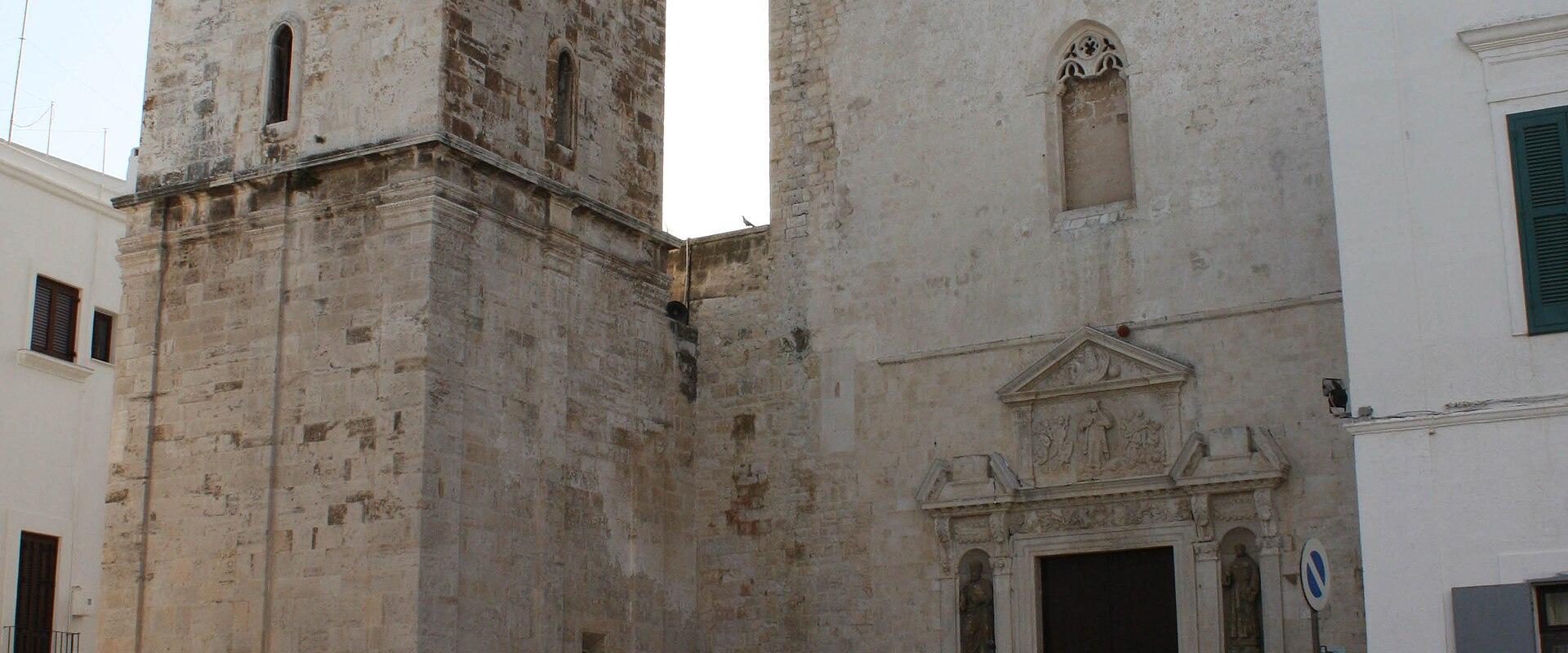
Chiesa Matrice di Santa Maria Assunta
Former cathedral of Polignano, consecrated 1295, with San Vito relics
- Where
- Polignano A Mare, Apulia
- Directions
- Directions
The Chiesa Matrice di Santa Maria Assunta is the mother church of Polignano a Mare, and it faces Piazza Vittorio Emanuele II, the small main square of the old town on its rock above the Adriatic. The church was consecrated in 1295 and dedicated to the Assumption of the Virgin. For more than five centuries it was a cathedral, the seat of the small diocese of Polignano, until 1818, when the diocese was merged with that of Monopoli and the church became the parish church it is today. Locals simply call it the Chiesa Matrice, the town's principal church.
Seen from the square, it is a plain stone building rather than a showpiece, with a carved portal and a bell tower rising over the roofs of the old quarter. Its value lies inside. Several sculptures are attributed to Stefano da Putignano, the Renaissance sculptor from nearby Putignano, whose painted stone figures appear in churches across central Apulia. The most precious painting is a fifteenth-century polyptych of the Madonna and Child with saints, painted on a gold ground and attributed to the Venetian artist Bartolomeo Vivarini. The church also holds vestments and smaller works that came from the former Benedictine monastery of San Benedetto, which no longer exists.
The Cappellone di San Vito, a large chapel inside the church, keeps relics of Saint Vitus, the patron saint of Polignano: a fragment of an arm and a kneecap. The saint is linked to the Benedictine abbey of San Vito on the coast north of town, and every June his feast brings a procession by sea from the abbey's small harbour to Polignano. The relics give the Chiesa Matrice a central role in that festival, the most important date in the town's calendar.
The church stands a few steps from the clock house on the same square and from the lanes that lead out to the cliff-edge terraces, so it fits naturally into any walk through the old town. Lama Monachile, the Bourbon bridge over the cove and the Arco Marchesale gateway are all within a few minutes on foot. A visit inside takes about twenty minutes and suits anyone interested in Apulian religious art, Renaissance sculpture or the history of the town before it became a seaside destination.
Categories
More photos coming soon
Nearby Attractions
Other places to visit in Polignano A Mare
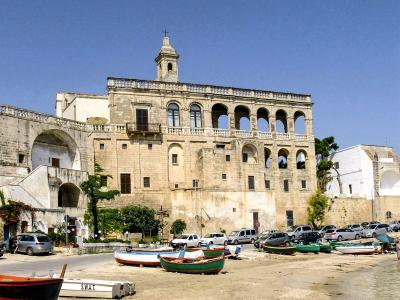
Abbazia di San Vito
Benedictine abbey above a tiny harbour, 3 km north of Polignano
Coastal & Maritime · Harbor Views
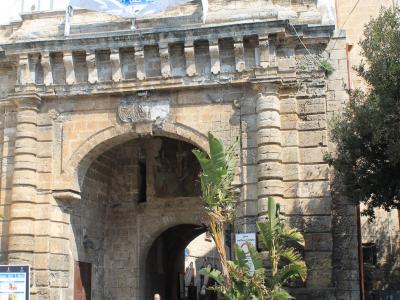
Arco Marchesale (Porta Grande)
1530 gateway, once the only way into Polignano's old town
Historic Districts · Historic Gates
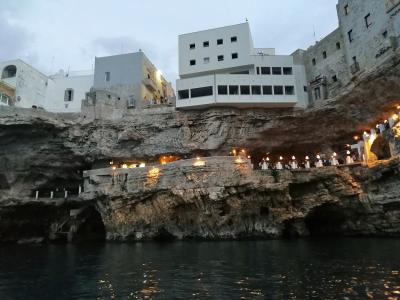
Grotta Palazzese
Seafood restaurant inside a limestone sea cave
Coastal & Maritime · Food & Gastronomy
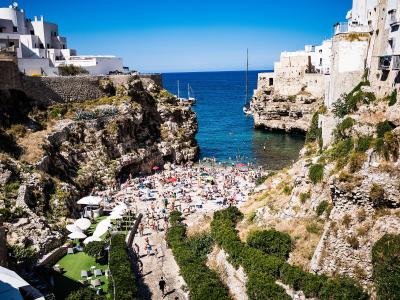
Lama Monachile
Pebble cove in Polignano A Mare cliffs
Beaches · Scenic Viewpoints
Questions people ask
Quick Facts
Best Time to Visit
Visit between April and June or September and October for mild temperatures and fewer crowds.