The Dolomites as a ski destination
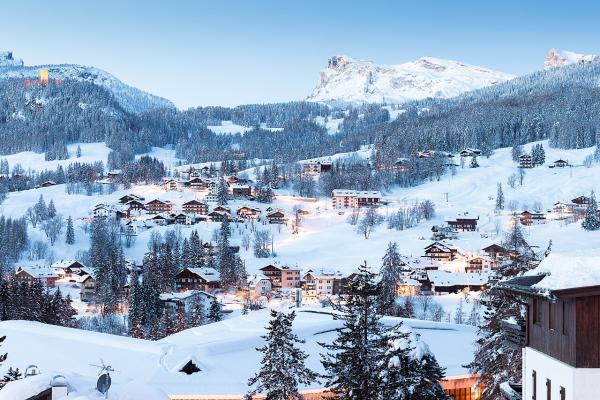
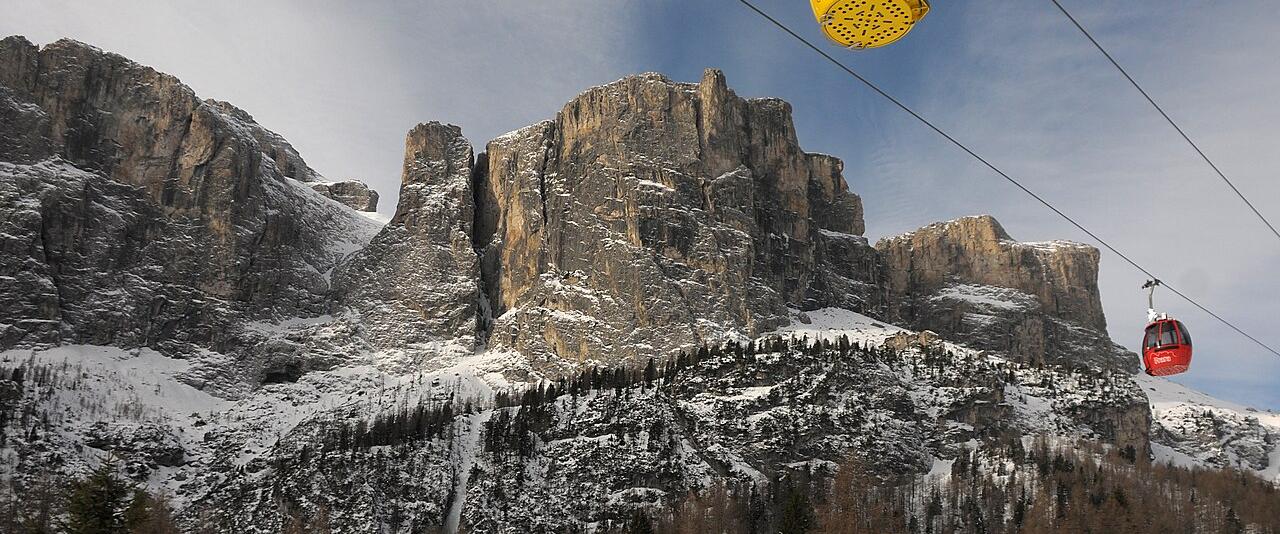
The Dolomites, a UNESCO World Heritage Site since 2009, stretch across the provinces of South Tyrol, Trentino and Belluno in northeastern Italy. In winter most of the region's big resorts are linked under one lift pass, Dolomiti Superski. The network counts around 1,200 km of slopes and some 450 lifts, and nearly all of its runs are covered by snowmaking, which helps keep the season running from December to April even in thin snow years.
The area was in the spotlight in February 2026, when the Milano Cortina Winter Olympics were held. Cortina d'Ampezzo hosted the women's alpine races, Val di Fiemme hosted Nordic events and Anterselva/Antholz the biathlon, while other events took place in Bormio and Livigno, outside the Dolomites. Upgraded lifts and venues remain, and for skiers the practical effect is a well-equipped region, not a changed one.
The Dolomiti Superski areas
The pass covers a dozen resort areas, each with its own local lift pass as a cheaper option. The main ones are:
- Val Gardena / Alpe di Siusi – Ortisei, Santa Cristina and Selva, with the Saslong World Cup run and gentle skiing on the Alpe di Siusi plateau.
- Alta Badia – Corvara, La Villa and San Cassiano, known for long, well-groomed blue and red runs and the Gran Risa race piste.
- Val di Fassa / Carezza – Canazei, Campitello and Pozza di Fassa on the Trentino side.
- Arabba / Marmolada – steeper terrain and the glacier run from Punta Rocca on the Marmolada, the highest peak in the Dolomites.
- Cortina d'Ampezzo – Tofana, Faloria and Cinque Torri, a classic resort with a famous town centre.
- Kronplatz / Plan de Corones – a single mountain with lifts on every side, popular with families.
- Tre Cime, Val di Fiemme, Obereggen, San Martino di Castrozza, Civetta, Alpe Lusia–San Pellegrino and Rio Pusteria–Bressanone complete the network.
You can buy the full Dolomiti Superski pass or a local area pass. If you plan to stay in one valley, the local pass is enough; if you want to travel between resorts or ride the Sella Ronda, the full pass is the one to get.
Skiing the Sella Ronda
The Sella Ronda is a ski circuit around the Sella massif that links four valleys: Val Gardena, Alta Badia, Arabba and Val di Fassa, crossing the Gardena, Campolongo, Pordoi and Sella passes. The loop is around 40 km in total, a little over half of it on skis and the rest on lifts. It can be skied clockwise (signed orange) or anticlockwise (signed green); the two directions use different runs.
The runs themselves are mostly reds and blues, so a confident intermediate skier can complete it. The challenge is time. Most skiers need a full day, and lift queues at the passes can slow you down on busy days. Start early, take a trail map, and keep an eye on the clock: missing the last lift back to your valley means an expensive taxi ride around the mountains. Many skiers do the circuit early in the week, when the slopes are quieter.
Choosing a base
For first-time visitors, Val Gardena and Alta Badia are the easiest bases: both sit on the Sella Ronda, have large ski schools and offer a wide choice of accommodation. Val di Fassa is often cheaper and well connected to Trentino. Cortina suits those who want a town with shops and restaurants, though it is not directly on the Sella Ronda. Arabba has the most direct access to steeper terrain and the Marmolada.
The nearest airports are Verona, Venice, Innsbruck and Bolzano; trains run to Bolzano, Bressanone and Trento, with buses up the valleys. A car makes moving between valleys easier, but check whether you need winter tyres or snow chains on board, as this is often required on mountain roads in winter.
Skiing from a Lake Garda base
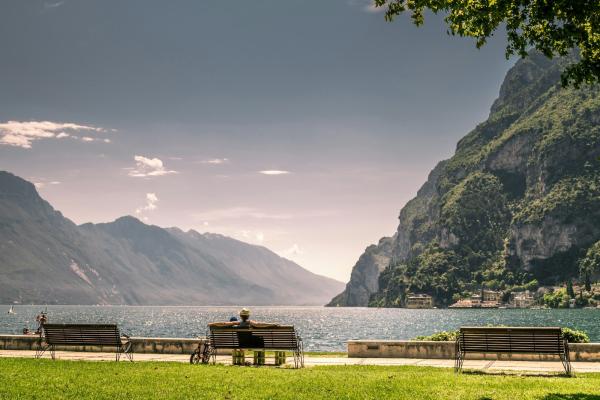
Lake Garda is not a ski resort, and the major Dolomites areas are a long drive away, so commuting daily from the lake to the Sella Ronda is impractical. There are closer options. The Malcesine–Monte Baldo cable car on the lake's eastern shore runs a winter season (for 2026/27, from 26 December 2026 to 21 February 2027, according to the operator). The top station sits at 1,760 metres, and the Prada–Costabella lifts on the Verona side of Monte Baldo serve a small, local ski area. Expect limited terrain and snow that depends heavily on the weather.
Larger Trentino resorts such as Madonna di Campiglio, Folgaria and the Paganella area are within reach of the northern end of the lake. Madonna di Campiglio sits in the Brenta Dolomites but is not part of Dolomiti Superski, so it needs its own pass. For a full Dolomites week, a better plan is to move into one of the valleys and keep Lake Garda for a few days before or after.
Practical tips
- Book ski school and equipment hire early for the Christmas, New Year and February holiday weeks.
- Many runs and huts are bilingual (Italian and German) or trilingual with Ladin in South Tyrol, so place names on maps may appear in more than one language.
- Italian law requires third-party liability insurance for skiers on the slopes, and helmets are compulsory for under-18s; many lift offices sell insurance with the pass.
- Check opening dates and current pass prices on dolomitisuperski.com before you book.