Pienza
UNESCO-listed Renaissance ideal city in Tuscany's Val d'Orcia
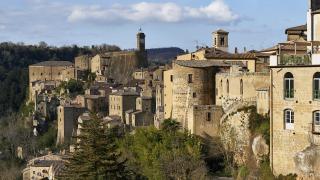
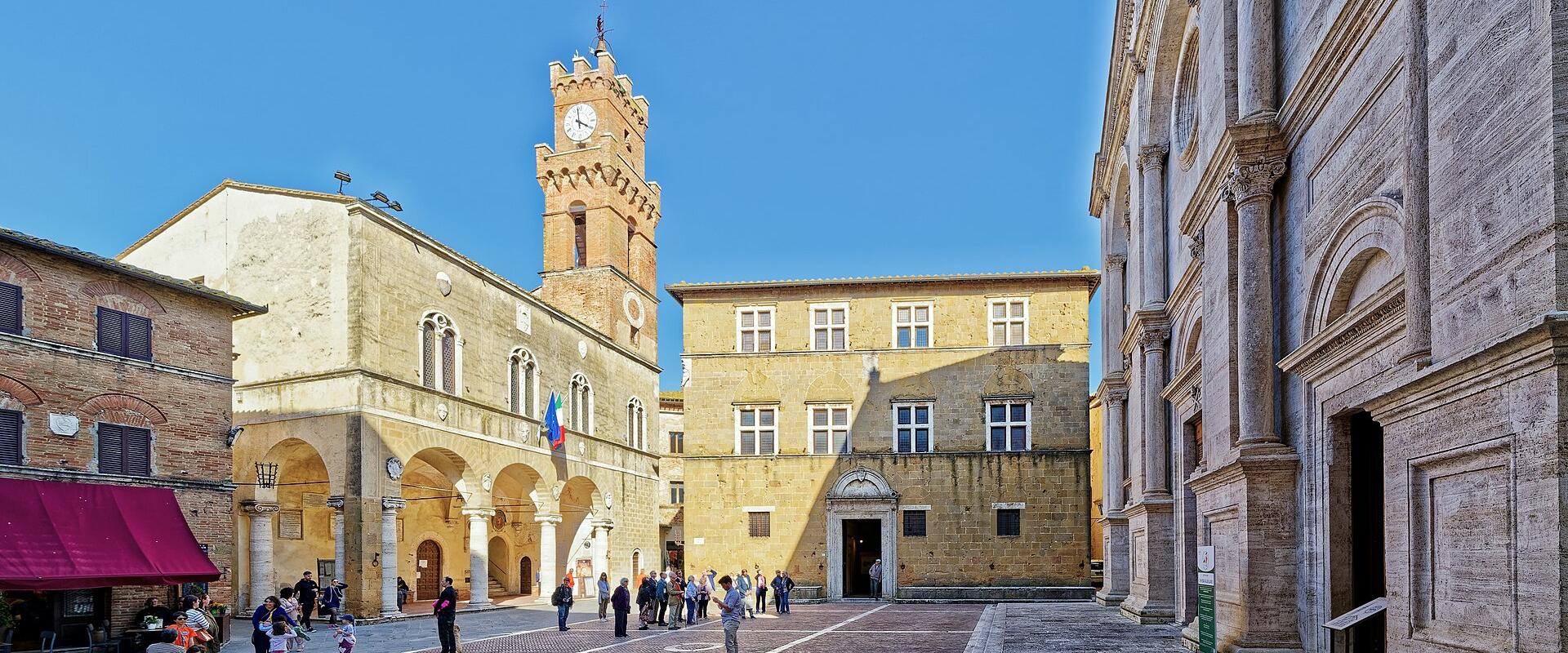
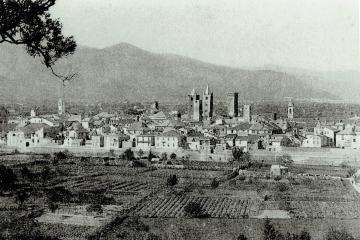
Pienza’s history is deeply rooted in the Renaissance humanist movement. Originally known as Corsignano, a small medieval village, it was the birthplace of Enea Silvio Piccolomini, who later became Pope Pius II. In 1459, the Pope decided to transform his hometown into a model Renaissance city, reflecting the ideals of harmony, proportion, and beauty. He commissioned the architect Bernardo Rossellino to redesign the town, expanding the main square and constructing key buildings such as the Palazzo Piccolomini, the Cathedral, and the Palazzo Vescovile. The transformation was completed in a remarkably short time, and Pienza became a symbol of the New Rome. After the Pope’s death, the town declined slightly but retained its architectural integrity. In 1996, the historic center of Pienza was inscribed as a UNESCO World Heritage Site, recognized as an outstanding example of Renaissance urban planning. The town has preserved its layout and buildings, offering a rare glimpse into 15th-century ideal city design.
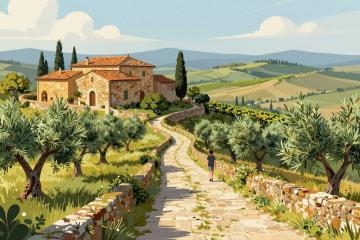
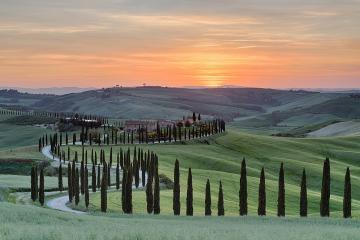
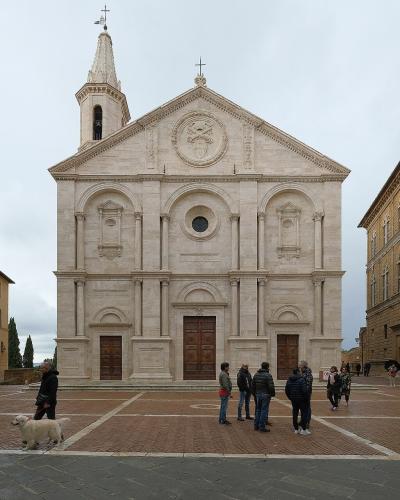
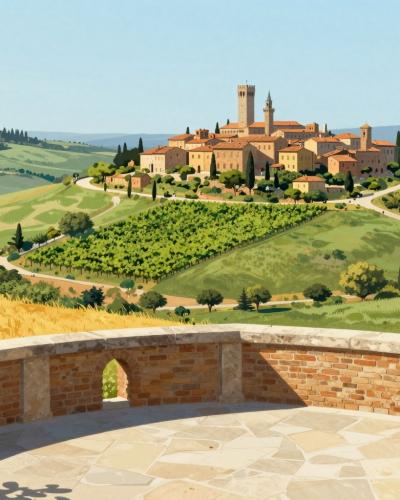
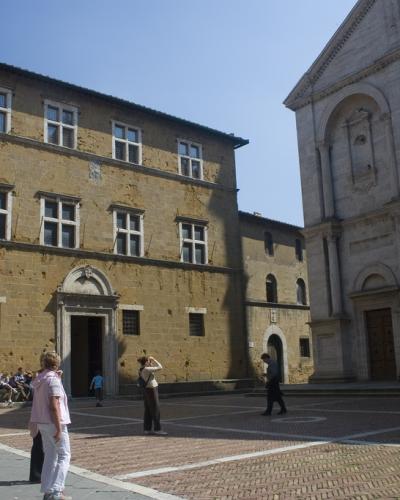
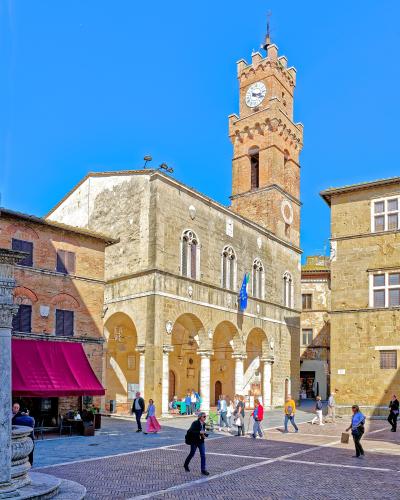
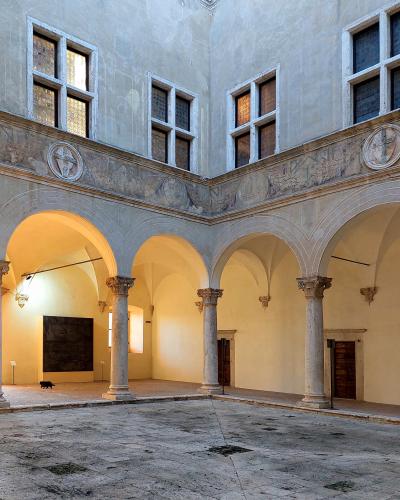
The main attractions in Pienza are centered around its historic center and the surrounding Val d'Orcia landscape. The Piazza Pio II is the heart of the town, surrounded by the Palazzo Piccolomini, the Cathedral of Santa Maria Assunta, and the Palazzo Vescovile. The Palazzo Piccolomini, now a museum, features frescoes by Pinturicchio and offers insights into the life of Pope Pius II. The Cathedral, with its Renaissance facade and interior, houses important artworks. The town’s narrow streets are lined with shops selling local products, especially pecorino cheese, which Pienza is famous for. The Belvedere, a viewpoint on the edge of the square, offers panoramic views of the Val d'Orcia, with its iconic cypress trees and rolling hills. The surrounding area includes the nearby towns of Montalcino and Montepulciano, known for their wines and historic centers.
Activities in Pienza include exploring the historic center, visiting cheese producers, and enjoying the natural scenery. The town is known for its traditional Tuscan cuisine, including pecorino cheese, wild boar ragù, and local wines like Brunello di Montalcino. Visitors can take guided tours to learn about the history of the Renaissance and the urban planning of Pienza. The surrounding Val d'Orcia offers opportunities for hiking, cycling, and wine tasting. Pienza also hosts various festivals and events throughout the year, including the Pienza Cheese Festival. Shopping includes local ceramics, textiles, and food products. For those interested in history, guided tours are available to explore the Renaissance heritage of the town.
Getting to Pienza is convenient via road. The town is accessible by car from Siena, approximately 60 kilometers away, via the SR2 and SR146 roads. Pienza does not have a railway station; the nearest stations are in Chiusi and Montepulciano, with bus connections to Pienza. For those traveling by air, the nearest airports are Florence and Rome. The best time to visit Pienza is from April to June or September to October, when the weather is mild and pleasant, ideal for exploring the outdoor attractions and historic sites. July and August are peak tourist months, with higher temperatures and larger crowds. Winter is cool but offers a quieter experience, with the town’s museums and cafes providing cultural entertainment. Despite the seasonal variations, Pienza’s rich history and natural beauty make it a rewarding destination year-round.
Best Time to Visit
Visit between April and June or September and October for mild temperatures and fewer crowds.
Did you know?
Interesting, verified facts about Pienza
Pienza Has a Second Local Claim
HistoryIt is renowned as the 'Ideal City' of the Renaissance, having been transformed from the small village of Corsignano into a papal summer residence by Pope Pius II.
Source: Pienza, ideal Renaissance town and UNESCO World Heritage Site | Portale ...Pienza Has Another Verifiable Detail
HistoryThe town offers a distinct atmosphere of harmonious urban planning, where Renaissance architecture meets the rolling pastoral landscape of Tuscany.
Source: Pienza - WikipediaPienza Has UNESCO-Linked Heritage
RecordAs a UNESCO World Heritage Site, Pienza stands as a testament to humanist ideals, with its compact historic center perfectly integrated into the hillside.
Source: Pienza - WikipediaPlan Your Visit to Pienza
Essential travel tips and information for your trip to Pienza.
Suggested Itineraries
Travel Tips
Currency
EUR • Cards widely accepted
Language
Italian • English in tourist areas
WiFi
Free WiFi in cafes and hotels
Explore Pienza by Interest
Discover attractions and experiences in Pienza organized by your interests and travel preferences.
All attractions in Pienza
Sorted by our recommendation score
Quick Facts
Book your stay
Frequently Asked Questions
More destinations in Tuscany
Explore other amazing places in the Tuscany region