







- Where
- Pienza, Tuscany
- Directions
- Directions
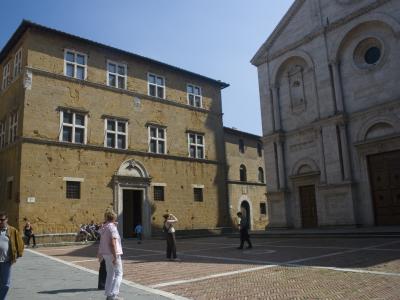
Palazzo Piccolomini is the largest building on the main square of Pienza, a small town in southern Tuscany that was reshaped in the 1460s by Pope Pius II, born Enea Silvio Piccolomini, who had spent his childhood in the village of Corsignano on this site. When he became pope in 1458, he decided to rebuild his birthplace as an ideal Renaissance town, renamed Pienza after himself, and he entrusted the work to the architect Bernardo Rossellino. In a few years the project produced a cathedral, a bishop’s palace, a town hall and this palace, which were arranged around a trapezoid square so that they could be seen from the best angles. The historic centre of Pienza is a UNESCO World Heritage site, and the palace is the chief example of what Pius wanted.
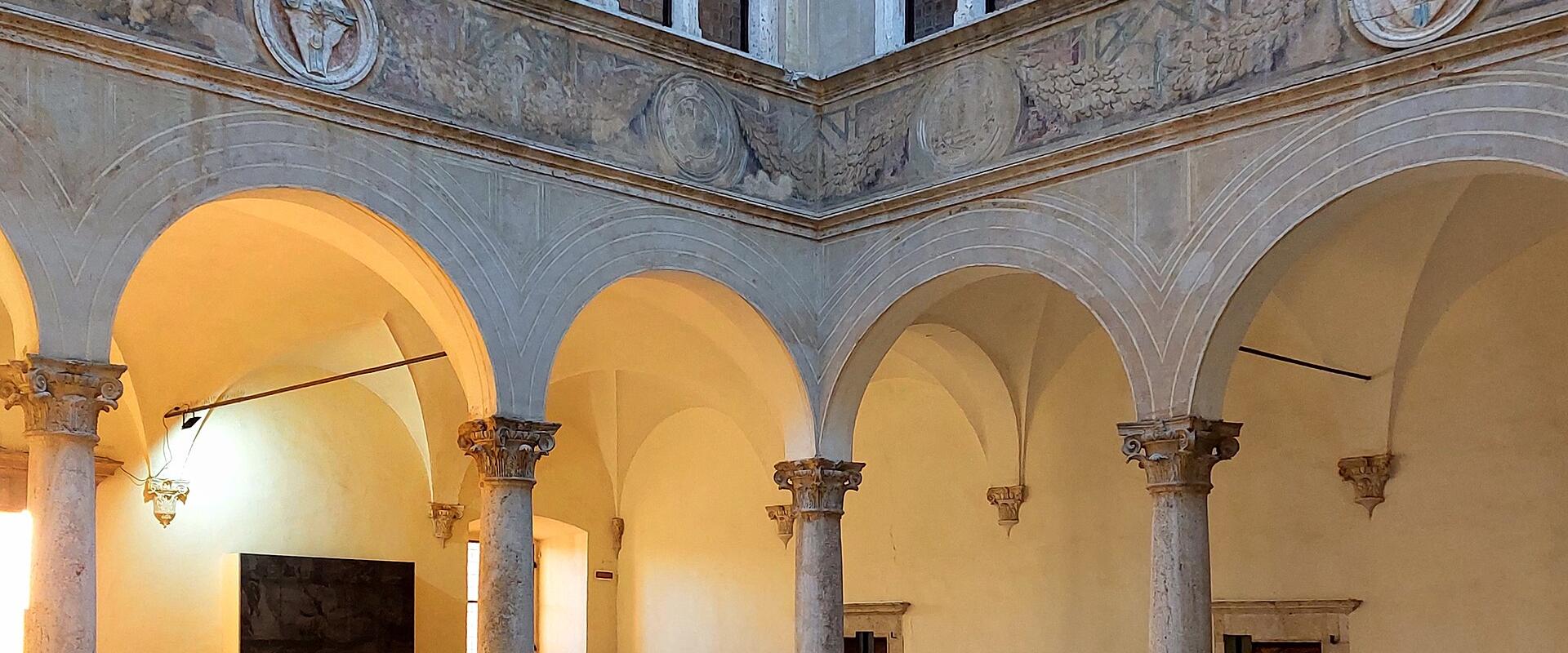
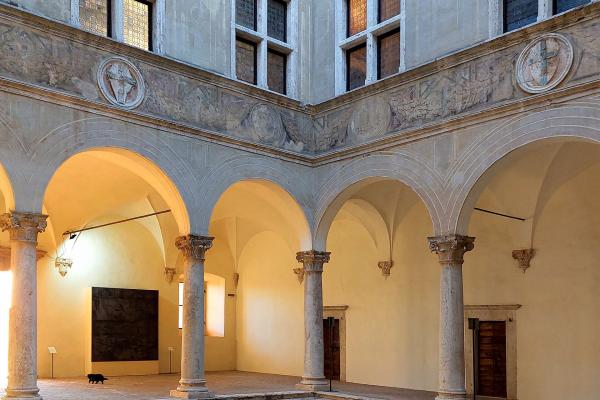
The palace was built for the pope’s family, and its design drew on the Palazzo Rucellai in Florence by Leon Battista Alberti. The facade is of three storeys, with a regular pattern of windows, a stone cornice and a rusticated base, and the whole composition has an ordered, classical look. Inside, a courtyard surrounded by columns leads to staircases and rooms that remained in the hands of the Piccolomini family for centuries, until the last descendant died in 1962 and left it to the public. Guided visits take people through the rooms, which are furnished with period pieces, arms, tapestries, paintings and porcelain, and include the library, the armoury and the private apartments. The Pope’s bedroom is one of the highlights, and the chance to see where the pope slept gives the visit a personal note.
At the back of the palace, the hanging garden is the best-known feature. A loggia with three tiers of arches opens onto a terraced garden, laid out in the Italian style with box hedges and gravel paths, and from here you look out over the Val d’Orcia toward Monte Amiata. The view of the valley with its rolling hills, cypress lines and farms has become one of the classic images of Tuscany, and it is the reason many visitors come. The garden is small, but it gives a sense of how the Renaissance wanted architecture and landscape to work together.
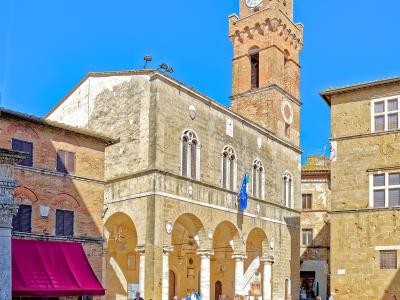
Tickets are sold for a guided tour, and opening days vary through the year, so check ahead and consider booking. The palace stands beside the Cathedral of Santa Maria Assunta, the Palazzo Vescovile, the Palazzo Comunale and Piazza Pio II, so everything is within a few steps, and the Belvedere di Pienza is a short walk. Pienza is easily visited in half a day, and the palace suits those interested in Renaissance architecture, in the Piccolomini family and in the landscape of the Val d’Orcia.
Categories
More photos coming soon
Nearby Attractions
Other places to visit in Pienza
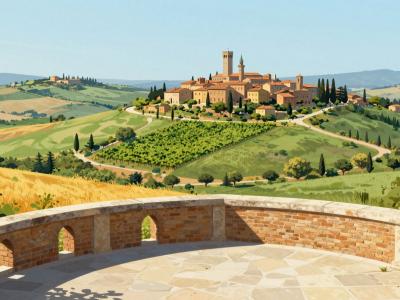
Belvedere di Pienza
Outdoor viewpoint overlooking Tuscan hills
Free Hillside Trails · Scenic Viewpoints
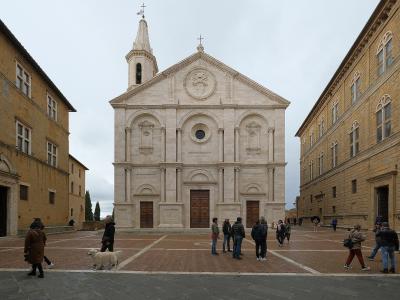
Cathedral of Santa Maria Assunta
Renaissance cathedral with tripartite travertine facade
Architectural Monuments · Cultural Tours
Palazzo Vescovile
Diocesan Museum housing medieval Sienese art
Cultural Tours · Historic Palaces
Piazza Pio II
Renaissance ideal city square in Pienza
Free Architectural Monuments · Historic Towns
Questions people ask
Quick Facts
Best Time to Visit
Visit between April and June or September and October for mild temperatures and fewer crowds.