







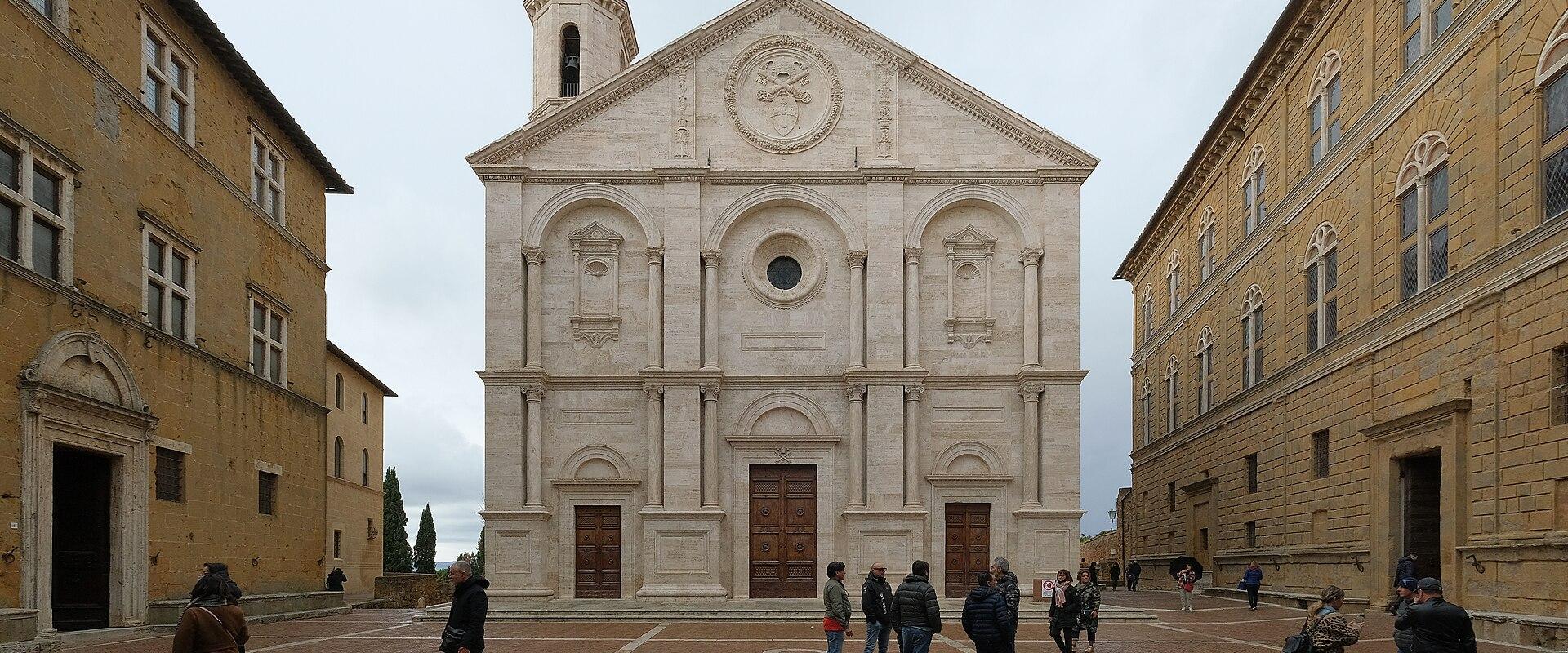
Cathedral of Santa Maria Assunta
Renaissance cathedral with tripartite travertine facade
- Where
- Pienza, Tuscany
- Directions
- Directions
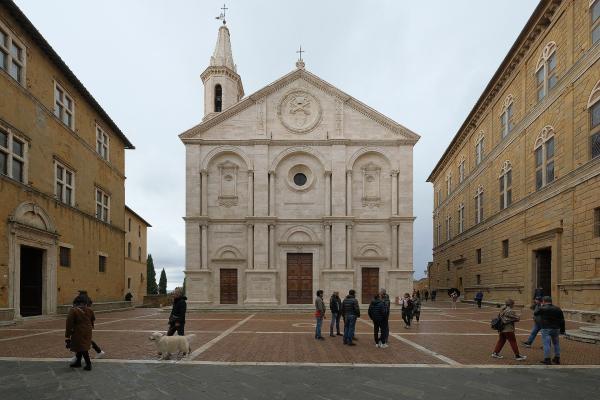
The Cathedral of Santa Maria Assunta in Pienza is a Renaissance-era structure located in the city center, on the main square, next to Palazzo Borgia and Palazzo Piccolomini. It is the centerpiece of one of the earliest attempts in Europe to build an ideal town according to Renaissance principles. The village of Corsignano was the birthplace of Enea Silvio Piccolomini, who was elected Pope Pius II in 1458 and decided to transform his home town into a model papal residence, renamed Pienza in his honor. The architect he chose, Bernardo Rossellino, a Florentine pupil of the humanist Leon Battista Alberti, built the cathedral between 1459 and 1462 on the site of the ancient Pieve di Santa Maria, the old parish church of the village.
The cathedral was commissioned by Pope Pius II and reflects his own taste and wishes. Pius had traveled widely in northern Europe, and he admired the German hall churches he had seen, in which the nave and aisles rise to the same height and the space flows uninterrupted, filling the interior with light. He asked for a similar design here, and the result is a building with an unusual mix: a classical, Renaissance facade and a Gothic-style interior. The building features a tripartite travertine facade, divided into three sections by columns, and the facade bears the Piccolomini coat of arms, with its crescent moons, and the papal keys. The facade has lines drawn from Gothic and classical sources, and the pale stone glows in the Tuscan sun.
Inside, three aisles of equal height, with slender clustered columns and cross vaults, create a bright and airy interior with an apse divided into three chapels. Large windows with clear glass fill the space with light, in contrast to the dim interiors of most medieval churches. The cathedral houses significant artworks by prominent Sienese painters, including Giovanni di Paolo, Matteo di Giovanni and Vecchietta, whose altarpieces were commissioned by the pope for each of the apse chapels, with the Assumption of the Virgin by Vecchietta in the center. These artistic treasures reflect the cultural flourishing of Pienza during the 15th century.
The cathedral has a famous structural problem. Because the ground beneath the apse is unstable, part of the building has been sinking since it was built, and cracks run through the floor and walls, so the structure has needed repeated repairs and reinforcement. The flaw is visible as a pronounced tilt in the floor near the apse, and guides often point it out. It is a reminder that even a carefully planned ideal city could not fully escape the realities of the hillside on which it was built.
As an active place of worship and a component of a UNESCO World Heritage site, the cathedral is generally accessible to the public, though access may be restricted during mass times. Modest dress is expected. Visitors are advised to allocate time to appreciate the harmonious proportions of the interior space and the altarpieces. Exploring the Cathedral of Santa Maria Assunta offers insight into Pienza’s architectural and artistic heritage. It complements visits to other landmarks in Pienza, such as the Piazza Pio II, one of the finest Renaissance squares in Italy, and the Palazzo Piccolomini, the pope’s palace, with its hanging garden and view over the Val d’Orcia, as well as the Belvedere di Pienza, a short walk away.
More photos coming soon
Nearby Attractions
Other places to visit in Pienza
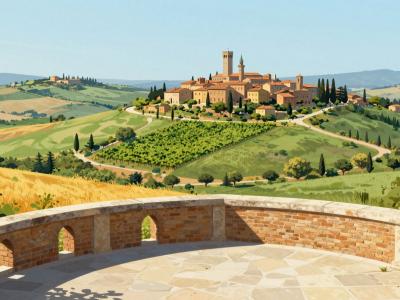
Belvedere di Pienza
Outdoor viewpoint overlooking Tuscan hills
Free Hillside Trails · Scenic Viewpoints
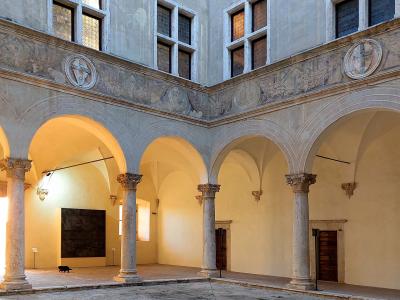
Palazzo Piccolomini
15th-century Renaissance palace built for Pope Pius II
Art Museums · Historic Palaces
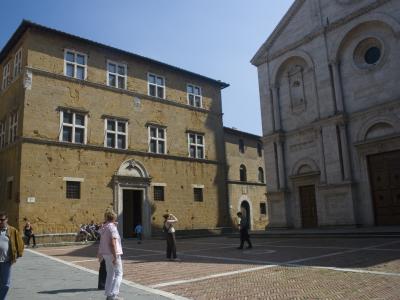
Palazzo Vescovile
Diocesan Museum housing medieval Sienese art
Cultural Tours · Historic Palaces
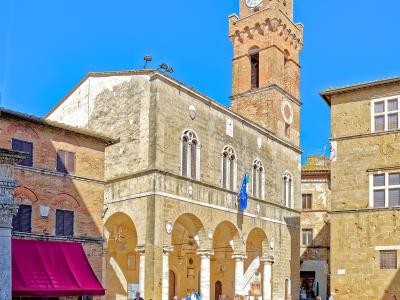
Piazza Pio II
Renaissance ideal city square in Pienza
Free Architectural Monuments · Historic Towns
Questions people ask
Quick Facts
Best Time to Visit
Visit between April and June or September and October for mild temperatures and fewer crowds.