







- Where
- Pienza, Tuscany
- Directions
- Directions
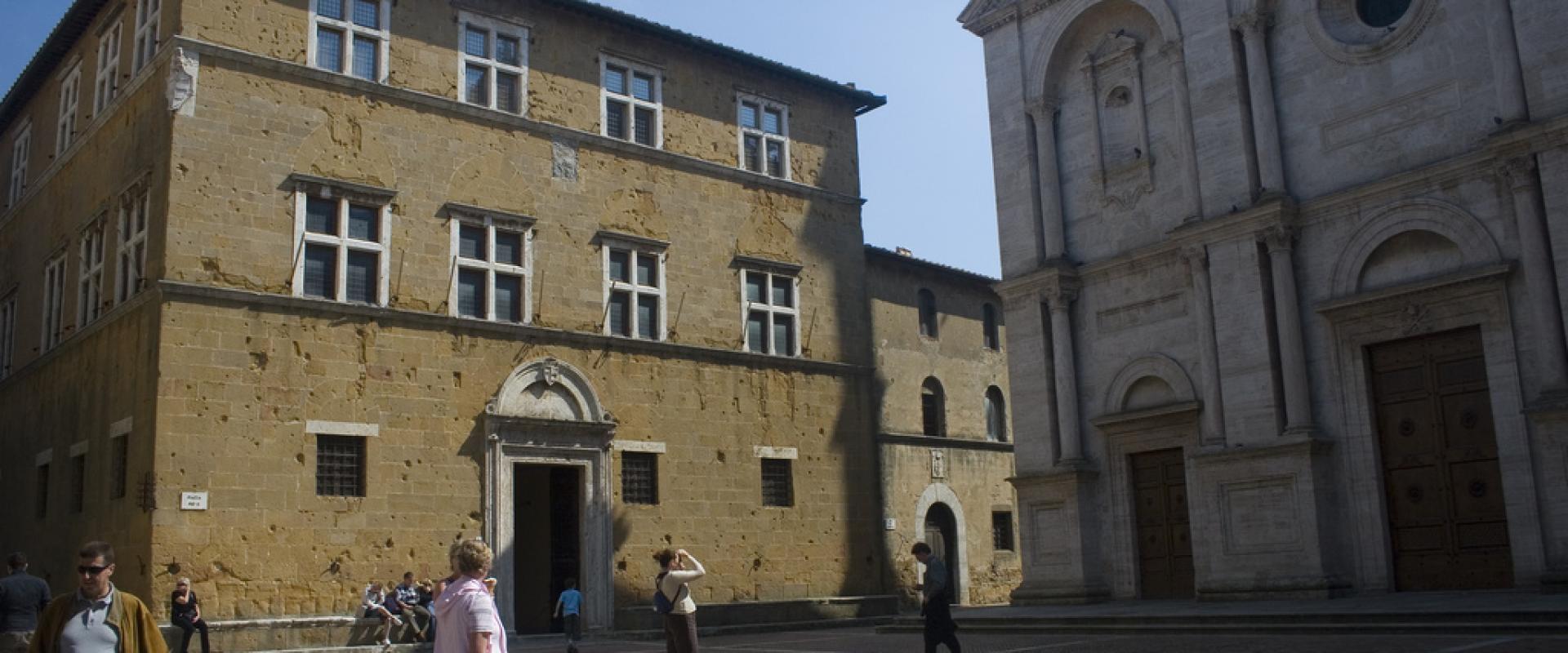
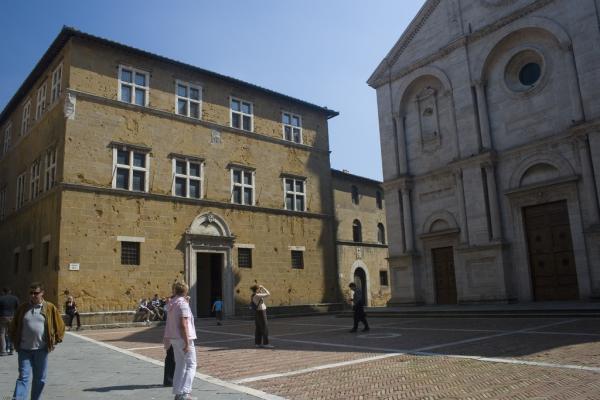
The Palazzo Vescovile in Pienza, also known as Palazzo Borgia, stands on the left side of Piazza Pio II, directly facing the Palazzo Piccolomini, and it forms part of the monumental group of buildings around the square and the cathedral. It belongs to the urban renewal project that Pope Pius II, born Enea Silvio Piccolomini, began in 1459 and that was carried out under the architect Bernardo Rossellino, who turned the village of his birth into a Renaissance ideal city. The bishop's palace was part of that plan, since Pienza was made a bishopric by the pope.
The history of the building is linked to one of the most famous families of the Renaissance. The ancient Gothic palace that stood on the site was donated by Pope Pius II to Cardinal Rodrigo Borgia, his closest collaborator and the Vice-Chancellor of the Catholic Church, who later became Pope Alexander VI. Borgia restored the building in a style that blended with Rossellino's scheme, which is why it is also known as the Borgia palace. It was later used as the residence of the bishops of Pienza, and the front faces the square with an austere, well-proportioned facade.
Today the Palazzo Vescovile houses the Museo Diocesano di Pienza, the Diocesan Museum, which displays a collection of medieval and modern art from the Cathedral and the ancient Diocese of Pienza, arranged chronologically across eleven rooms. It is a small museum, but it holds some important works of Sienese painting, and it gives a clear picture of how art developed in the countryside of southern Tuscany. Notable artworks include Pietro Lorenzetti’s Madonna di Monticchiello, a painting of about 1320 in which the Virgin and Child are shown with great tenderness and a delicate sense of volume, and Bartolo di Fredi’s Madonna della Misericordia, in which the Virgin shelters the faithful under her cloak. There are also works connected with Vecchietta’s workshop, the Sienese painter and sculptor, and with Luca Signorelli’s school.
Among the most unusual objects is a fourteenth-century cope, a ceremonial cloak, made of English embroidery, which was presented to Pius II and is considered a masterpiece of medieval needlework. Vestments, reliquaries, goldwork, tapestries and sculptures complete the collection, and the display shows how the pope's gifts enriched the new cathedral.
The museum is a quiet place, usually visited in about an hour. Check opening hours and ticket arrangements locally, since a small museum may open only on certain days, particularly in winter, and combined tickets may cover several sites in the town. From the building, a short walk leads to the Belvedere and the garden of Palazzo Piccolomini, with their view of the Val d'Orcia. The cathedral, with its Gothic interior and its Sienese altarpieces, is next door. Pienza is a beautiful town in all seasons, and the museum is a good stop on a rainy or very hot day.
Categories
More photos coming soon
Nearby Attractions
Other places to visit in Pienza
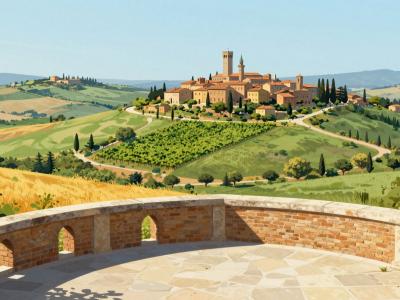
Belvedere di Pienza
Outdoor viewpoint overlooking Tuscan hills
Free Hillside Trails · Scenic Viewpoints
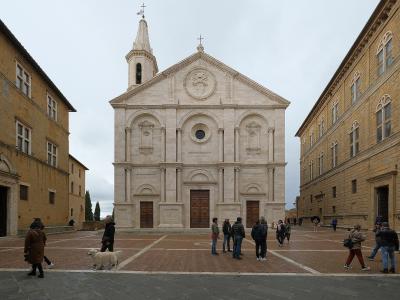
Cathedral of Santa Maria Assunta
Renaissance cathedral with tripartite travertine facade
Architectural Monuments · Cultural Tours
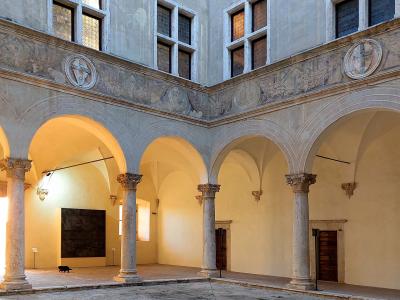
Palazzo Piccolomini
15th-century Renaissance palace built for Pope Pius II
Art Museums · Historic Palaces
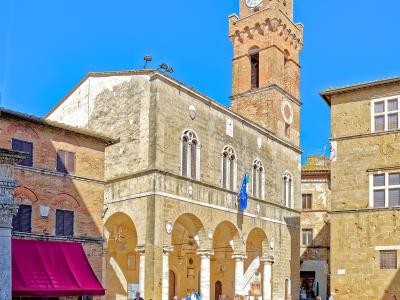
Piazza Pio II
Renaissance ideal city square in Pienza
Free Architectural Monuments · Historic Towns
Questions people ask
Quick Facts
Best Time to Visit
Visit between April and June or September and October for mild temperatures and fewer crowds.