







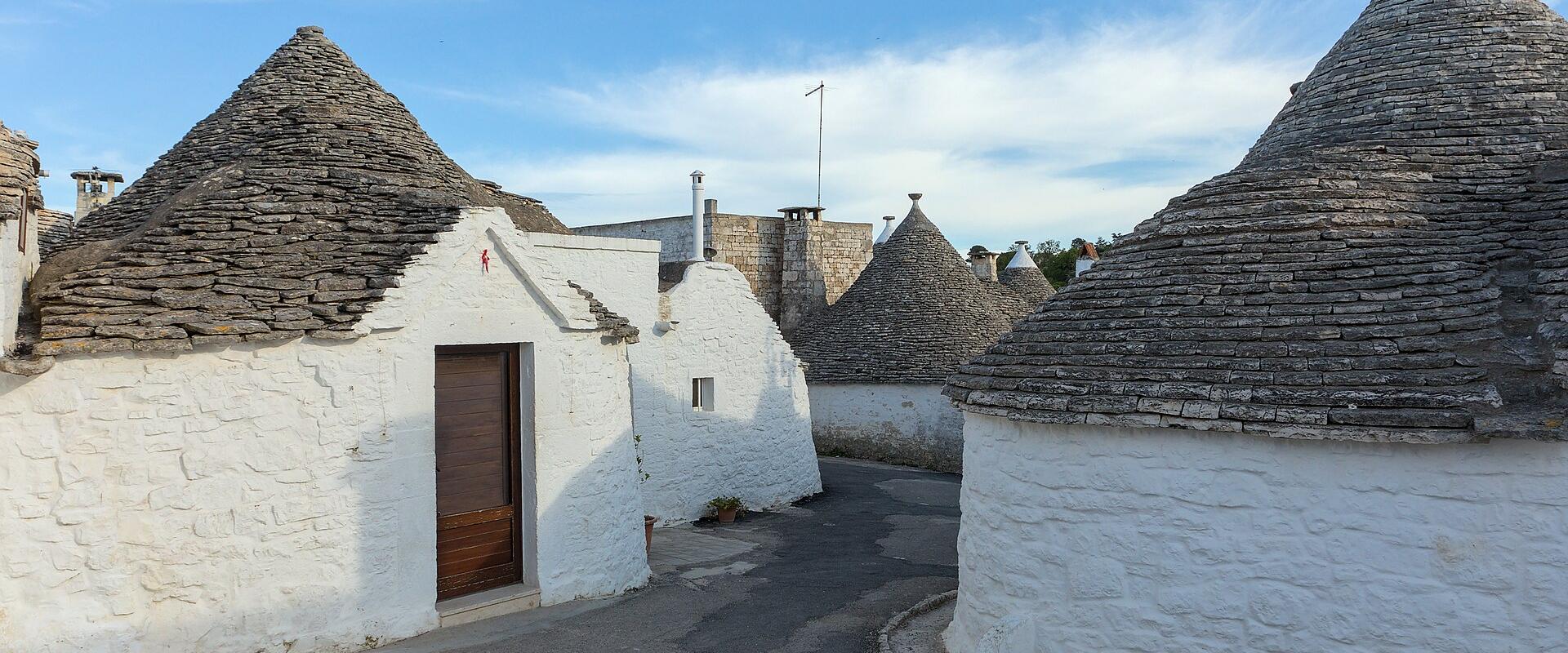
Rione Aia Piccola
Historic trulli district on Alberobello's southeastern slope
- Where
- Alberobello, Apulia
- Directions
- Directions
Rione Aia Piccola is one of the two historic trulli districts of Alberobello, in Puglia, in the south-east of Italy, and it lies on the south-eastern slope of the town. The name translates as the Small Yard District. An aia is a threshing floor or yard, a flat open space where grain was beaten, and tradition says that this district took its name from an old yard that was smaller than a nearby one used mainly for collecting tithes. The district belongs to the UNESCO World Heritage listing of Alberobello's trulli, the traditional dry stone huts with conical roofs.
The trullo is the building type that has made the town famous. Each one is a single or double cell with thick walls of limestone and a roof made of overlapping stone slabs, laid without mortar, forming a cone that is often topped by a small pinnacle in stone. White symbols, some religious and some magical, are painted on the cones. The craft was practised by local builders using the stone that farmers cleared from their fields, and it needed no tools beyond hammers. A popular story says that the dry stone method was chosen so that the houses could be dismantled quickly when tax inspectors came, since permanent buildings were taxed, though historians treat the tale as a legend.
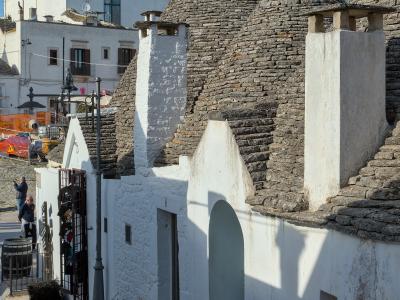
Visitors exploring Rione Aia Piccola can experience the authentic residential character of Alberobello, distinct from the more commercialised area of Rione Monti on the opposite hill, where most of the souvenir shops and restaurants are. Here the lanes are narrow and quiet, and the trulli are mainly used as houses, with washing, flowerpots and doors open to the street. Clusters of trulli have been preserved, and walking up and down the stepped alleys gives a feeling of what daily life was like in the region, with its simple living conditions and its ingenuity in making use of local materials. The scale is small, and the effect is of a village built out of stone cones.
Because people live here, visitors should be considerate, keeping voices low, not entering private property, and asking before taking photographs of residents. Some trulli have been converted into small shops or guest accommodation, and a few can be visited as museums. The Trullo Sovrano, the largest and most important trullo of the town, stands a short distance away near the church of Sant'Antonio, and the Museo del Territorio is nearby.
The best time to visit is early in the morning, when the light is soft and the district is empty, or in the evening, when the stone turns warm in the setting sun. In summer, the midday heat and the crowds in the town make a visit less pleasant. Wear comfortable shoes, because the paving is uneven. A visit takes about an hour, and it is easy to combine with the neighbouring district and with day trips to Locorotondo and Martina Franca.
Categories
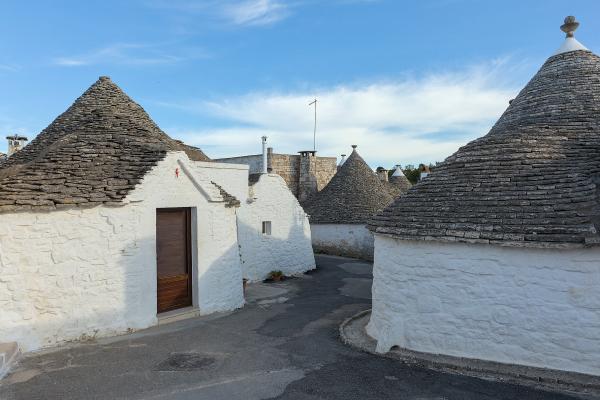
More photos coming soon
Nearby Attractions
Other places to visit in Alberobello
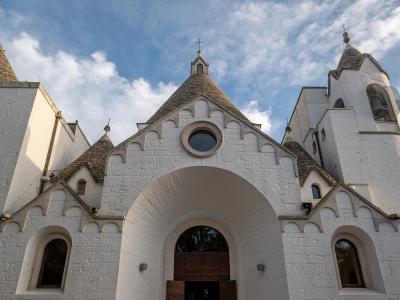
Church of Saint Anthony of Padua
World's only trullo-style church in Alberobello
Architectural Monuments · Historic Churches
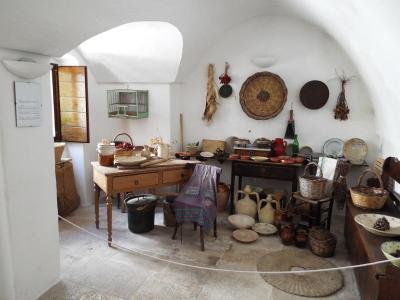
Museo del Territorio
15 interconnected trulli showcasing local history
History & Heritage · Museums & Culture
Rione Monti
UNESCO-listed district of 1,000 dry-stone trulli
Architectural Monuments · Cultural Tours
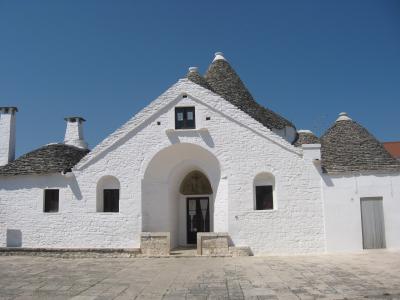
Trullo Sovrano Excursions
14m conical dome, raised floor, mortar-built trullo
Architectural Monuments · Cultural Tours
Questions people ask
Quick Facts
Best Time to Visit
Visit between April and June or September and October for mild temperatures and fewer crowds.