







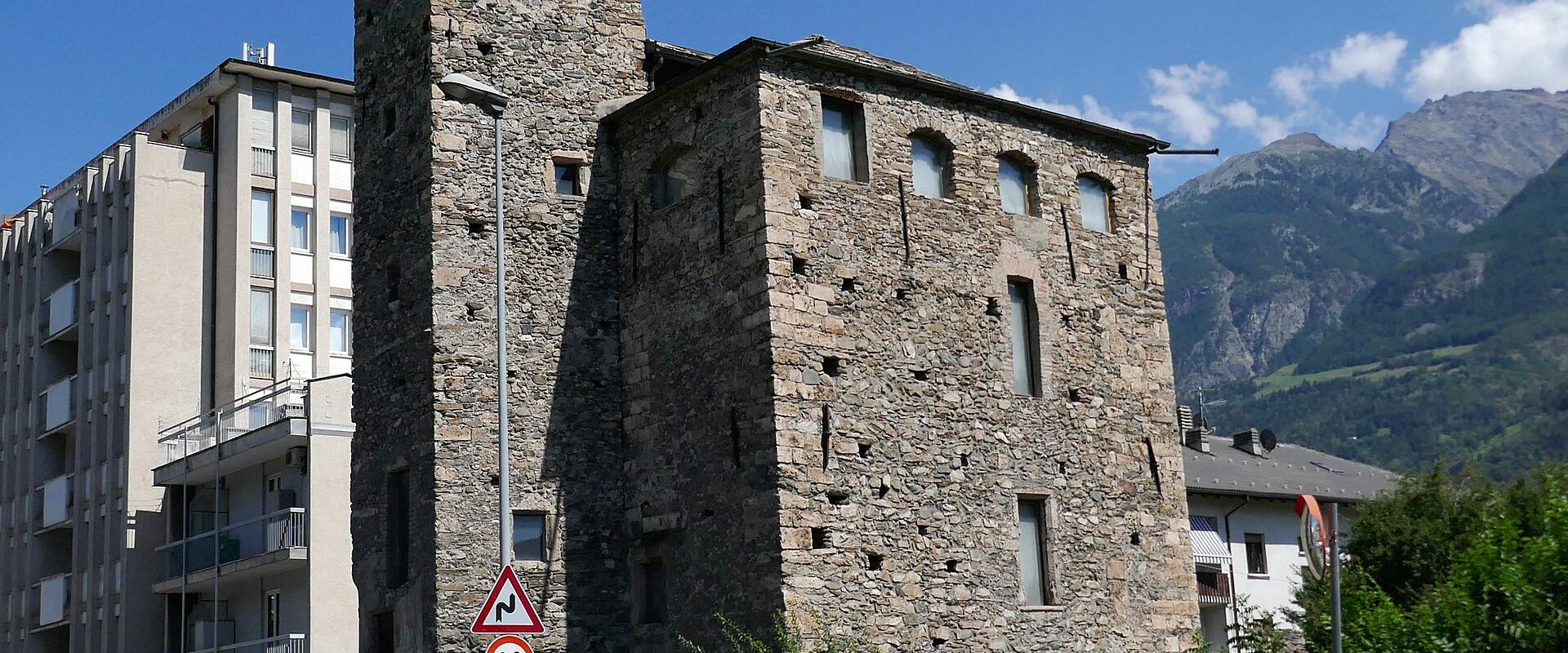
Torre del Lebbroso (Tour du Lépreux)
Tower on the Roman walls that inspired a Xavier de Maistre novel
- Where
- Aosta, Piedmont and Aosta Valley
- Directions
- Directions
The Torre del Lebbroso, the Leper's Tower or Tour du Lépreux in French, stands on the western side of the Roman walls of Aosta, at the corner of Via Jean-Boniface Festaz and Via Jean-Joconde Stévenin. It is one of the many towers that rise along the circuit of the walls of Augusta Praetoria, and it owes its fame less to its architecture than to the sad story of one of its inhabitants.
The tower was built on the remains of a Roman tower of the city walls, and the restoration at the end of the 19th century exposed the stepped Roman foundations. In the Middle Ages it was known as the Tour Friour, after the De Friour family who lived in it and who also held the nearby Porta Decumana, the western gate of the Roman town, which has since disappeared. The family is first recorded in a document of 1191. In the 15th century a tall square medieval tower was added, reached by an external staircase under a roof and holding a spiral stair that led to the upper floors. Most of the old Roman windows were later walled up, but those that remain still light the interior. After a period of abandonment, people in the town called it the Tour de la frayeur, the tower of fear.
Its present name dates from the late 18th century. In 1773 the tower was bought by the Order of Saints Maurice and Lazarus, and from 1773 to 1803 it housed Pietro Bernardo Guasco from Oneglia, a man with leprosy who was shut inside with his sister, to keep the disease from spreading in the city, until his death. His isolation inspired the short novel Le Lépreux de la cité d'Aoste by the Savoyard writer Xavier de Maistre, published in 1811, a dialogue between the sick man and a soldier that became widely read across Europe.
In 1890 the building was restored by the regional monuments office for Piedmont and Liguria, led by Alfredo d'Andrade. Today it belongs to the Autonomous Region of the Aosta Valley, which uses it as an exhibition space, so the interior can be seen during shows.
The tower suits readers and visitors interested in the human stories behind Aosta's monuments, and it is a natural stop on a walk around the Roman walls together with the Torre di Bramafam and the Tour du Pailleron.
Categories
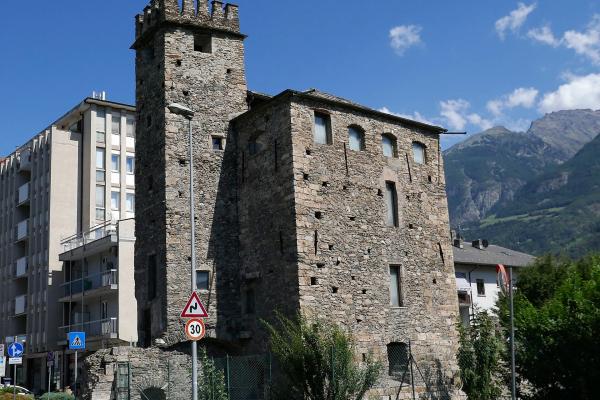
More photos coming soon
Nearby Attractions
Other places to visit in Aosta
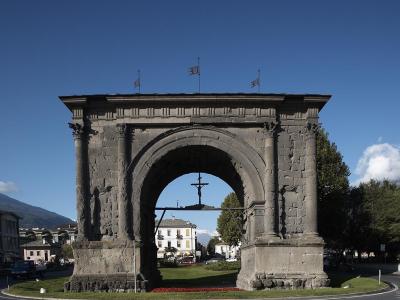
Arch of Augustus
25 BC triumphal arch with mixed Corinthian-Doric styles
History & Heritage · Urban Exploration
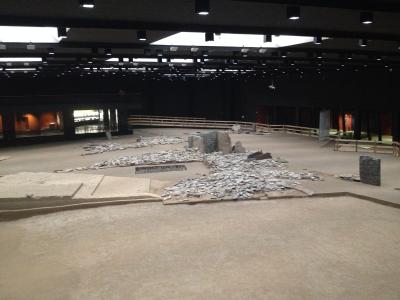
Area Megalitica di Saint-Martin-de-Corléans (MegaMuseo)
Prehistoric sacred site and tombs found in 1969, now a museum
Ancient Ruins · Archaeological Museums
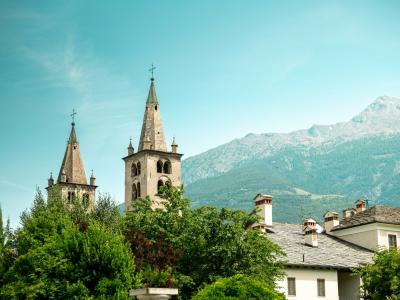
Basilica of Saint Ours
9th-century basilica with 12th-century Romanesque cloister
Architectural Monuments · Historic Churches
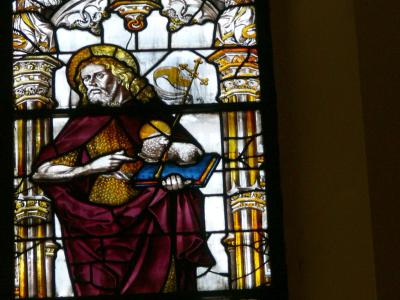
Cathedral of Saint John the Baptist
11th-century Romanesque cathedral with 11th-century frescoes
Architectural Monuments · Historic Churches
Questions people ask
Quick Facts
Best Time to Visit
Visit between June and September for hiking or December and March for skiing.