

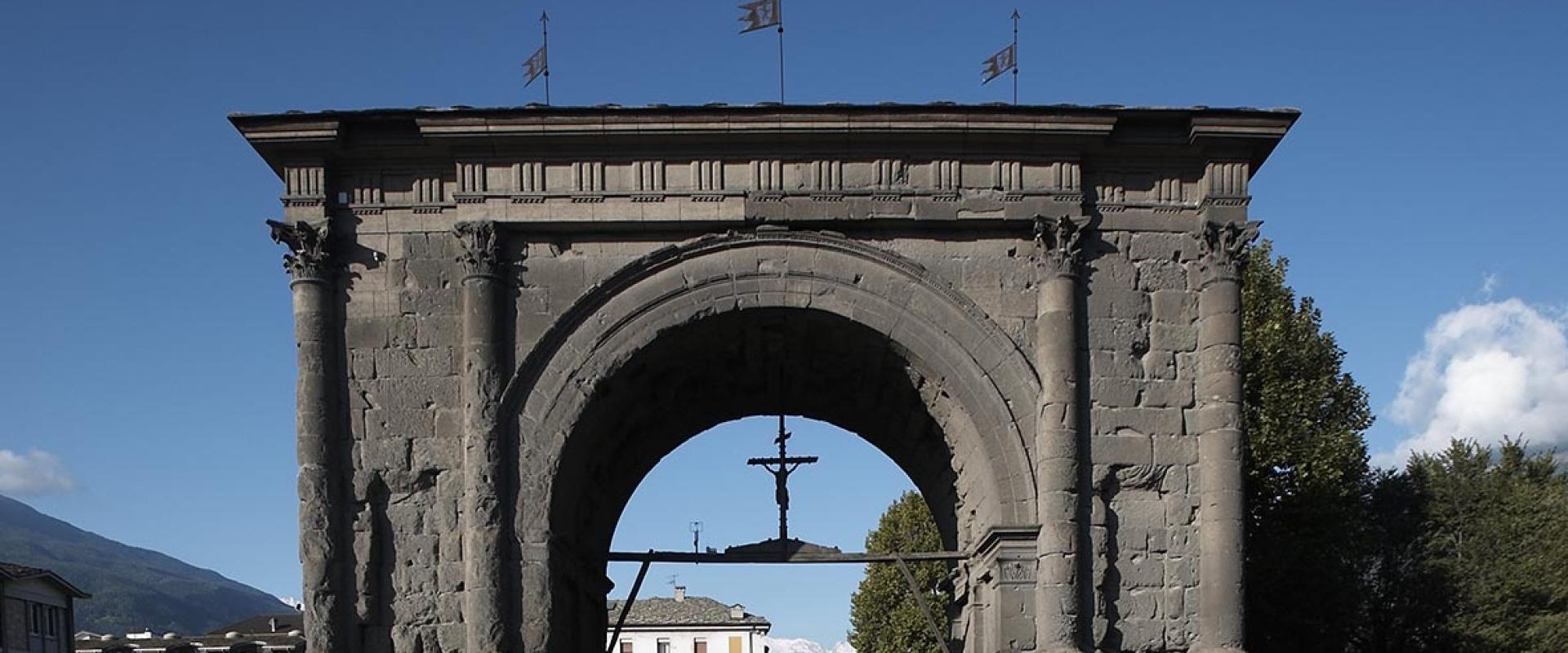
Arch of Augustus
25 BC triumphal arch with mixed Corinthian-Doric styles
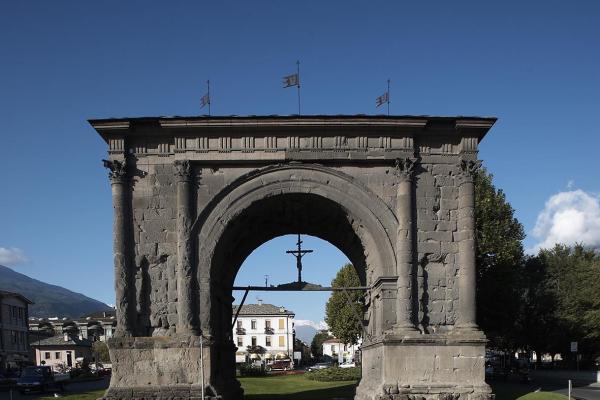
The Arch of Augustus in Aosta is an ancient Roman triumphal arch erected in 25 BC to commemorate the Roman victory over the Salassi tribe. Designed by Aulus Terentius Varro Murena, the monument marks the establishment of the Roman colony Augusta Praetoria, forming the foundation of modern Aosta. Constructed from conglomerate, the arch features a single barrel vault with a height of 11.4 meters. Architecturally, it displays a distinctive mix of styles, combining Corinthian engaged columns with a Doric entablature.
Throughout history, the arch has served various functions. In the Medieval period, it was known as the "Saint-Voût" due to an image of Jesus housed within. It later served as a noble family's residence in the 12th century and contained a fortification for crossbowmen in 1318. Structural modifications include the replacement of the attic with a slate roof in 1716 to prevent leaks. A major restoration and consolidation in 1912, directed by Ernesto Schiaparelli, established its modern appearance.
The arch is located in the historic center of Aosta and is accessible to the public as an open-air monument. It stands as a testament to Roman engineering and the city’s ancient origins. For travelers, the Arch of Augustus offers a tangible connection to the Roman past, situated amidst the medieval and Renaissance buildings of the valley. Exploring the arch provides a starting point for understanding the layered history of Aosta, one of the oldest cities in Italy.
Categories
More photos coming soon
Nearby Attractions
Other places to visit in Aosta


Frequently Asked Questions
Quick Facts
Best Time to Visit
Visit between June and September for hiking or December and March for skiing.