







- Where
- Aosta, Piedmont and Aosta Valley
- Directions
- Directions
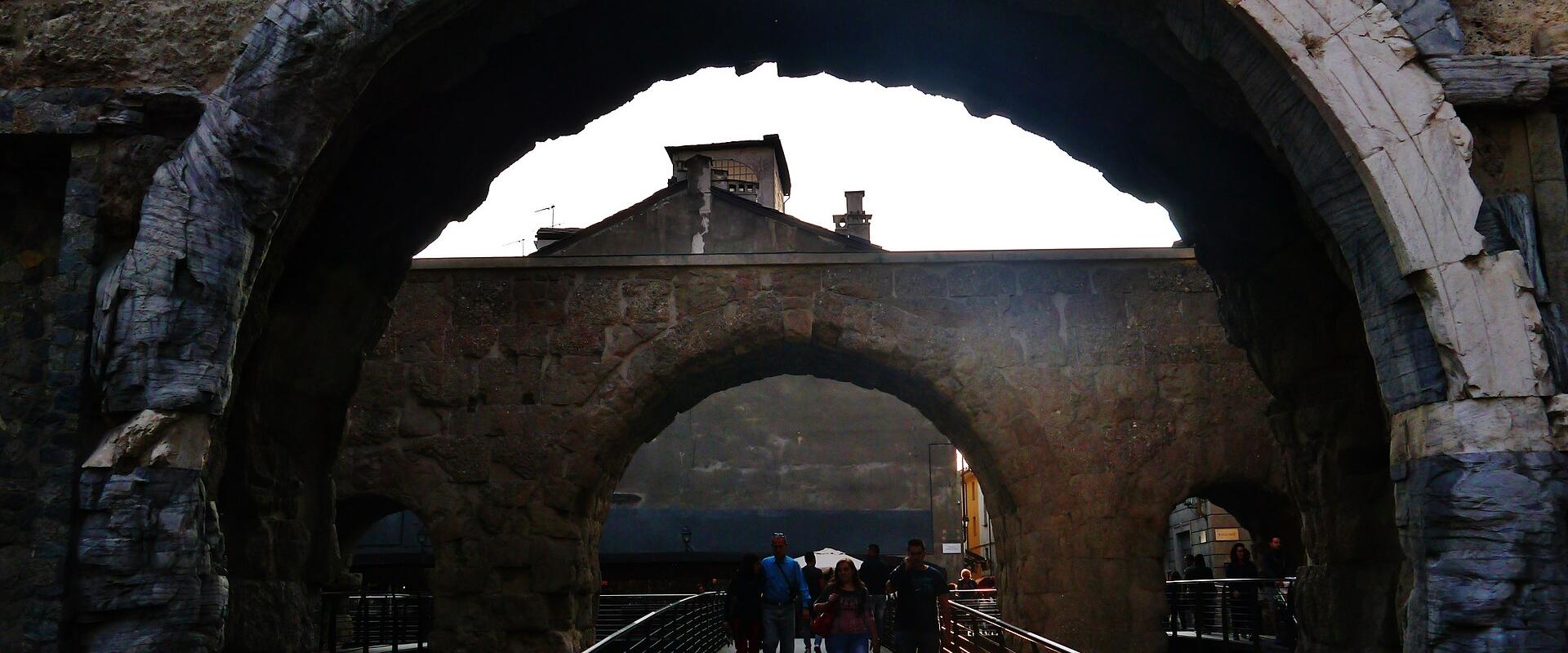
The Porta Praetoria is the main gate of the Roman city of Aosta, in the Aosta Valley in north-western Italy, and it is one of the best-preserved monuments of Roman Augusta Praetoria. The city was founded in 25 BC, after the Romans conquered the Salassi, the Alpine people who controlled the passes, and the emperor Augustus gave his name to the new colony. It was laid out as a rectangle with straight streets and walls, a plan that can still be traced in the old centre, and the gates in the walls marked the entrances to the city. The Porta Praetoria, on the eastern side, was the main gate, facing the road that led to the Great and Little Saint Bernard passes and to Gaul, and it was built in the late 1st century BC. Although it is sometimes described as a triumphal arch, it was a fortified gate designed for defence as well as ceremony.
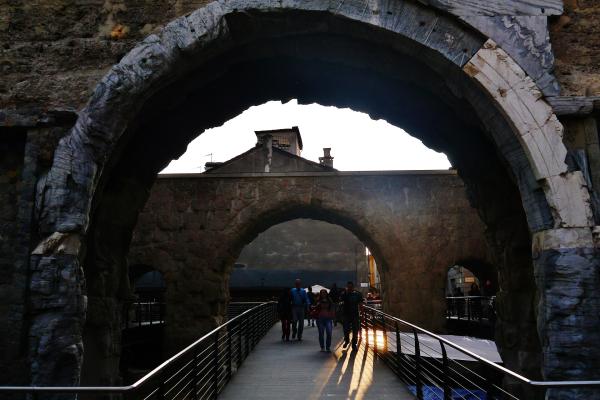
The gate has a distinct design, with a triple opening of three arches, the central one for vehicles and two smaller ones for pedestrians, made in a facade of local stone. Behind it lies a courtyard, a defensive space that was closed by a second gate at the inner end, so that an enemy who forced the outer gate would find himself trapped in a killing zone, under fire from the walls and towers on either side. The stone used came from the nearby quarries, and the lower part of the facade is well preserved, with its pilasters and the traces of decorative elements, including a frieze, which gives an idea of the former splendour. Some visitors describe the acanthus decoration in the details, but the principal impression is of massive strength.
Over the centuries, the gate was modified. In the Middle Ages, it was incorporated into a defensive complex and used for different purposes, and a chapel and houses were built into it, so that its original form was partly hidden. Excavations and restoration in the 19th and 20th centuries cleared the surroundings and revealed the Roman structure, and the gate now stands in a small open area, beside the walls, as a well-preserved monument. It is a good place to see how Roman engineers laid out a frontier city in the Alps, and it stands as one of the most visible traces of the Roman past in the valley.
The Porta Praetoria shows the engineering prowess of the Roman Empire in the Alps. The monument lies in the historic centre, and it is easily reached on foot. It is open to the public throughout the year, and there is no fee to view the exterior, though the interior courtyard may be accessible only at certain times. A visit takes only a few minutes, but it is part of a walk through Roman Aosta, which has often been called the Rome of the Alps. Other nearby landmarks are the Arch of Augustus, the Roman Theatre of Aosta with its tall surviving wall, the Amphitheater, the Aosta Cathedral, the Musée d’Art et d’Histoire, the Museo Archeologico Regionale, the Cathedral of Saint John the Baptist and the Basilica of Saint Ours, while the Fort de Bard is farther down the valley. The gate suits those who like ancient history and who want to visit a less crowded destination in Italy.
Categories
More photos coming soon
Nearby Attractions
Other places to visit in Aosta
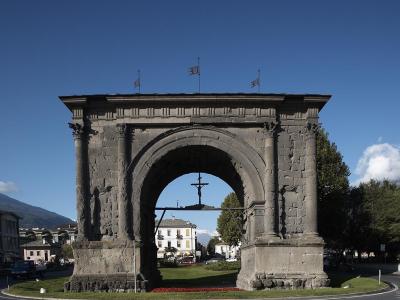
Arch of Augustus
25 BC triumphal arch with mixed Corinthian-Doric styles
History & Heritage · Urban Exploration
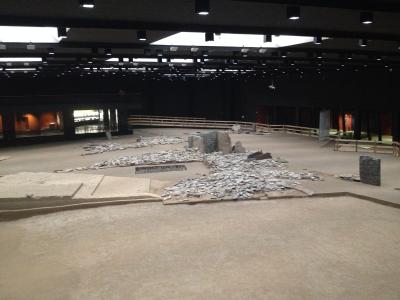
Area Megalitica di Saint-Martin-de-Corléans (MegaMuseo)
Prehistoric sacred site and tombs found in 1969, now a museum
Ancient Ruins · Archaeological Museums
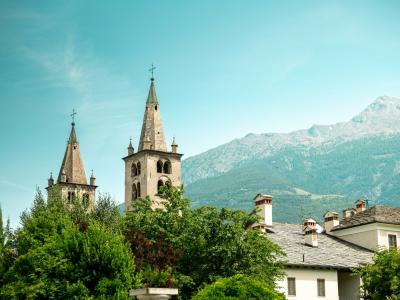
Basilica of Saint Ours
9th-century basilica with 12th-century Romanesque cloister
Architectural Monuments · Historic Churches
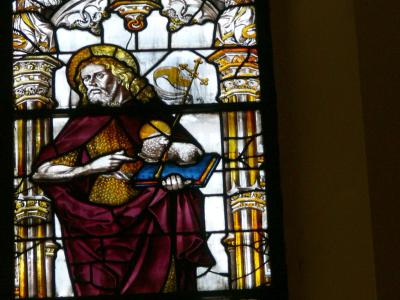
Cathedral of Saint John the Baptist
11th-century Romanesque cathedral with 11th-century frescoes
Architectural Monuments · Historic Churches
Questions people ask
Quick Facts
Best Time to Visit
Visit between June and September for hiking or December and March for skiing.