







- Where
- Terni, Umbria and Marche
- Directions
- Directions
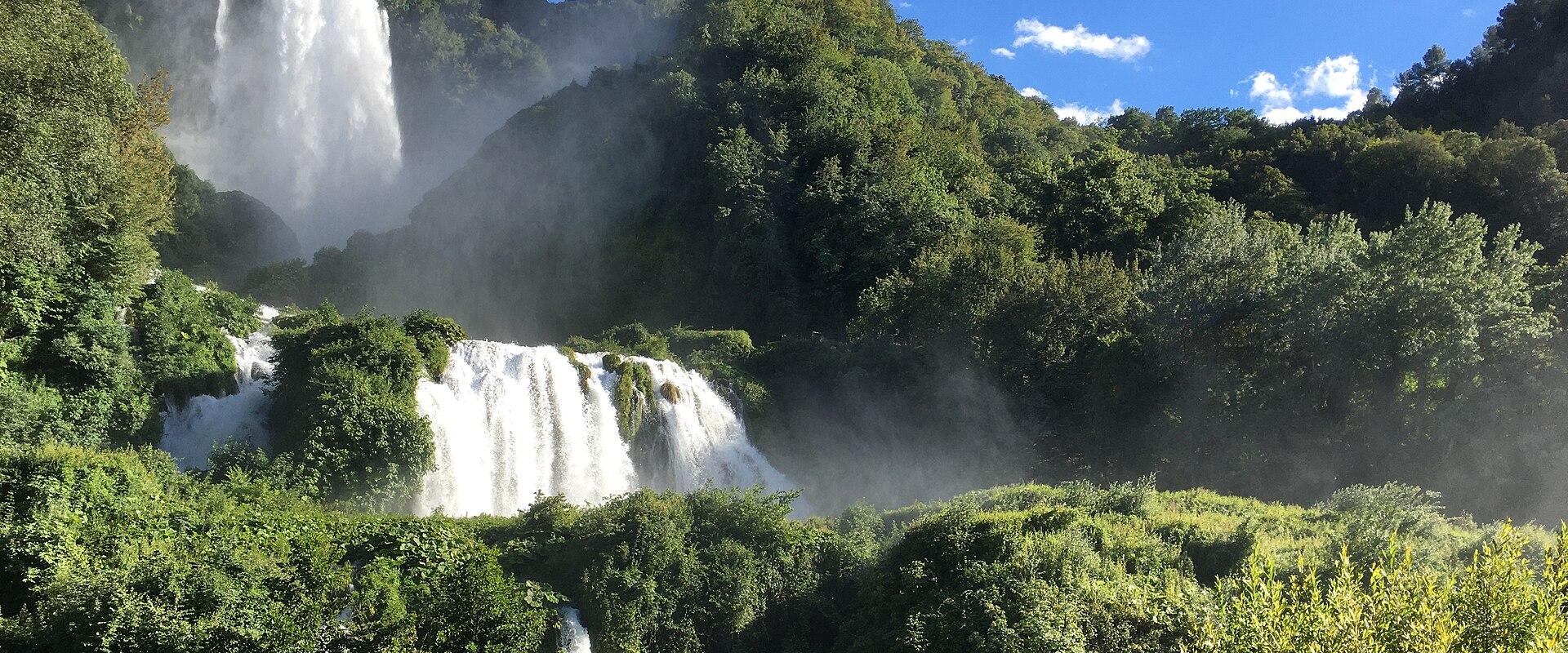
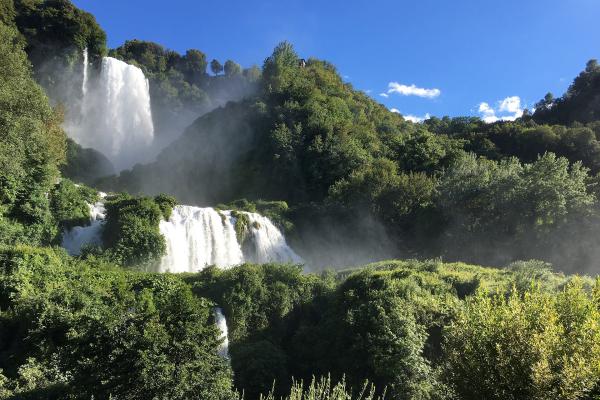
The Marmore Waterfalls, the Cascata delle Marmore, are one of the most spectacular waterfalls in Europe, a three-stage cascade in Umbria, about seven and a half kilometres from Terni, in the Nera River Park, in the Valnerina valley. The waterfall drops a total of 165 metres, in three successive leaps, which makes it, by many accounts, the tallest man-made waterfall in the world, since it is not a purely natural feature but the product of human engineering that is over two thousand years old. The water comes from the Velino river, which rises in the Apennines near Rieti and flows into Lake Piediluco, from where it plunges over the edge of a limestone cliff into the Nera river far below, sending up a cloud of mist and rainbows, and the roar can be heard from far away.
The origin of the falls goes back to Roman times. In 271 BC, the Romans, under the order of Consul Manius Curius Dentatus, ordered the Velino to be diverted into the Nera, by a channel cut through the rock called the Curiano Trench, in order to drain the marshy land in the Rieti plain and to reduce the threat of malaria, since the river used to flood and form swamps. The cut led the water to the edge of the cliff, and the waterfall was born. Over the following centuries, the channel silted up and the area flooded again, and popes and engineers repeatedly worked to improve it: Pope Gregory XII restored the flow in 1422, and in 1545, Pope Paul III had regulating works built, followed by the new channel of the 18th century. The Rieti Valley, once swampy, owes its fertility to these works. The final form of the fall dates from the 18th century, when a new channel designed by Andrea Vici was cut. Lord Byron, who visited in the early 19th century, described it in verse as a hell of waters.
Today the waterfall is regulated for the production of hydroelectric power at the plant that uses the water, and the flow is released according to a timetable, so that the falls are full only at certain times of the day and the year. At other times, the water is diverted and the cliff is almost dry, which is a disappointment for visitors who do not check the schedule, so it is essential to consult the published times of water release before going. There are walking paths that wind through the green woods around the falls, with several viewpoints, among them the lower belvedere, which is close to the foot of the falls and where visitors can feel the spray, and the upper path that climbs through the trees to the top, with bridges and tunnels.
Visitors should wear shoes with a good grip and bring a waterproof jacket, since the paths can be wet, and the visit can be combined with a visit to the nearby town of Terni. In Terni, the San Valentino Basilica, the Museo Civico di Terni and the San Francesco Cathedral are worth seeing, and the Parco Fluviale del Nera offers more walks. Tickets are sold at the entrances, and the prices and hours change with the season. The falls show Roman engineering and the Umbrian natural heritage in Italy. The waterfalls suit families, nature lovers and photographers, and they are best seen when the water is released, in the morning or afternoon.
More photos coming soon
Nearby Attractions
Other places to visit in Terni
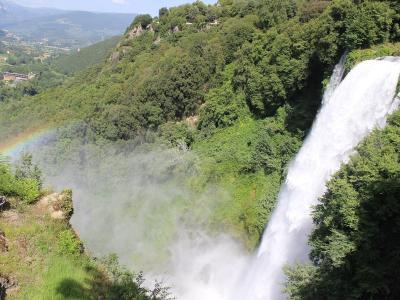
Cascata delle Marmore
Europe's tallest man-made waterfall in Umbria
Free Natural Wonders · Hiking Trails

Museo Civico di Terni
Three-floor museum with detailed archaeological and art e...
Archaeological Museums · Art Museums
Parco Fluviale del Nera
20km protected nature park along the Nera River
Activities & Wellness · Natural Wonders

San Francesco Cathedral
13th-century Franciscan church with plain gabled front
Architectural Monuments · Historic Churches
Questions people ask
Quick Facts
Best Time to Visit
Visit between April and June or September and October for mild temperatures and fewer crowds.