







- Admission
- Free admission
- Hours
- Nighttime visits with modern LED lighting available during the summer
- Where
- Terni, Umbria and Marche
- Directions
- Directions
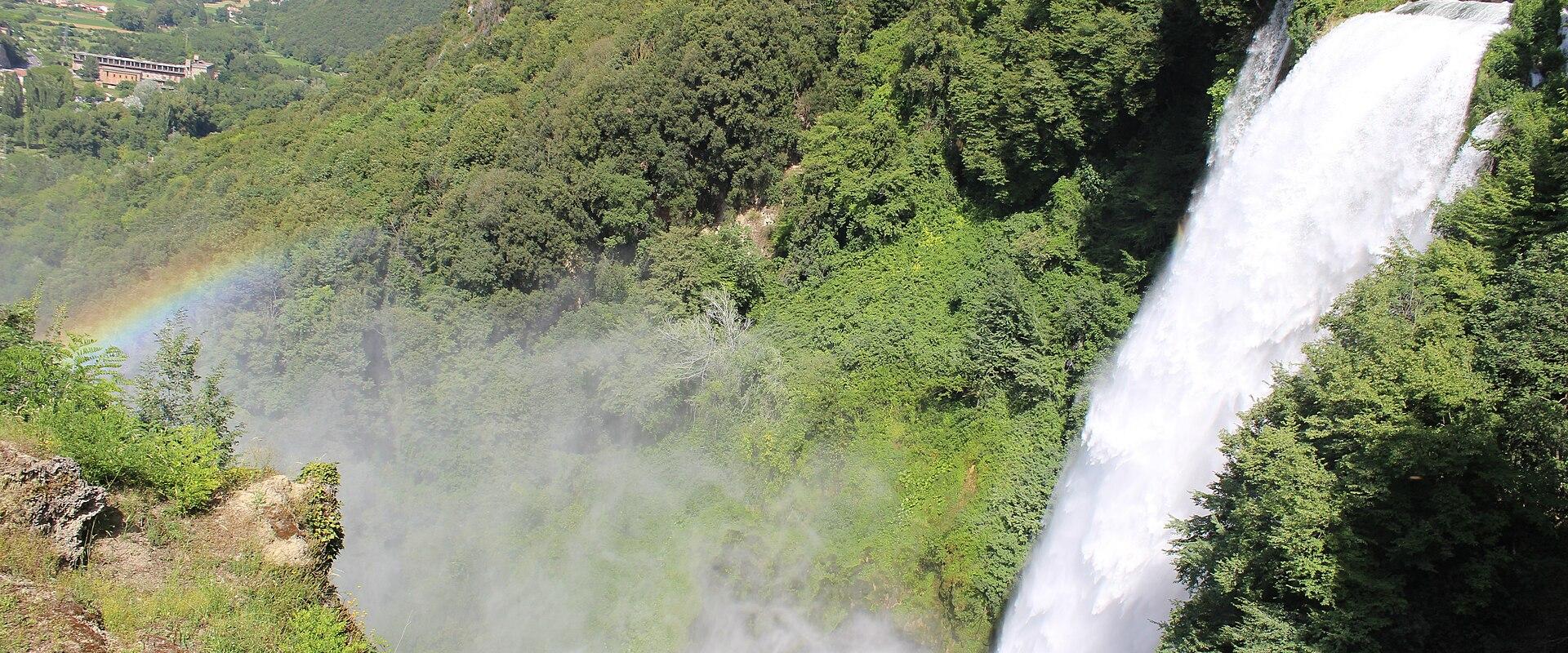
The Cascata delle Marmore, located in the Valnerina valley near Terni within the Nera River Park, is one of the tallest and most famous waterfalls in Europe. It lies in the province of Terni, in southern Umbria, about seven kilometres east of the city of Terni. Formed by the Velino River plunging into the Nera River from Lake Piediluco, the site offers a dramatic natural spectacle, and with a total drop of about 165 meters, in three leaps, it is often described as the highest man-made waterfall in Europe.
The waterfall is not entirely natural. In 271 BC, the Roman consul Manius Curius Dentatus ordered the digging of a channel, the Curiano Cut, to drain the marshes of the Rieti plain by diverting the waters of the Velino over the edge of the cliff into the Nera valley below. The works were repeatedly modified over the centuries, including by the popes, to control floods and the dispute between the cities of Terni and Rieti, and the final form was achieved in the 18th century. Today, the flow is controlled by a hydroelectric power plant, and the water is released over the falls only at certain scheduled times, so the cascade runs at full force on a timetable that varies by day and season, and it is important to check the schedule before going.
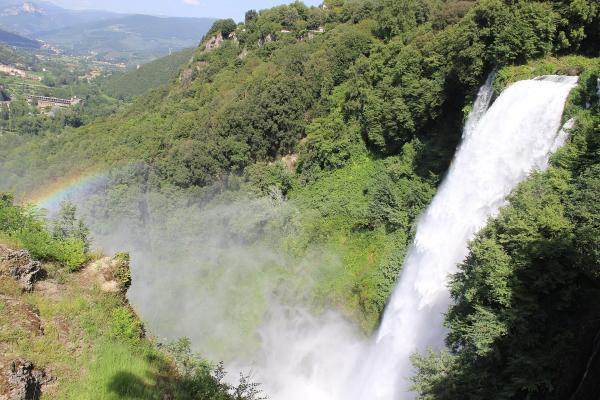
Visitors can explore two primary viewing points: the Upper Belvedere, which provides a view of the first cascade, and the Lower Belvedere, offering a panoramic perspective of the entire fall. These viewpoints are connected by a scenic trail. At the lower viewpoint, the spray is cool and one can feel the power of the water, and a rainbow often forms in the sunlight. A third viewpoint, the Belvedere of the Specola, a small terrace on the cliff, is associated with the English poet Lord Byron, who visited in the early 19th century and described the falls as a scene of terrific beauty in his poem Childe Harold’s Pilgrimage.
The site features six marked trails for hiking and exploration, which wind through woods of holm oak and past rock faces and caves, and the Campacci di Marmore Industrial Archaeological Park, which highlights the history of the water management systems and the industrial development of Terni. The area supports various outdoor activities, including rafting, canyoning and kayaking in the Nera River, which are very popular in the warmer months. During the summer, the site offers nighttime visits illuminated by modern LED lighting, providing a unique visual experience.
A half-day, three to four hours, is the recommended visit duration. You can combine the waterfall with nearby attractions in Umbria for a richer half-day or full-day itinerary, including the city of Terni, the medieval town of Narni and the beautiful Lake Piediluco, in a basin of the Apennines. It is advisable to check local tourism resources for current schedules and ticket prices. Exploring the Cascata delle Marmore offers insight into the natural beauty and engineering history of Umbria. It is an essential stop to appreciate the region’s landscape. The combination of natural power and historical context makes it a memorable destination.
Categories
More photos coming soon
Hours & Fees
- Open
- Nighttime visits with modern LED lighting available during the summer
- Admission
- Free admission
Hours and prices change, especially out of season. Check with the venue before you go.
Nearby Attractions
Other places to visit in Terni
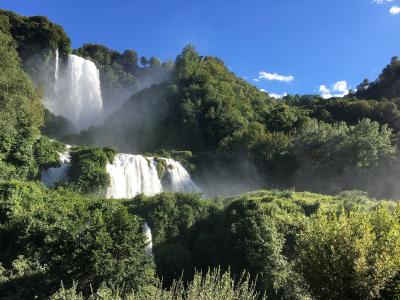
Marmore Waterfalls (Cascata delle Marmore)
World's tallest man-made waterfall
Activities & Wellness · History & Heritage

Museo Civico di Terni
Three-floor museum with detailed archaeological and art e...
Archaeological Museums · Art Museums
Parco Fluviale del Nera
20km protected nature park along the Nera River
Activities & Wellness · Natural Wonders

San Francesco Cathedral
13th-century Franciscan church with plain gabled front
Architectural Monuments · Historic Churches
Questions people ask
Quick Facts
Best Time to Visit
Visit between April and June or September and October for mild temperatures and fewer crowds.