







- Hours
- Closed Mondays. Tue-Fri 10:00-18:00; Sat-Sun 10:00-19:00. Special hours in August and Chri...
- Where
- Aosta, Piedmont and Aosta Valley
- Directions
- Directions
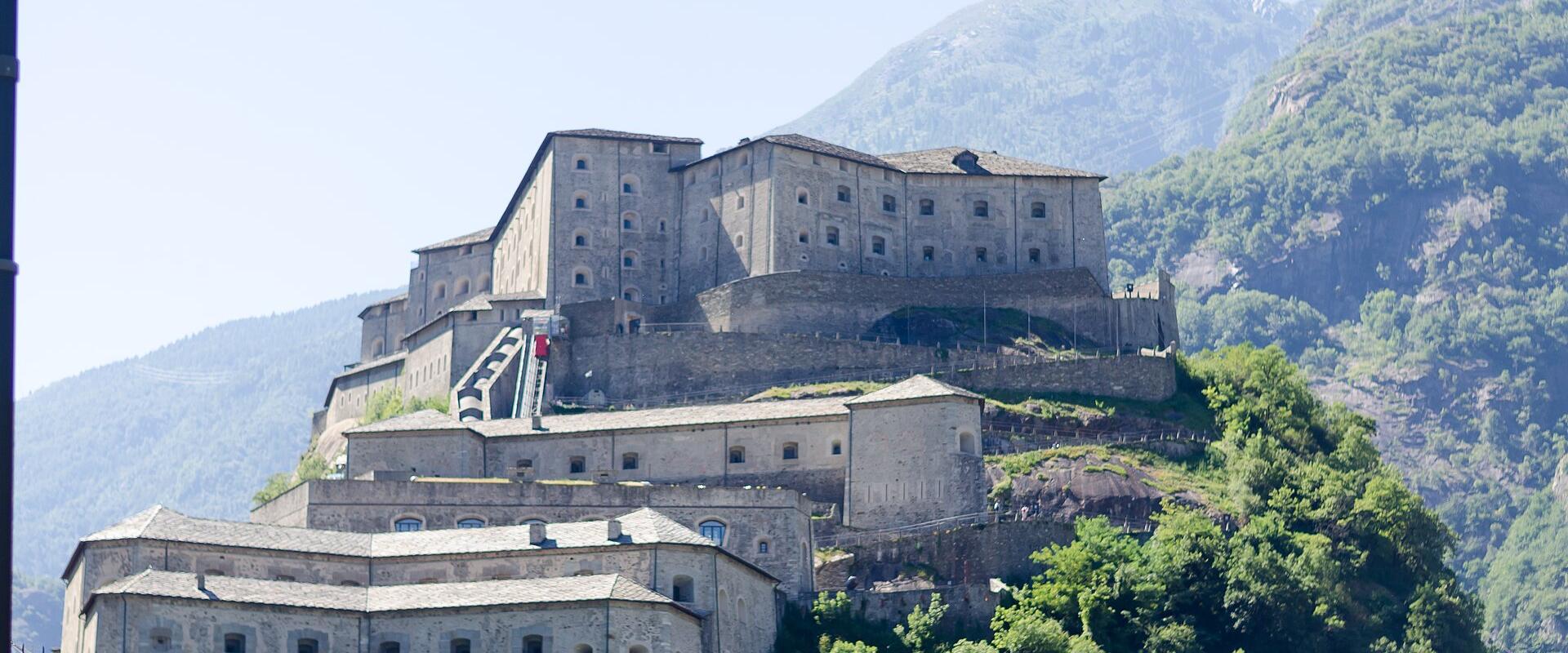
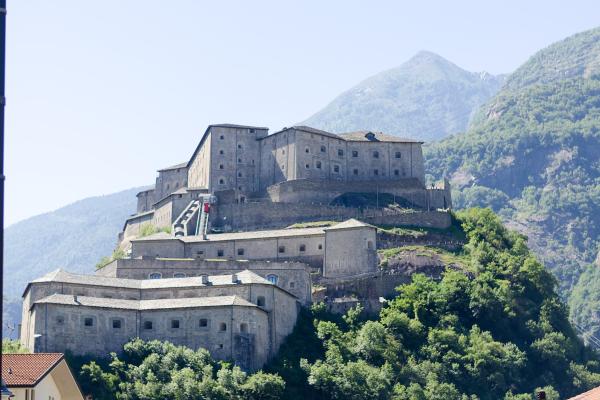
Fort de Bard is a 19th-century military fortress built on a rocky spur above the village of Bard, in the lower Aosta Valley, at a narrow point where the valley of the Dora Baltea shrinks to a gorge. The position is strategic, since the route from the Great St Bernard Pass and Piedmont to the Aosta Valley passes right below the rock, and the fort controls the road. Now housing four museums, exhibitions, a hotel and restaurants, it features significant Napoleonic history, and the fort offers a comprehensive cultural experience, with a typical visit lasting 2 to 4 hours.
The story is closely tied to Napoleon. In May 1800, as the French army under Bonaparte crossed the Alps by the Great St Bernard Pass to invade Italy, it was halted at Bard by an earlier fortress held by a small Austrian garrison, which blocked the road and held out for about two weeks, forcing the army to find a way to drag its artillery through the village at night. Napoleon was said to be furious at the delay and, after taking the fort, ordered it destroyed. The Savoy kings of Sardinia later decided to build a new fortress on the site, and between 1830 and 1838, under King Charles Albert, they raised the present fort, a huge complex of terraces, barracks and batteries that covers the whole rocky spur and rises in several levels above the village.
In the 20th century, the fort lost its military role and fell into neglect, until it was restored and reopened in the early 2000s as a cultural center. Today, it contains the Museum of the Alps, a modern museum with interactive displays and films that follow a virtual journey through the mountains, the Museum of Fortifications and Borders, which explains the history of defenses in the western Alps, and the Prisons, a former jail where the story of confinement is told. There is a section for children, the Alps of the Children, with hands-on activities, and the fort also hosts temporary exhibitions of photography and art. Parts of the fort have been used as a film location, including a major superhero film.
To reach the upper levels, visitors can walk up a steep path or use the glass panoramic lifts that rise from the village, giving views over the valley and the fortress walls. The terraces and bastions give wide views over the Dora Baltea valley, the road and the mountains. Admission is charged, with reduced rates for seniors and young people, and children and some other groups enter free, and there is also a combined ticket for all the museums and exhibitions. The fort is closed on Mondays, and special hours apply in August and over the Christmas and New Year holidays in December and January, so check the official website for current times and prices. Guided tours are available at weekends for an additional fee.
Access is convenient via the Hône-Bard train station, about 500 meters from the village, though service changes can occur during works on the railway, and parking is available near the base of the fort. Dogs are permitted in non-exhibition areas on a lead. Exploring Fort de Bard provides a deep insight into the region’s military heritage and artistic collections, making it an essential destination for visitors to the Aosta Valley. It suits families and anyone who enjoys fortresses and mountain views, and it is easy to combine with a visit to Aosta, about 40 minutes away by road.
Categories
More photos coming soon
Opening Hours
- Open
- Closed Mondays. Tue-Fri 10:00-18:00; Sat-Sun 10:00-19:00. Special hours in August and Christmas/New.
Hours and prices change, especially out of season. Check with the venue before you go.
Nearby Attractions
Other places to visit in Aosta
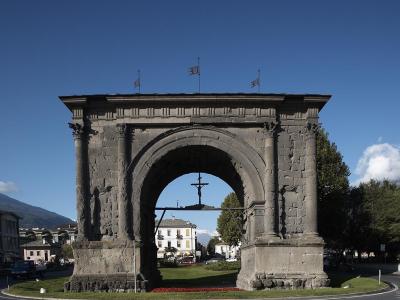
Arch of Augustus
25 BC triumphal arch with mixed Corinthian-Doric styles
History & Heritage · Urban Exploration
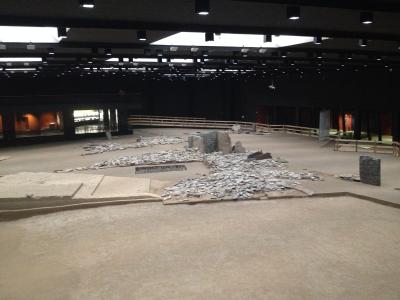
Area Megalitica di Saint-Martin-de-Corléans (MegaMuseo)
Prehistoric sacred site and tombs found in 1969, now a museum
Ancient Ruins · Archaeological Museums
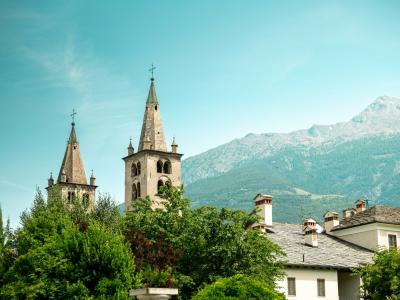
Basilica of Saint Ours
9th-century basilica with 12th-century Romanesque cloister
Architectural Monuments · Historic Churches
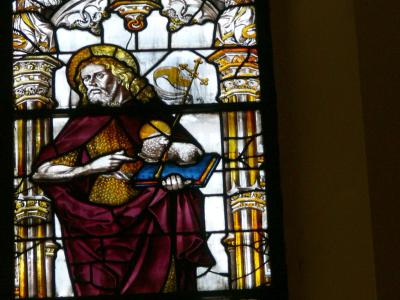
Cathedral of Saint John the Baptist
11th-century Romanesque cathedral with 11th-century frescoes
Architectural Monuments · Historic Churches
Questions people ask
Quick Facts
Best Time to Visit
Visit between June and September for hiking or December and March for skiing.