







- Where
- Padua, Veneto and the Dolomites
- Directions
- Directions
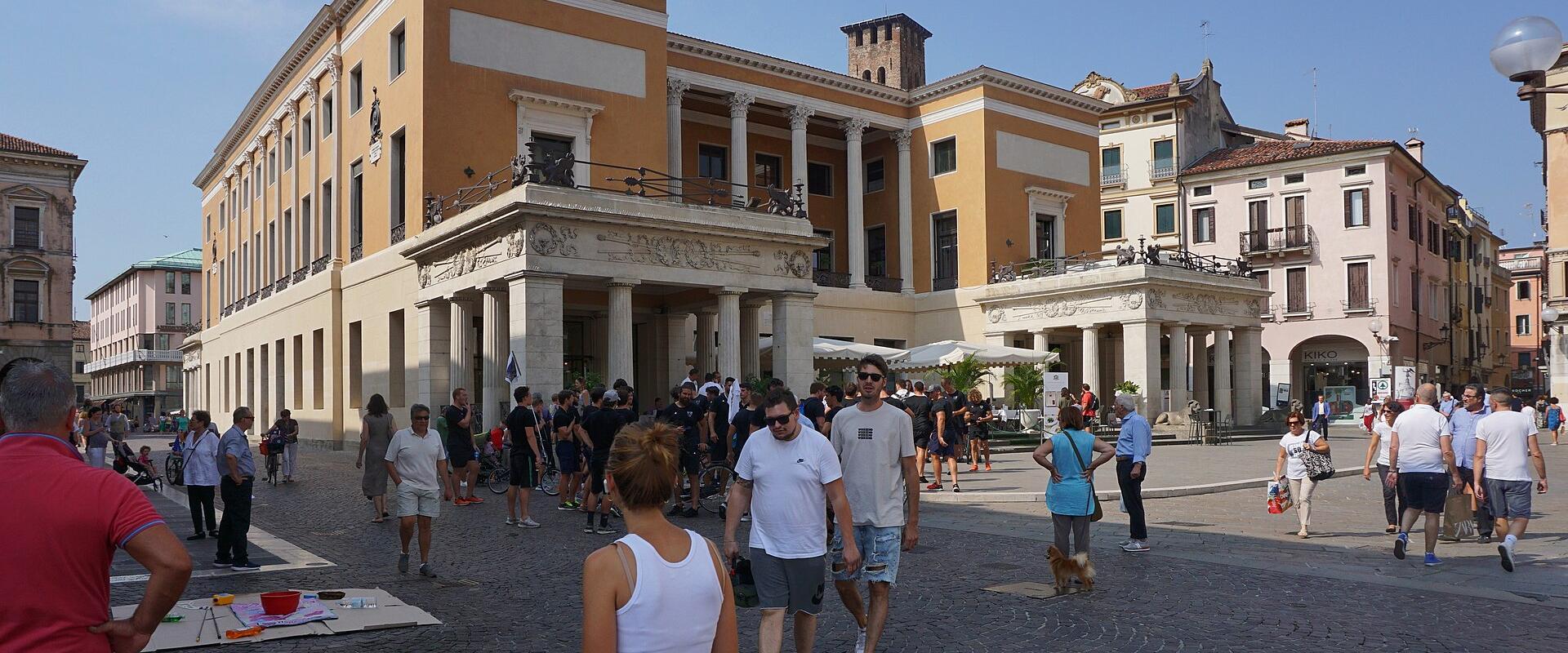
Caffè Pedrocchi in Padua is the oldest and most famous historical cafe in the city, a unique place for coffee tasting and cuisine, and one of the best-known cafes in Italy. The building is a monumental neoclassical structure that also houses the Museo del Risorgimento. It stands on Via VIII Febbraio, in the center of the city, between the University of Padua’s historic headquarters, the Palazzo del Bo, and the city’s old market squares, in a spot where students, professors, merchants and politicians have crossed paths for nearly two centuries. The cafe’s history is deeply intertwined with the cultural and political life of Padua, making it a significant landmark for visitors interested in 19th-century Italian history.
The cafe was commissioned by Antonio Pedrocchi, a coffee maker and businessman, and designed by the architect Giuseppe Jappelli, who completed the main building in 1831. Jappelli created a grand structure with a wide portico of Corinthian columns and a ground floor with a series of rooms for the cafe, along with a neo-Gothic annex known as the Pedrocchino, added in 1837, in an eccentric contrast with the classical main building. The cafe was famously open day and night, and for much of its history it never closed its doors, hence its nickname, the cafe without doors, which encouraged all classes to enter and meet.
The cafe became a center of liberal thought in the years before Italian unification. On the night of February 8, 1848, student protests against Austrian rule, which governed the Veneto at that time, led to clashes in the cafe and the city, and the event is commemorated in the name of the street, Via VIII Febbraio. The cafe was a gathering place for writers, patriots and artists, and it appears in the literature of the period, and the French writer Stendhal is said to have praised it.
The building features rooms with distinct styles on the ground floor, among them the Green Room, the Red Room and the White Room, each with its own character, and the first floor, the piano nobile, has a series of rooms decorated in different historical styles, from Egyptian and Greek to Etruscan, Roman and Renaissance, with ornate ceilings and stucco work. The ground-floor cafe is open to the public, allowing visitors to experience the historic atmosphere while enjoying traditional Italian coffee and pastries. A specialty is the Caffè Pedrocchi, a coffee with a layer of mint cream and a dusting of cocoa. The Museo del Risorgimento and Contemporary Age, located within the same complex, tells the story of the period from the end of the 18th century to the early 20th, and admission may require a ticket, so it is advisable to check local tourism resources for current pricing and schedules.
Exploring Caffè Pedrocchi offers insight into Padua’s social and historical heritage. It complements visits to other landmarks in Padua, such as the Scrovegni Chapel, with its famous frescoes by Giotto, and the Prato della Valle, a vast elliptical square lined with statues. Visitors are advised to take time to admire the neoclassical architecture and enjoy the lively atmosphere of the surrounding streets. A coffee at the counter is inexpensive, while a table in the rooms costs more.
Categories
More photos coming soon
Nearby Attractions
Other places to visit in Padua
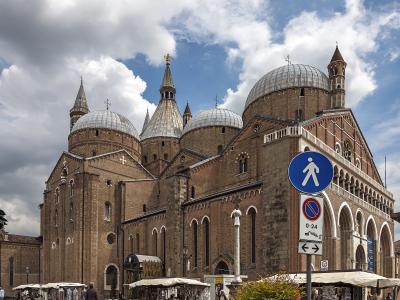
Basilica of Saint Anthony of Padua (Basilica di Sant'Antonio)
World-renowned pilgrimage site housing Saint Anthony's re...
Free Architectural Monuments · Cultural Tours
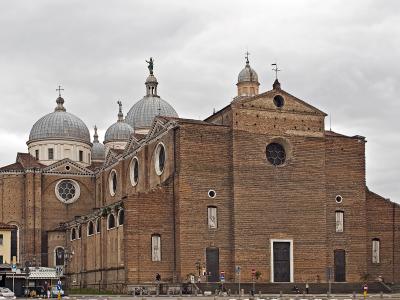
Basilica of Saint Justina (Basilica di Santa Giustina)
16th-century basilica housing 4th-century relics
Architectural Monuments · Cultural Tours
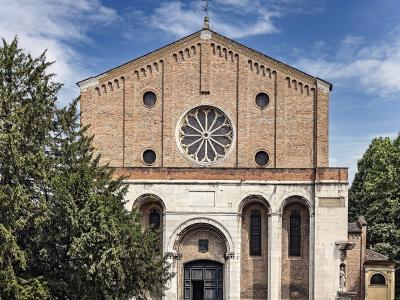
Eremitani Chapel Ruins
15th-century Mantegna frescoes in a restored medieval church
Ancient Ruins · Art Museums
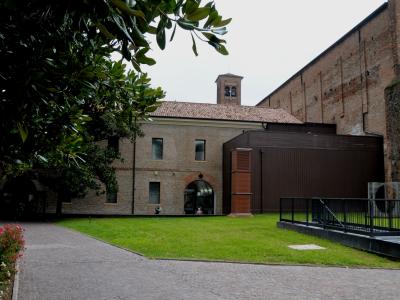
Musei Civici agli Eremitani
Padua's civic museums of art and archaeology
History & Heritage · Museums & Culture
Questions people ask
Quick Facts
Best Time to Visit
Visit between April and June or September and October for mild temperatures and fewer crowds.