







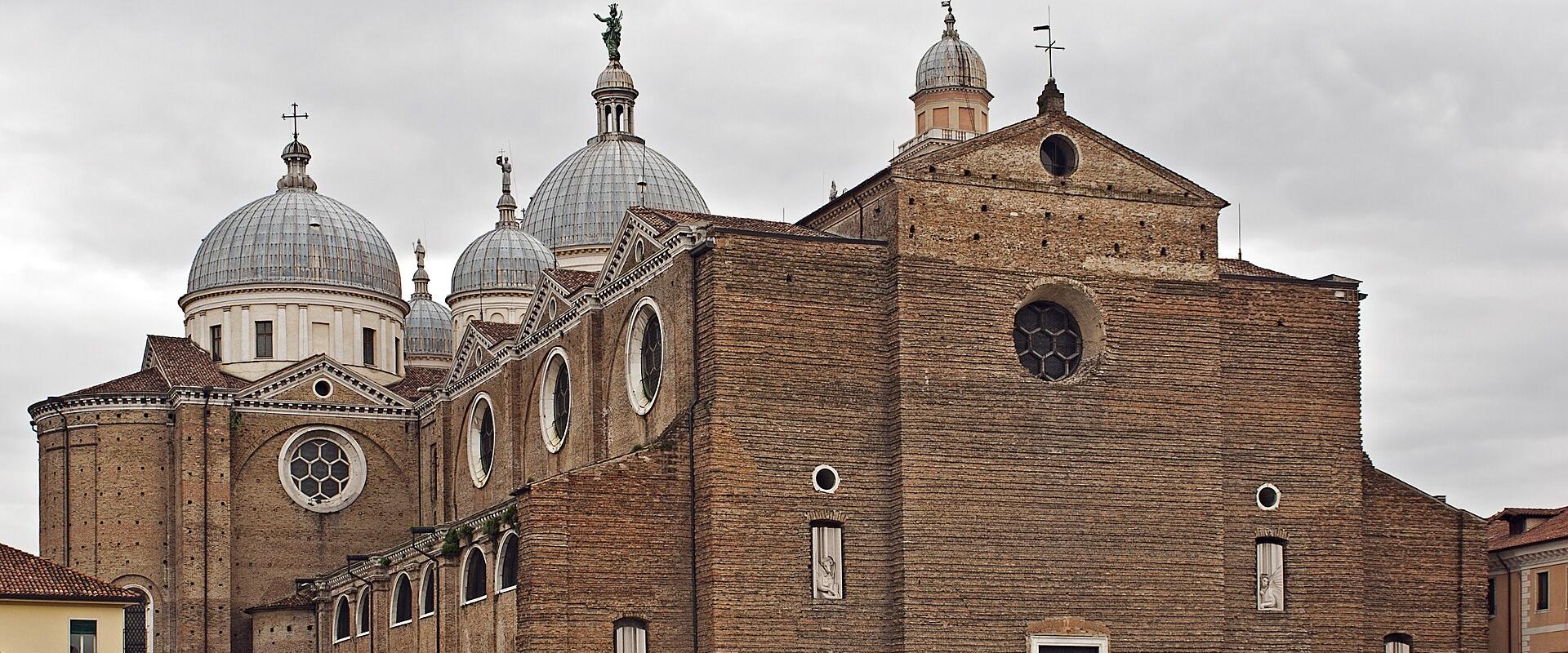
Basilica of Saint Justina (Basilica di Santa Giustina)
16th-century basilica housing 4th-century relics
- Where
- Padua, Veneto and the Dolomites
- Directions
- Directions
The Basilica of Saint Justina (Basilica di Santa Giustina) in Padua stands on the south side of the Prato della Valle, the huge elliptical square that is one of the city’s best-known sights, and it is part of a Benedictine abbey that has a history of more than a thousand years. The first church on the site was built to house the tomb of Saint Justina, a young Christian woman of Padua who was martyred around the year 304, and the early history is tied to the city’s first Christian community. According to tradition, the original basilica was constructed in the 520s by the Prefect Opilius, and its lavish decoration was already praised in the 6th century by the poet Venantius Fortunatus, who mentions the church in his Life of Saint Martin. The Benedictines took over the site in the 10th century.
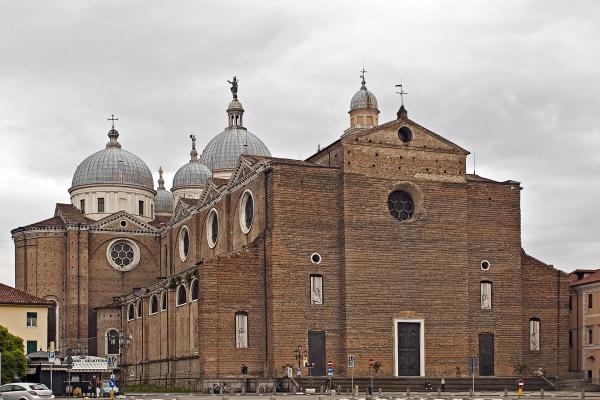
The abbey has a notable place in the history of monasticism. In the early 15th century, Santa Giustina became the centre of a reform movement that gave rise to the Cassinese Congregation, a federation of Benedictine monasteries that spread across Italy and shaped the order for centuries, so that it counted among the most influential religious houses in Europe. The church that visitors see today is the result of a 16th-century reconstruction, with Baroque additions later, begun in 1502 and continued over decades by several architects, including Alessio Tramello and Andrea Moroni, who gave it a Renaissance form, with a series of domes and a long nave. The facade, never completed, is a plain wall of brick, but the interior is vast and imposing.
The interior is large, solemn and well lit, with a long Latin cross plan, side chapels, and a row of domes that are visible from outside across the square. The high altar is crowned by an altarpiece of 1575 by Paolo Veronese, the Martyrdom of Saint Justina, painted for the church and still in place, an impressive composition in warm colours. The basilica houses the tomb of Saint Justina and the relics of other saints, among them Saint Luke the Evangelist and Saint Matthias the Apostle, according to tradition, and Saint Prosdocimus, the first bishop of Padua. The Corridor of the Martyrs and the Well of the Martyrs, in the oldest part of the church, preserve the memory of the early Christians of the city, and the older parts, including the Romanesque and Gothic remains, can be seen in the abbey complex.
The basilica is an active church, and access may be limited during services, so check locally. Dress modestly. A visit takes about half an hour, or more if you want to see the cloisters. Its location on the Prato della Valle makes it easy to combine with the market held in the square and with a stroll around the statue-lined canal, and the Basilica of Saint Anthony of Padua (Basilica di Sant’Antonio), the Orto Botanico di Padova, the Palazzo del Bo, the Caffè Pedrocchi and the Scrovegni Chapel are all within walking distance. Within the religious heritage of Veneto, it pairs with the University of Padua. It suits anyone interested in early Christianity, monastic history and Renaissance architecture.
More photos coming soon
Nearby Attractions
Other places to visit in Padua
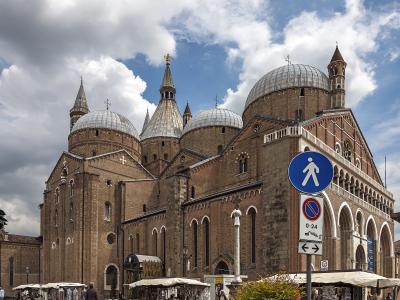
Basilica of Saint Anthony of Padua (Basilica di Sant'Antonio)
World-renowned pilgrimage site housing Saint Anthony's re...
Free Architectural Monuments · Cultural Tours
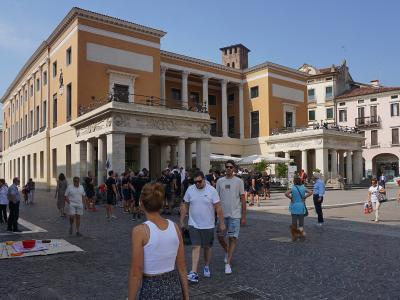
Caffè Pedrocchi
Padua's oldest historic café and Risorgimento museum
Food & Gastronomy · History & Heritage
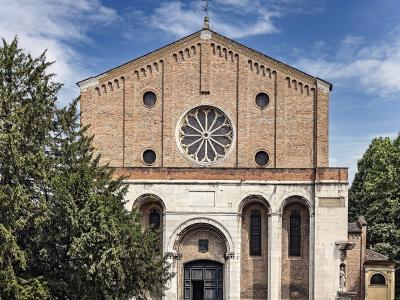
Eremitani Chapel Ruins
15th-century Mantegna frescoes in a restored medieval church
Ancient Ruins · Art Museums
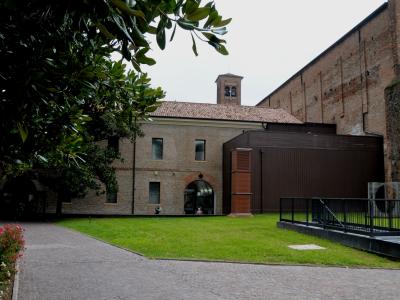
Musei Civici agli Eremitani
Padua's civic museums of art and archaeology
History & Heritage · Museums & Culture
Questions people ask
Quick Facts
Best Time to Visit
Visit between April and June or September and October for mild temperatures and fewer crowds.