







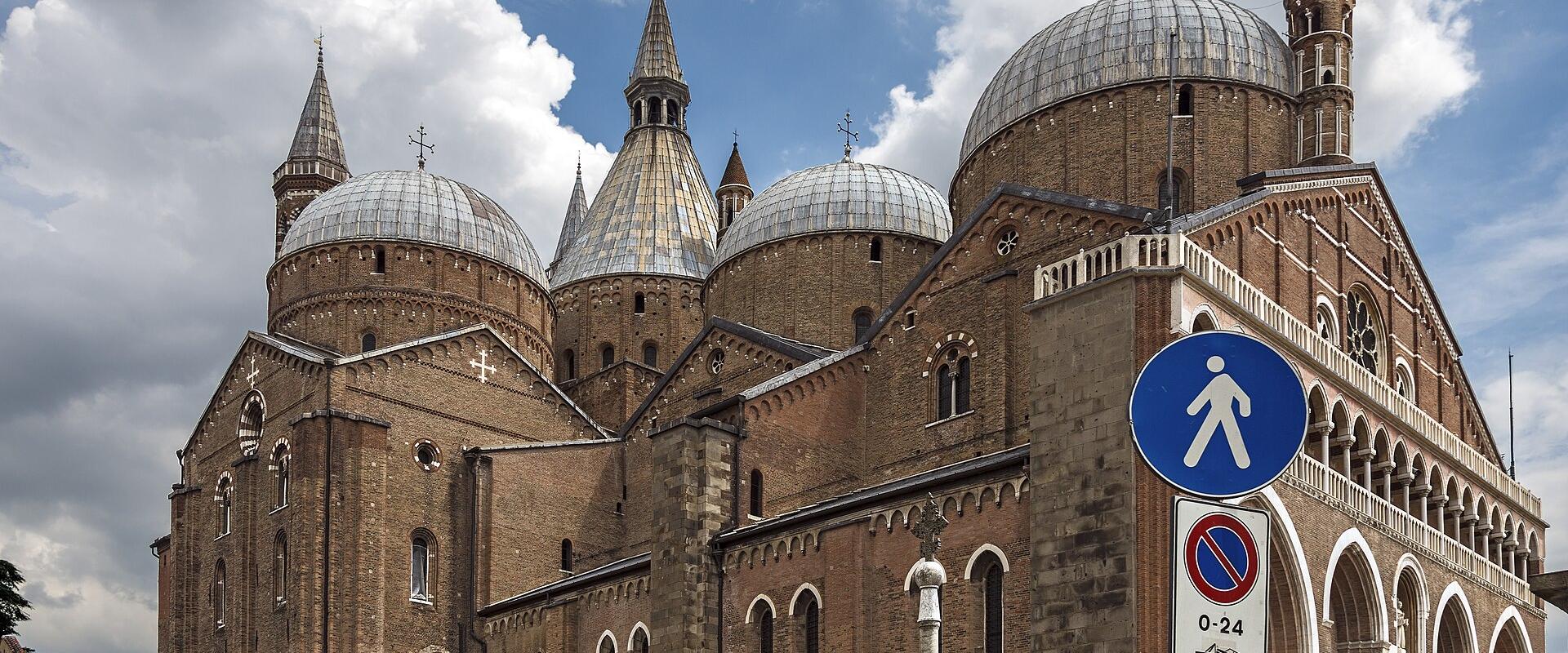
Basilica of Saint Anthony of Padua (Basilica di Sant'Antonio)
World-renowned pilgrimage site housing Saint Anthony's re...
- Admission
- Free admission
- Hours
- Monday to Friday 6:15 AM to 6:45 PM
- Where
- Padua, Veneto and the Dolomites
- Directions
- Directions
For the people of Padua the great church is simply Il Santo, the saint, and it is easily one of the busiest pilgrimage sites in Italy. Saint Anthony, a Portuguese-born Franciscan preacher, died near Padua in 1231 and was canonised within a year. Work on the basilica began soon afterwards, and pilgrims have been arriving ever since, many of them walking straight to the tomb to touch the stone and leave a note or a photograph.
The architecture is unusual. A line of domes, eight in all, rises above the roof, giving the church an almost Eastern skyline, and slender bell towers stand like minarets at the sides. The building mixes Romanesque and Gothic elements with Byzantine influence, and it is one of the most distinctive profiles in the Veneto. Inside, the long nave is richly frescoed, and the sense of scale and of devotion is strong.
The art is remarkable. The high altar was made by Donatello in the 1440s and includes bronze reliefs of Anthony's miracles, a landmark of Renaissance sculpture. In the square outside stands his equestrian monument to the condottiere Gattamelata, one of the first large bronze horsemen since antiquity. Chapels hold fresco cycles by Altichiero and other artists, and nearby buildings such as the Scuola del Santo hold paintings, including works by Titian. The treasury shows reliquaries, among them the one that holds relics of the saint, an object of intense devotion.
This is first of all a living church. Masses and confessions take place all day, and pilgrims queue quietly at the tomb. Visitors should dress modestly, covering shoulders and knees, keep voices low, and be prepared to wait during busy periods. Opening hours and mass times change with the day and the season, so check the current schedule on the basilica's official website. Entry to the church is free, though some side areas may have their own rules.
The basilica sits a short walk from Prato della Valle, the enormous elliptical square with its ring of statues and canal, and from the Basilica of Saint Justina. Further into the city, the Scrovegni Chapel with Giotto's frescoes, Palazzo del Bo, Caffè Pedrocchi, the Musei Civici agli Eremitani and the Orto Botanico di Padova give plenty to fill a day. The basilica suits pilgrims, art lovers and travellers interested in how faith and sculpture meet. Early morning is calmer and gives the best light in the interior.
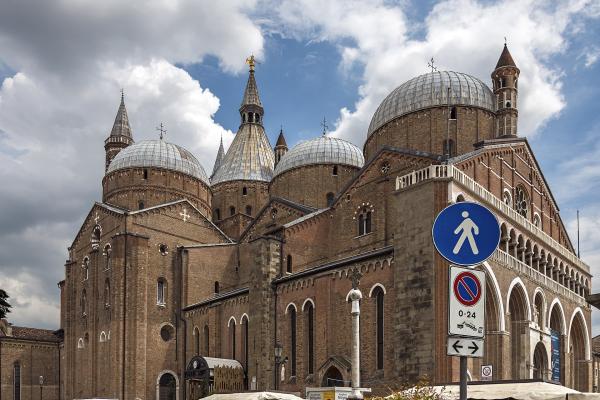
More photos coming soon
Hours & Fees
- Open
- Monday to Friday 6:15 AM to 6:45 PM
- Admission
- Free admission
Hours and prices change, especially out of season. Check with the venue before you go.
Nearby Attractions
Other places to visit in Padua
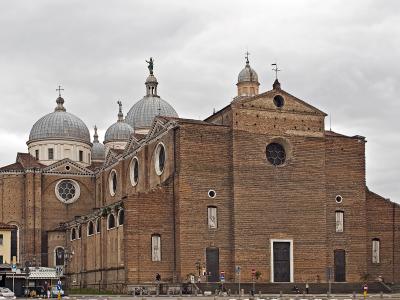
Basilica of Saint Justina (Basilica di Santa Giustina)
16th-century basilica housing 4th-century relics
Architectural Monuments · Cultural Tours
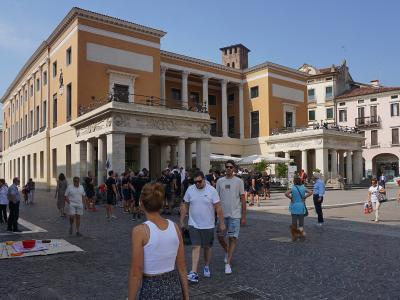
Caffè Pedrocchi
Padua's oldest historic café and Risorgimento museum
Food & Gastronomy · History & Heritage
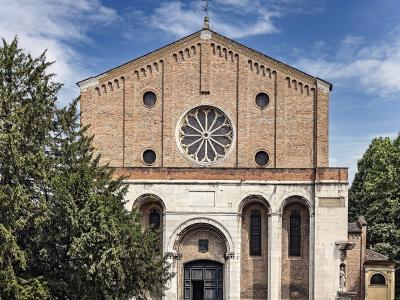
Eremitani Chapel Ruins
15th-century Mantegna frescoes in a restored medieval church
Ancient Ruins · Art Museums
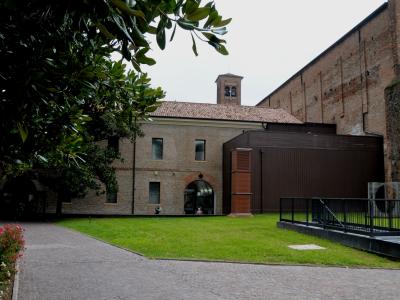
Musei Civici agli Eremitani
Padua's civic museums of art and archaeology
History & Heritage · Museums & Culture
Questions people ask
Quick Facts
Best Time to Visit
Visit between April and June or September and October for mild temperatures and fewer crowds.