







- Where
- Gubbio, Umbria and Marche
- Directions
- Directions
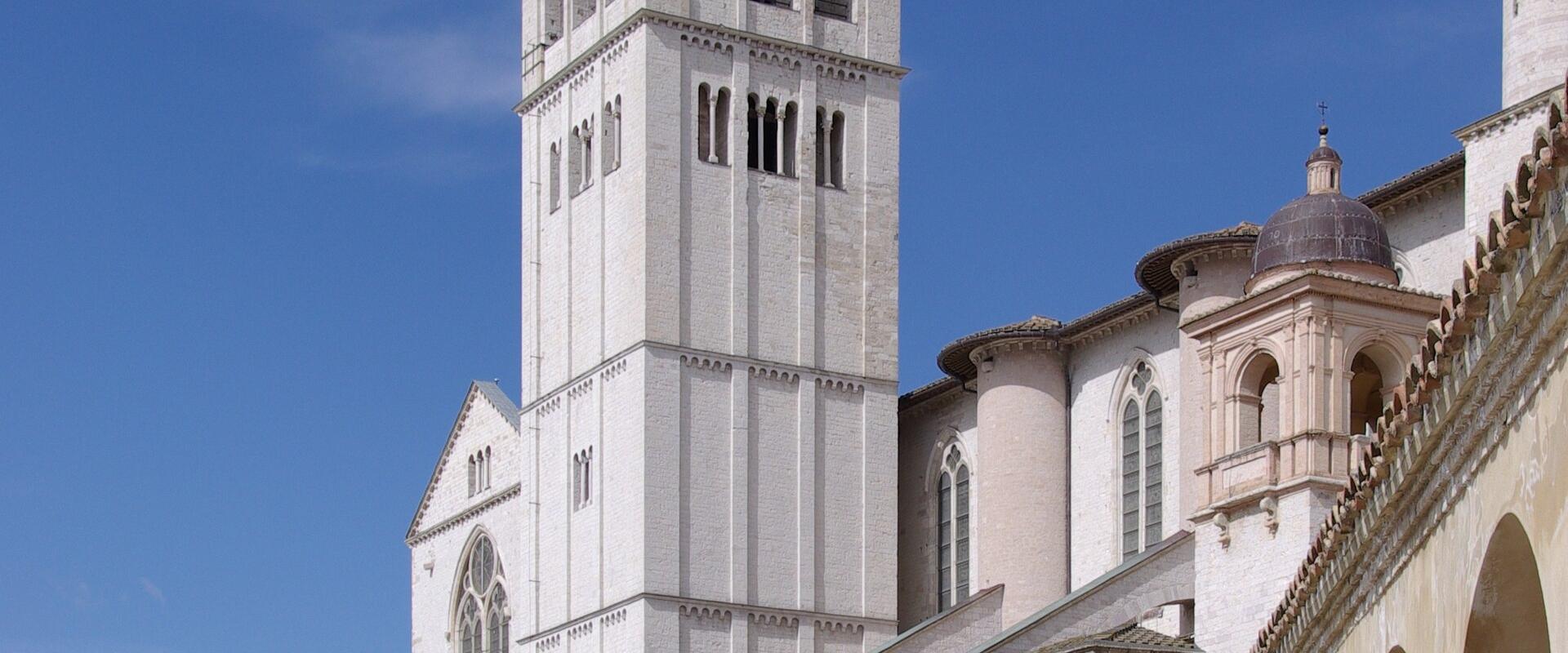
The Basilica of San Francesco in Gubbio is a Gothic church of the 13th century in the old town of Gubbio, a medieval hill town in Umbria, and it reflects the close link between the town and Saint Francis of Assisi. The Franciscans arrived in Gubbio while Francis was still alive, and the saint is said to have spent time in the town, which was then a powerful independent commune with grand public buildings. According to tradition, a Gubbio nobleman, a friend of Francis, gave him shelter after he renounced his possessions, and the church, begun in the second half of the 13th century, was built to honour that connection. It stands on the Piazza San Francesco, at the foot of the slope, close to the arcades and the old gate, and it is one of the main religious buildings of the lower town.
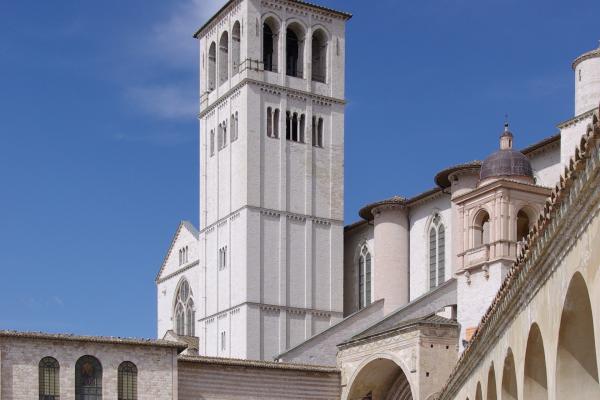
The church follows the plain, austere type favoured by the Franciscan order for preaching. It has a single wide nave, a simple rib-vaulted ceiling and three polygonal apses at the east end, with a facade of local stone that has a pointed portal and a small rose window. Its form is rather unlike that of the Gothic cathedrals of northern Europe, since it is meant to be a large hall for gathering a congregation, with plain walls and little carved decoration. The interior is quiet, in the soft light of narrow windows, and the atmosphere is simple and calm. A bell tower rises alongside, and the whole effect is one of stern harmony.
The apse and chapels contain frescoes of the late medieval and early Renaissance periods. The apse is decorated with paintings of the Virgin and scenes from her life, attributed to Ottaviano Nelli, the most important painter of Gubbio, who worked in the early 15th century, and other fresco fragments from the 14th century survive on the walls, showing saints and religious scenes. These paintings reflect the characteristic style of the Umbrian school, with bright colours, graceful figures and decorative detail, and they are a pleasure to study. The details of what is on display at any time are best checked on site.
For many visitors, the church is also associated with the legend of the Wolf of Gubbio, one of the best-loved stories about Saint Francis. According to the tale, a fierce wolf was terrorising the town, and Francis went out to meet it and spoke to the animal, making a pact in which the townspeople agreed to feed the wolf in exchange for its peaceful behaviour. The wolf lived out its days in Gubbio, and a smaller church, San Francesco della Pace, is traditionally linked to the story. The legend illustrates the saint’s gentleness toward creatures and his ability to bring peace to a divided community.
The basilica is a working church of the Catholic Church in the Diocese of Gubbio, and modest dress is expected. One of the nearby landmarks is the Chiesa San Giovanni Battista, and the Cattedrale di Santi Mariano e Giacomo Martiri is the town’s cathedral. Opening times vary through the day and may close at midday, so check locally. A visit takes about twenty minutes. It lies a short walk from the Palazzo dei Consoli, the Palazzo dei Duchi, the Museo Civico (Civic Museum) and the Cattedrale di San Giorgio, which are higher up the hill, and the Festa dei Ceri, the spectacular race of giant wooden candles held on 15 May, fills the town’s streets. It suits those interested in Franciscan history, Gothic architecture and Umbrian painting.
More photos coming soon
Nearby Attractions
Other places to visit in Gubbio
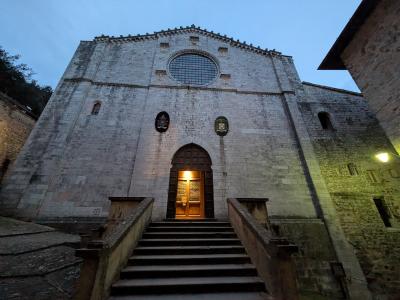
Cattedrale di San Giorgio
13th-century Gothic cathedral housing saints' relics
Architectural Monuments · Historic Churches
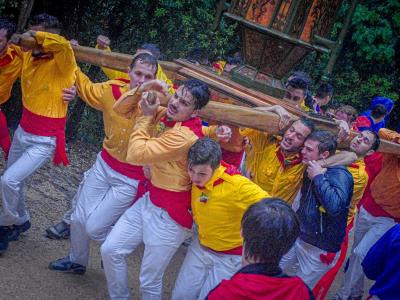
Festa dei Ceri
Ancient May 15 race carrying 280kg wooden ceri
Cultural Festivals · Historic Towns
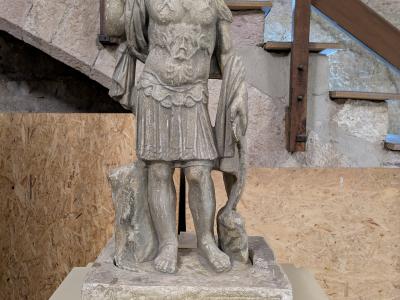
Museo Civico (Civic Museum)
Civic Museum in Gubbio's Palazzo dei Consoli
From €4 History & Heritage · Museums & Culture
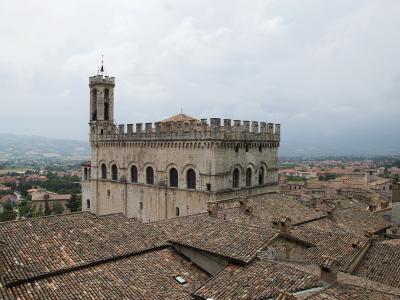
Palazzo dei Consoli
14th-century civic palace on Piazza Grande
From €5 Art Museums · Historic Palaces
Questions people ask
Quick Facts
Best Time to Visit
Visit between April and June or September and October for mild temperatures and fewer crowds.