







- Where
- Ravenna, Emilia-Romagna
- Directions
- Directions
The Basilica di Sant’Apollinare Nuovo in Ravenna is one of the eight early Christian and Byzantine monuments of the city that make up its UNESCO World Heritage listing, and it holds some of the most famous mosaics in the world. It was built around the year 500 by Theodoric, the king of the Ostrogoths, who ruled Italy from Ravenna, as the palace church of his court, and it was originally dedicated to Christ the Redeemer. Theodoric and his people followed the Arian form of Christianity, which differed from the Catholic doctrine, and the church was built for Arian worship. After the Byzantine conquest of Italy in the 540s, the building was converted to Catholic use, and in the 560s the mosaics were altered to reflect the new orthodoxy, and the church was rededicated to Saint Martin. In the 9th century, the relics of Saint Apollinaris were moved here from the nearby port of Classe, and the basilica took its present name, Nuovo, new, to distinguish it from the older basilica of Sant’Apollinare in Classe.
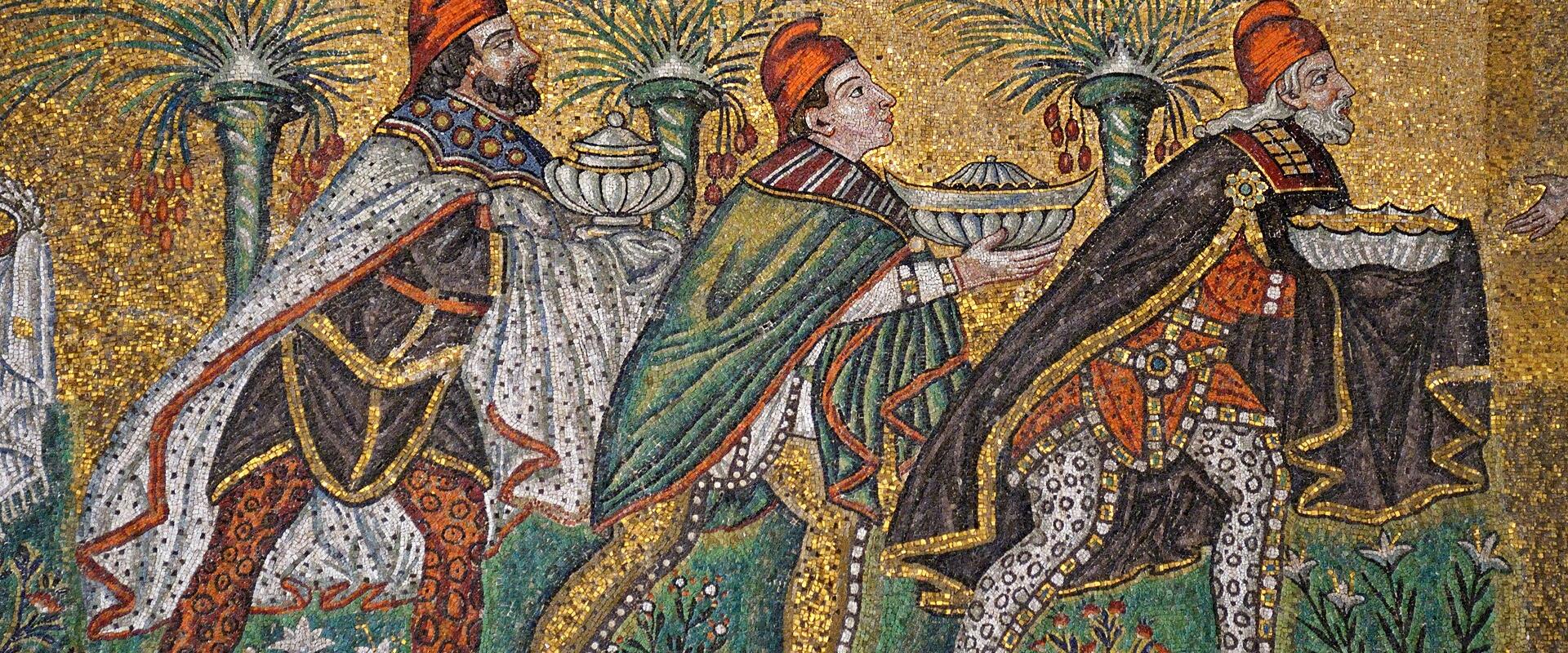
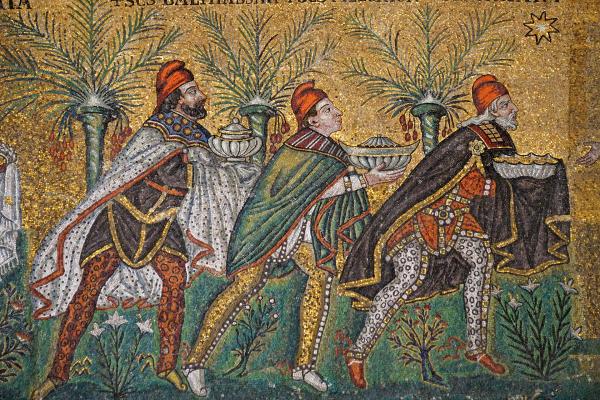
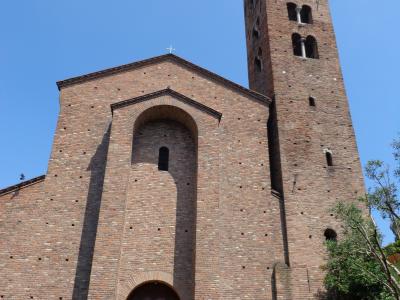
The church has a plain brick exterior with a tall round bell tower of the 9th or 10th century, and a simple porch of the 16th century in front of it. Inside, the nave is lined with two rows of marble columns with Byzantine capitals, and the walls above them are covered with mosaics in three bands. The upper band shows scenes from the life of Christ: his miracles and parables on one side and the Passion on the other, in glittering gold and bright colours. The middle band shows prophets and saints between the windows. The lower band, which is the most celebrated, has two great processions that move toward the altar. On the left side, a line of twenty-two virgins carrying crowns, led by the three Magi in Persian dress, walks toward the Virgin and Child, and on the right side, a procession of twenty-six martyrs, in white robes, advances toward Christ enthroned. The figures are stylised and hieratic, with large eyes and rhythmic movement, and the effect is of solemnity and calm.
The mosaics also tell a story of change. On the wall near the entrance, the Palace of Theodoric and the port of Classe are depicted, but the figures that once stood between the columns of the palace were removed after the Byzantine conquest, as the court of the Arian king was erased from memory. Traces remain: hands resting on the columns and the pattern of the curtains, ghostly marks that reveal the removal. Because the mosaics belong to two different periods, the original Ostrogothic work around 500 and the Byzantine additions of about 560, they show the development of the art in Ravenna.
The basilica is open daily for most of the year, with longer hours in the summer season and shorter hours in winter, and it is closed on some holidays such as Christmas and New Year’s Day. Ticket options include a combined ticket covering two or four of the Ravenna monuments, so check the current arrangements. A visit takes about half an hour. The basilica is in the centre of the city, a short walk from the Neonian Baptistery, the Basilica di San Francesco, the Tomb of Dante, the Basilica di San Vitale, the Mausoleum of Galla Placidia and the Museo Nazionale di Ravenna. The Ravenna Mosaic Institute offers a look at the modern craft. It suits anyone interested in art, history and the late antique world.
Categories
More photos coming soon
Nearby Attractions
Other places to visit in Ravenna
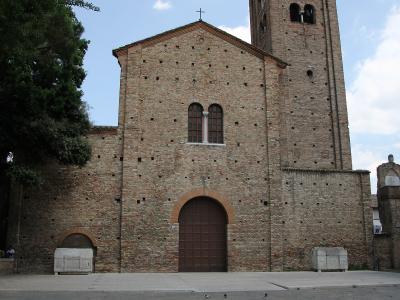
Basilica di San Francesco
5th-century basilica linked to Dante's burial
Architectural Monuments · Cultural Tours
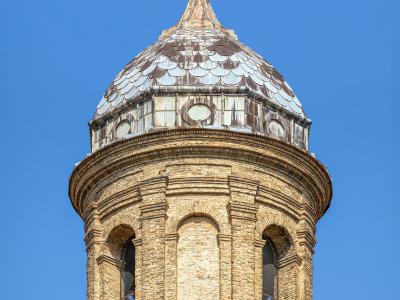
Basilica di San Vitale
UNESCO site with Byzantine mosaics
Architectural Monuments · Cultural Tours
Basilica of San Giovanni Evangelista
Early Christian basilica near Ravenna's railway station
Free Historic Churches
Mausoleum of Galla Placidia
5th-century UNESCO mausoleum with magical golden mosaics
Architectural Monuments · Historic Cemeteries
Questions people ask
Quick Facts
Best Time to Visit
Visit between April and June or September and October for mild temperatures and fewer crowds.