







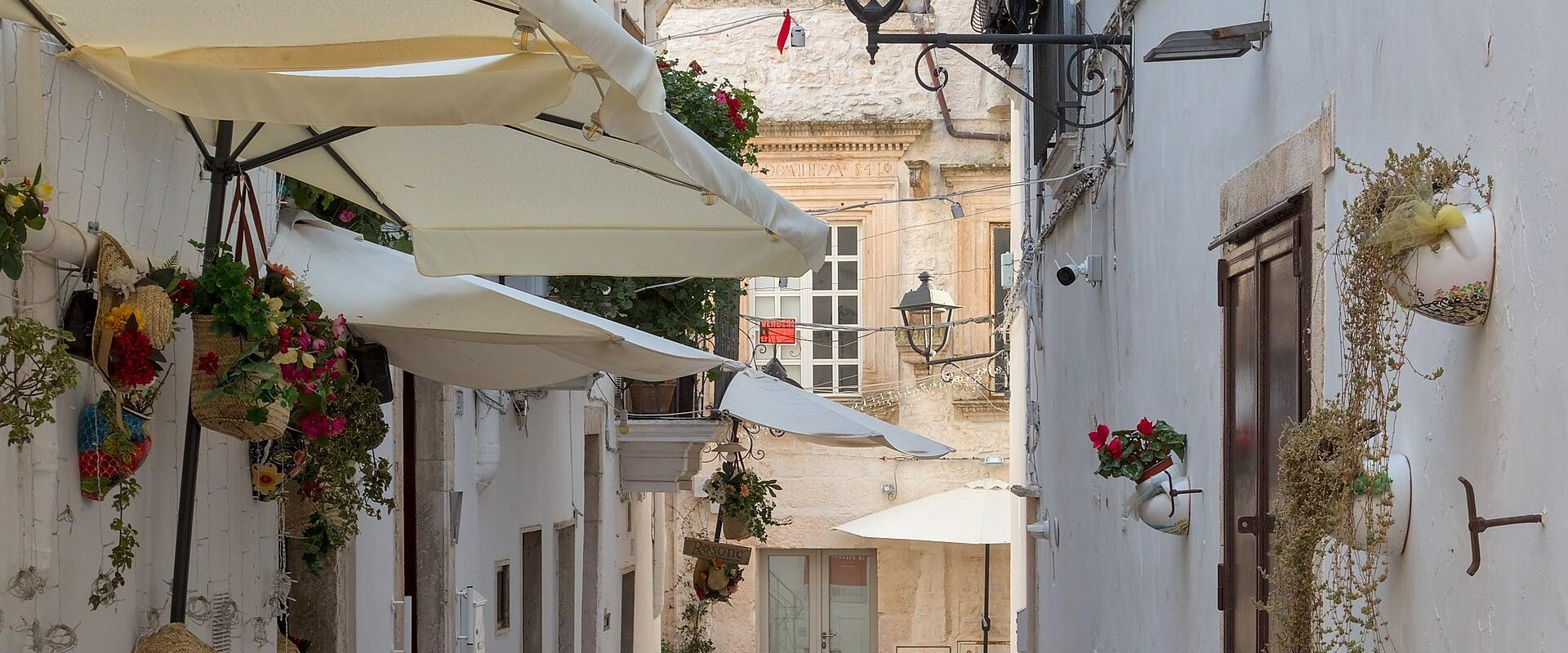
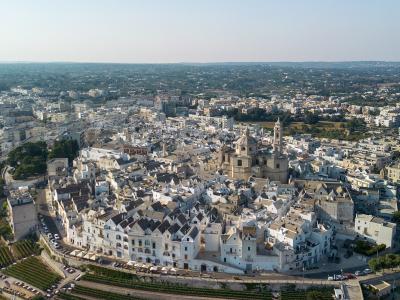
Locorotondo’s history dates back to the Middle Ages, when it was founded as a fortified settlement to protect against Saracen raids. The town’s name, meaning 'round place,' refers to its circular layout, which maximized defence and community cohesion. Over the centuries Locorotondo was ruled by various powers, including the Normans, Swabians, and Angevins. The town flourished in the 17th and 18th centuries under the rule of the D’Afflitto family, who commissioned many of its Baroque churches and palaces. The historic centre, with its whitewashed houses and pitched stone roofs, reflects this architectural heritage. Locorotondo has preserved its medieval character, giving visitors a view of its history and artistic legacy. The town is also known for its agricultural traditions, particularly olive oil and wine, which remain central to its economy and culture.
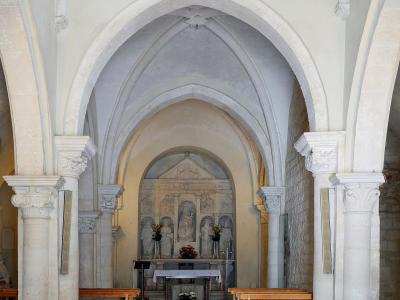
The main attractions are centred on the historic centre and its religious sites. The Church of San Giuseppe is a prominent Baroque church with a beautiful facade and interior. The Chiesa di Santa Maria della Greca, in the old town, is regarded as one of the oldest churches in Locorotondo, and has a long history tied to the Greek-speaking communities of the region. The Church of Santa Maria Immacolata is another significant religious site. The Palazzo D’Afflitto is a historic palace associated with the family that shaped the town. The historic centre is a maze of narrow streets lined with boutiques, galleries, and restaurants, and the town has museums, including an Archaeological Museum, displaying artefacts from the Messapian and Roman periods. The surrounding countryside offers scenic views of olive groves and vineyards, with wineries and olive oil mills that open for tours.
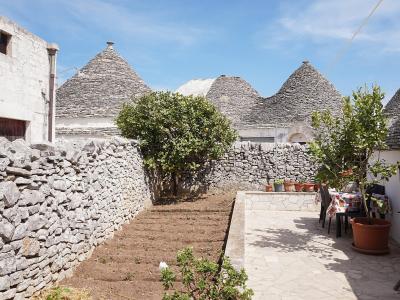
Wine is central to the local identity. The Locorotondo Wine Cellars are a collection of wineries across the Valle d'Itria rather than a single site, and many welcome visitors for tastings of the dry white wine named for the town. The Local Markets give a view of daily life and local products, such as vegetables, cheeses, and bread. Away from the town, the rural landscape is dotted with stone farmsteads and trulli, the conical-roofed buildings that are typical of this valley and most famous in nearby Alberobello. Trullo Sovrano excursions, which are connected to the area's rural architecture, can be arranged with local guides.
Activities in Locorotondo include exploring the historic sites, visiting museums, and enjoying the local cuisine. The town is known for traditional Puglian dishes, including orecchiette pasta, burrata cheese, and fresh seafood, along with vegetables and local cured meats. Visitors can take guided tours to learn about the town’s history and architecture. The surrounding area offers hiking, cycling, and wine tasting. Locorotondo also hosts festivals and events through the year, including the Festival of the Assumption. Shopping includes local ceramics, textiles, and food products. For those interested in history, guided tours explore the town’s Messapian and Roman heritage.
Getting to Locorotondo is easiest by road. The town is reached by car from Bari, about 70 kilometres away, via the A14 motorway and SS16, and the roads in the valley are narrow in places. Local trains of the Ferrovie del Sud Est run from Bari to Locorotondo, and the stations at Brindisi and Fasano on the main railway are also useful, with bus connections to the town. For those flying, the nearest airports are in Bari and Brindisi.
The best time to visit Locorotondo is from April to June or September to October, when the weather is mild and pleasant, ideal for outdoor attractions and historic sites. July and August are peak tourist months, with higher temperatures and larger crowds. Winter is mild but can be windy. Despite the seasonal variations, Locorotondo’s rich history and beautiful architecture make it a rewarding destination year-round.
Best time to visit
Visit between April and June or September and October for mild temperatures and fewer crowds.
What to see in Locorotondo
Our picks first.
Locorotondo by interest
The same sights, grouped by what you came for.
Planning a visit to Locorotondo
Itineraries that include Locorotondo
Good to know
- Currency
- EUR
- Language
- Italian
Quick Facts
Book your stay
Questions people ask
More places in Apulia
Apulia
Alberobello
UNESCO-listed town in Puglia famous for unique conical trulli houses
Apulia
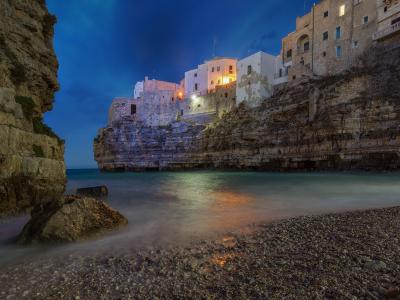
Polignano A Mare
Dramatic cliffside town in Puglia with iconic caves and beaches
Apulia
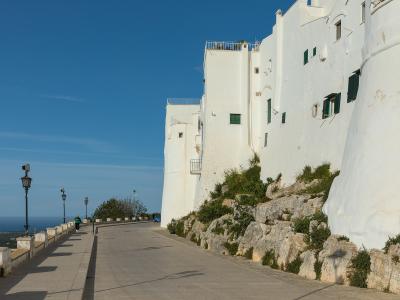
Ostuni
Whitewashed hill town in Apulia known as the White City
Apulia
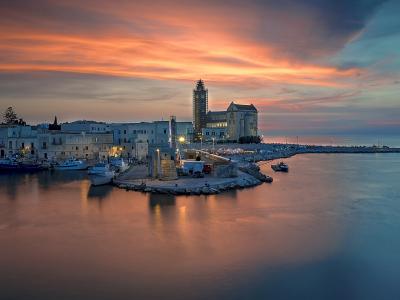
Trani
Adriatic coastal city with Norman cathedral and historic port