Three islands, three characters
The northern lagoon islands make the most popular half-day or full-day trip from central Venice, and they are easy to reach on the city's public water buses (vaporetti). Each island is different:
- Murano is the glassmaking island, a smaller version of Venice with its own Grand Canal.
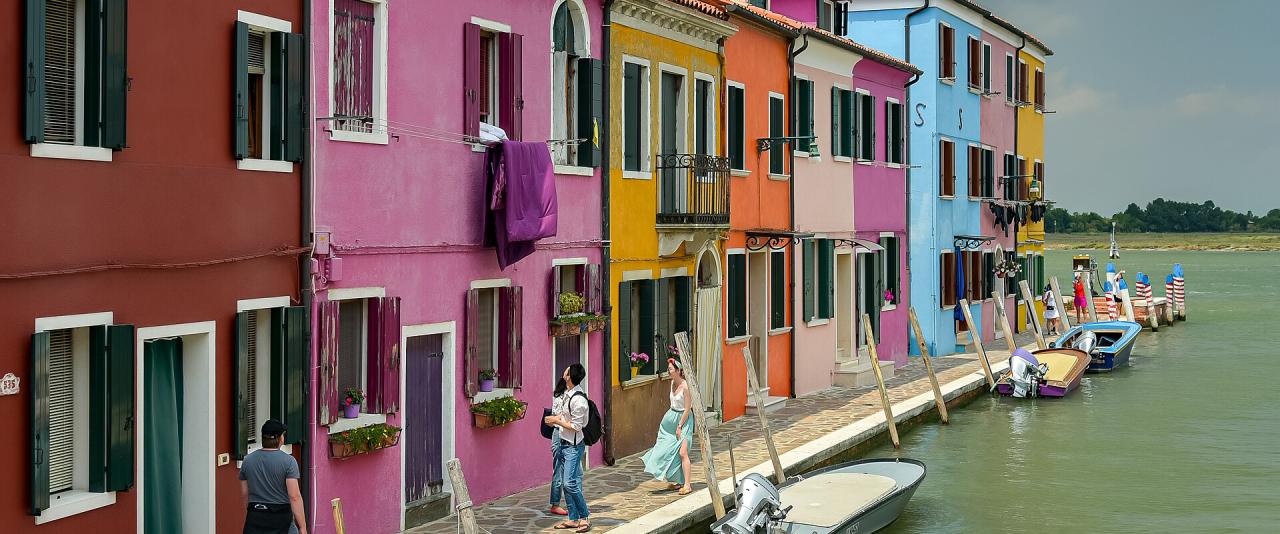
- Burano, further north, is a fishing village known for brightly painted houses and its tradition of needle lace.
- Torcello, beyond Burano, was one of the first settlements in the lagoon and is now almost empty, with a cathedral containing some of the finest Byzantine mosaics in Italy.
Seeing all three in a day is realistic if you start in the morning. If you have only half a day, choose Murano and Burano.
Getting there on the vaporetto
The main departure point is Fondamente Nove (also written Fondamente Nuove) on the northern edge of the Cannaregio district.
- To Murano: several ACTV lines run from Fondamente Nove, including lines 4.1 and 4.2, and the crossing takes only a few minutes. Line 3 runs direct from the railway station and Piazzale Roma area to Murano.
- To Burano: line 12 runs from Fondamente Nove, calling at Murano Faro and Mazzorbo before Burano. The trip takes roughly 40 to 45 minutes.
- To Torcello: a short shuttle boat (line 9) connects Burano and Torcello in a few minutes, and some line 12 boats also stop there.
Single vaporetto tickets are expensive relative to the distance, so if you plan more than two or three rides in a day, a 1-day or multi-day ACTV travel card usually works out cheaper. Validate your ticket or card at the electronic reader on the pontoon each time you board. Boats on line 12 can be very full in late morning; travelling early or returning before late afternoon helps.
Murano: glass beyond the showrooms
Glassmaking was concentrated on Murano from the late 13th century, and the island has been associated with it ever since. Today you can:
- visit the Museo del Vetro (Glass Museum), run by the Venice civic museums foundation, which traces the history of Venetian glass from Roman times to the present;
- watch a glassblowing demonstration in one of the furnaces (fornaci), many of which run short demonstrations for visitors;
- see the Basilica dei Santi Maria e Donato, a Veneto-Byzantine church with a 12th-century mosaic floor.
A note on buying glass: much of the cheap "Murano glass" sold around Venice is imported. Genuine pieces from Murano workshops may carry the "Vetro Artistico Murano" trademark, a collective mark created to identify glass made on the island. Buy from established workshops, and ask for documentation on expensive items.
Be wary of free taxi-boat offers to a "glass factory" from San Marco: these are usually sales trips, with pressure to buy at the end.
Burano: colour and lace
Burano's rows of painted houses line its canals, and the island is compact enough to walk end to end in a few minutes. The leaning bell tower of the church of San Martino is visible from most of the village.
Lacemaking is Burano's traditional craft. The Museo del Merletto (Lace Museum), also part of the civic museums network, occupies the former lace school on the main square and shows historical pieces alongside demonstrations when lacemakers are present. As with glass, much of the inexpensive lace sold in shops is machine-made and imported; handmade Burano lace takes a long time to make and is priced accordingly.
A wooden footbridge links Burano to neighbouring Mazzorbo, a quieter island with gardens, vineyards and a few restaurants.
Burano's restaurants specialise in lagoon seafood, and the village is known for risotto made with goby fish (risotto di gò) and for buttery "bussolà" biscuits. Prices near the boat stop tend to be higher than on the back canals.
Torcello: where Venice began
Torcello was an important settlement in the early Middle Ages, before the population moved to the islands that became Venice. Today only a handful of buildings and a few residents remain.
The Cathedral of Santa Maria Assunta, founded in the 7th century and rebuilt several times, is the reason to come. Its mosaics include a vast Last Judgment covering the west wall and a tall, solitary Virgin and Child in the gold apse. Next door is the small church of Santa Fosca, and the cathedral's bell tower can be climbed for a view across the marshes when it is open. Allow about an hour and a half on the island including the walk from the boat stop along the canal.
Suggested timing
- Morning: early boat from Fondamente Nove to Murano; museum and a furnace demonstration.
- Midday: line 12 to Burano; walk the island and have lunch.
- Afternoon: shuttle to Torcello for the cathedral, then back via Burano to Fondamente Nove.
Practical notes
- In 2026, Venice's day-tripper access fee applied to the historic centre on selected days from April to July. The lagoon islands themselves are outside the fee area, but check the city's official site (cda.ve.it) for the current calendar and rules if you arrive in the city on a fee day.
- Museum opening days and boat timetables change between summer and winter; check the ACTV and civic museums websites the day before.
- Carry water and a hat in summer; there is little shade on Burano and Torcello.