Visitors to Italy often ask two practical questions: can I drink the tap water, and is there anything I should be careful about with food? The short answers are yes, and not much. This guide explains the details, from Rome's public fountains to raw seafood, allergies and gluten-free eating.
Is Tap Water Safe to Drink in Italy?
Yes. Tap water across Italy is treated and tested by local water utilities under national rules based on the EU Drinking Water Directive, and it is safe to drink unless a local notice says otherwise. Italians half-jokingly call it acqua del sindaco, the mayor's water.
Despite this, Italy is one of the world's largest consumers of bottled mineral water: recent industry figures put consumption at roughly 200 litres per person per year, the highest in Europe. That is mostly about habit and taste, not safety. Many Italians grew up with bottled water at the table and prefer its flavour or its fizz.
Why Tap Water Tastes Different Around the Country
Water quality is consistently safe, but taste varies. Rome's water comes largely from springs in the Apennines and is cool and fresh, though hard. In other places, water is noticeably chlorinated or very hard, leaving limescale in kettles. On some smaller islands and in parts of the south, supply depends partly on desalination or long pipelines, and the water can taste flat or of chlorine. Locals in those areas often drink bottled water even though the tap supply meets standards.
Occasionally a town issues a temporary order declaring the water unsafe to drink (an ordinanza di non potabilità), for example after a pipe failure or heavy flooding. These are announced by the municipality and reported in local news, and hotels usually tell guests. In the past, some areas of northern Lazio, around Viterbo, had problems with naturally high arsenic levels, which led to long-running remediation work. If you are staying somewhere for a long time, the local utility's website will show current water analyses.
Public Fountains: Free Water Across Italy
Many Italian cities have public drinking fountains, and using them is the easiest way to save money and plastic. Carry a refillable bottle.
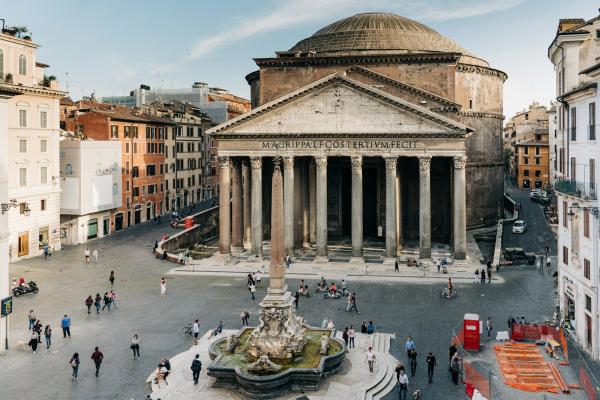
Rome has the most famous ones: the nasoni (big noses), cast-iron fountains with a curved spout, of which there are roughly 2,500 across the city. Press your finger over the end of the spout and water spurts up from a small hole on top, so you can drink directly. The water company Acea maps them in its free app. Milan has its own green cast-iron fountains, nicknamed vedovelle (little widows) because of their constant trickle, with several hundred across the city. Florence, Venice, Bologna and many smaller towns also have public fountains, and some cities have installed modern water points dispensing chilled still and sparkling water.
If a fountain carries a sign reading acqua non potabile, the water is not for drinking.
Ordering Water in Restaurants
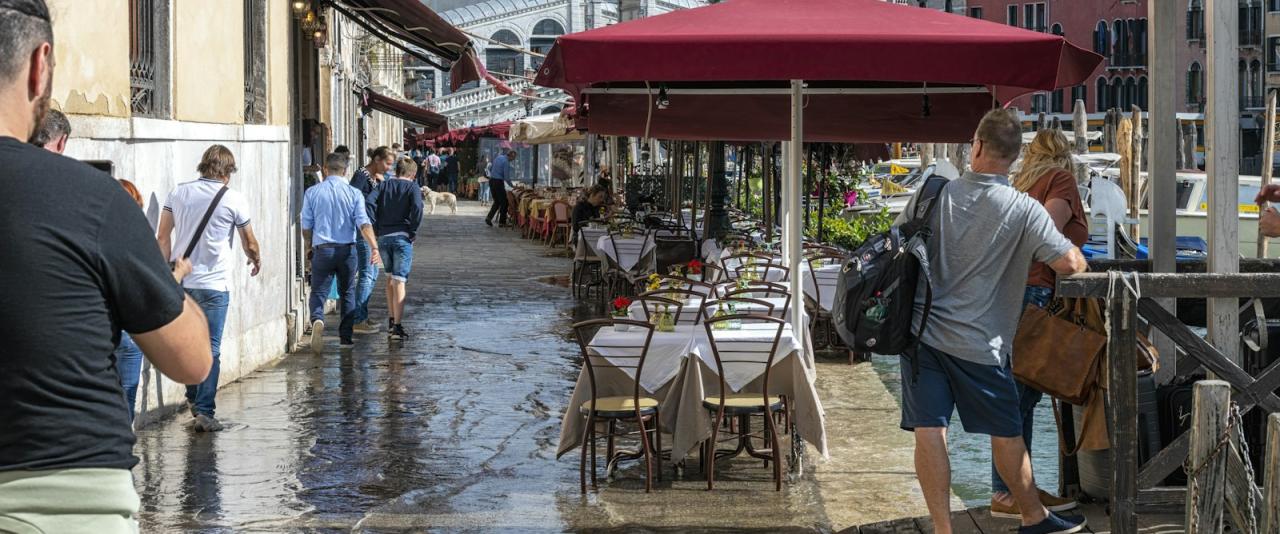
In restaurants, water is usually served bottled, and you will be asked naturale (still) or frizzante (sparkling, also called gassata). It appears on the bill, usually at a modest price for a litre bottle. You can ask for tap water, acqua del rubinetto, but restaurants are not required to serve it and some will politely decline. A carafe of tap water is more common in simple trattorie and in the north.
Food Safety in Italy
Food hygiene standards in Italy are high and enforced by local health authorities (ASL), and stomach upsets from restaurant food are uncommon. Market stalls, bakeries, gelaterie and street food stands are generally safe; busy places with quick turnover are the best choice anywhere.
A few points are worth knowing:
- Raw seafood. Raw oysters, clams, mussels and sea urchins are popular along the coast. Shellfish carry a higher risk of stomach bugs and hepatitis A, so eat them only from reputable restaurants and fishmongers, and avoid them if you are pregnant or have a weakened immune system.
- Wild mushrooms. Never eat mushrooms you have foraged yourself without having them checked. Local health authorities run mycological inspection services where pickers can have their finds checked, usually free of charge.
- Unpasteurised cheese and cured meats. Many traditional cheeses are made from raw milk. They are safe for most people, but pregnant travellers are usually advised to avoid them along with cured meats.
- Summer heat. Picnic food spoils quickly in July and August, so keep it cool and eat it soon.
Allergies and Gluten-Free Eating
Under EU rules, restaurants must be able to tell customers which of 14 major allergens, including nuts, shellfish, eggs and gluten, are in their dishes, and many keep a written allergen list. Ask for it in Italian: "Avete la lista degli allergeni?"
Italy is one of the easiest countries in Europe for coeliacs. Awareness of coeliac disease is high, the Italian Coeliac Association (AIC) runs a network of trained restaurants, and many pizzerias and bakeries offer certified senza glutine (gluten-free) options. Pharmacies and supermarkets also sell gluten-free products. If you have a serious allergy, carry a translated allergy card and your medication.