Where Trastevere is and why people go
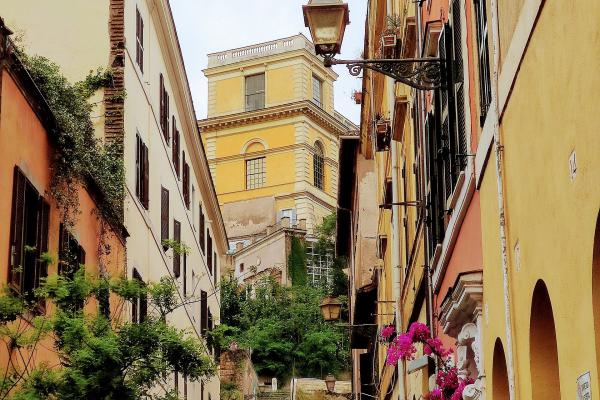
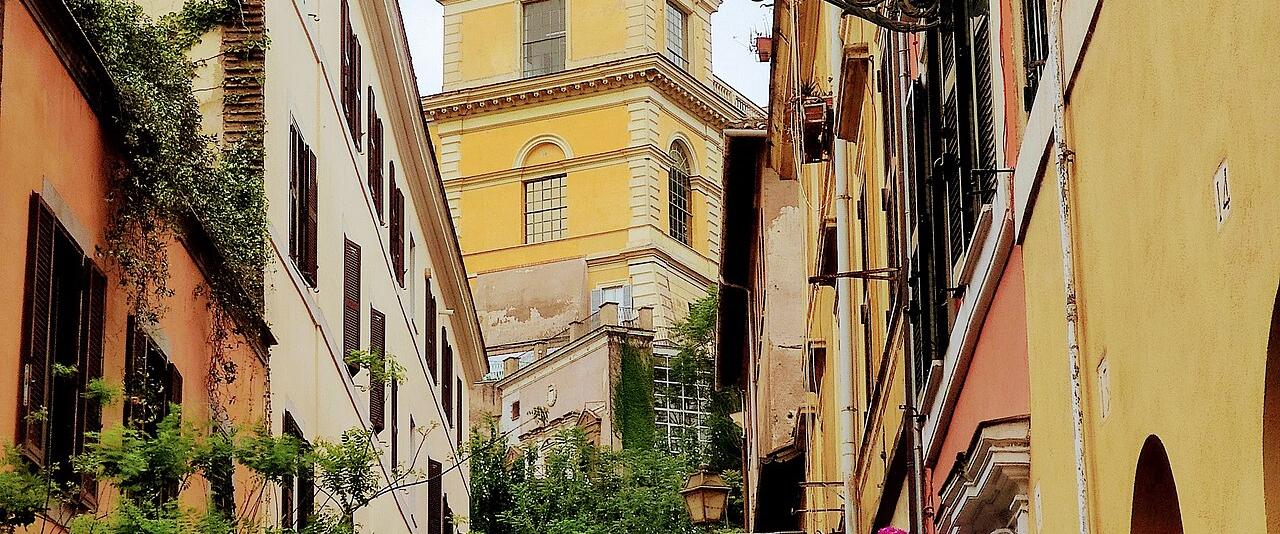
Trastevere means "across the Tiber": the neighbourhood lies on the west bank of the river, south of the Vatican and opposite the Jewish Ghetto and Campo de' Fiori. For centuries it was a working-class district of artisans, dockworkers and immigrants, and its narrow cobbled lanes, ochre houses and small squares still feel different from the grand avenues across the river.
Today it is one of the most popular places in Rome to eat out and spend an evening, but it is also worth exploring by day for some of the city's oldest churches and a handful of first-rate art collections. A good visit combines both: sights and the Janiculum in the morning or afternoon, dinner in the evening.
Churches worth stepping into
Santa Maria in Trastevere stands on the piazza that forms the neighbourhood's centre. It is one of the oldest churches in Rome dedicated to the Virgin Mary, and the present building dates mostly from the 12th century. Its gold apse mosaics are the main reason to go inside, along with a lower series of mosaic panels on the life of the Virgin by Pietro Cavallini from the late 13th century. The facade mosaic glows when lit in the evening.
Santa Cecilia in Trastevere, a short walk south-east, is known for Stefano Maderno's marble statue of the martyred saint beneath the altar, carved around 1600 and showing her body as it was reportedly found. The convent also preserves Cavallini's fresco of the Last Judgment, which can be seen only at limited times.
San Francesco a Ripa, near the southern edge of the district, holds Bernini's late sculpture of the Blessed Ludovica Albertoni. Like many Roman churches, it closes for several hours in the middle of the day, so check times before planning a visit around it.
Art and gardens on Via della Lungara
North of the main piazza, the long straight Via della Lungara runs towards the Vatican.
- Villa Farnesina was built in the early 16th century for the banker Agostino Chigi. Its rooms are decorated by Raphael and his workshop, including the Triumph of Galatea and the Loggia of Cupid and Psyche. It is a compact visit of about an hour.
- Palazzo Corsini, across the road, houses part of the national collection of older art (Galleria Nazionale d'Arte Antica), including works by Caravaggio.
- The Orto Botanico, Rome's botanical garden, run by Sapienza University, climbs the slope behind Palazzo Corsini and offers shade in summer.
The Janiculum Hill
The Gianicolo (Janiculum) rises above Trastevere and gives one of the best free views over Rome's domes and rooftops. Walk up from the neighbourhood via Via Garibaldi, past two stops worth making:
- San Pietro in Montorio, whose courtyard contains Bramante's Tempietto, a small circular temple of the early 1500s that became a model for Renaissance architecture.
- The Fontana dell'Acqua Paola, a monumental fountain built in the early 1600s, known locally as "il Fontanone".
At the top, the terrace near the Garibaldi monument looks east across the city. A cannon is fired from below the terrace every day at noon, a tradition that has served as a time signal for Rome since the 19th century.
Markets and Sunday mornings
Porta Portese, on the southern edge of Trastevere, hosts Rome's largest flea market on Sunday mornings, stretching along streets near the old city gate. Expect second-hand clothing, household goods, antiques and plenty of junk. Go early, carry small cash, and keep an eye on bags in the crowds.
Evenings: eating and nightlife
In the evening Trastevere fills with diners, students and visitors, especially around Piazza di Santa Maria, Piazza Trilussa near Ponte Sisto, and the lanes in between. The area has everything from traditional Roman trattorias serving cacio e pepe and supplì to modern wine bars.
Some practical points:
- Restaurants on the most photographed corners tend to charge more. A few streets back, menus are often closer to everyday Roman prices.
- Romans eat late; many restaurants fill from about 8.30 pm.
- On weekend nights the area is noisy until late. If you plan to stay overnight, ask for a room facing a courtyard.
Getting there
- Tram 8 runs from Largo di Torre Argentina in the centre across the Tiber along Viale di Trastevere.
- On foot, cross the pedestrian Ponte Sisto from Campo de' Fiori, or walk over Tiber Island from the Jewish Ghetto. Both take only a few minutes.
- Roma Trastevere railway station, just south of the district and served by tram 8, has regional trains including the FL1 line towards Fiumicino Airport.
There is no metro station in Trastevere. Driving is not practical, as much of the area falls inside Rome's limited traffic zone, and streets are narrow and cobbled, so comfortable shoes help.