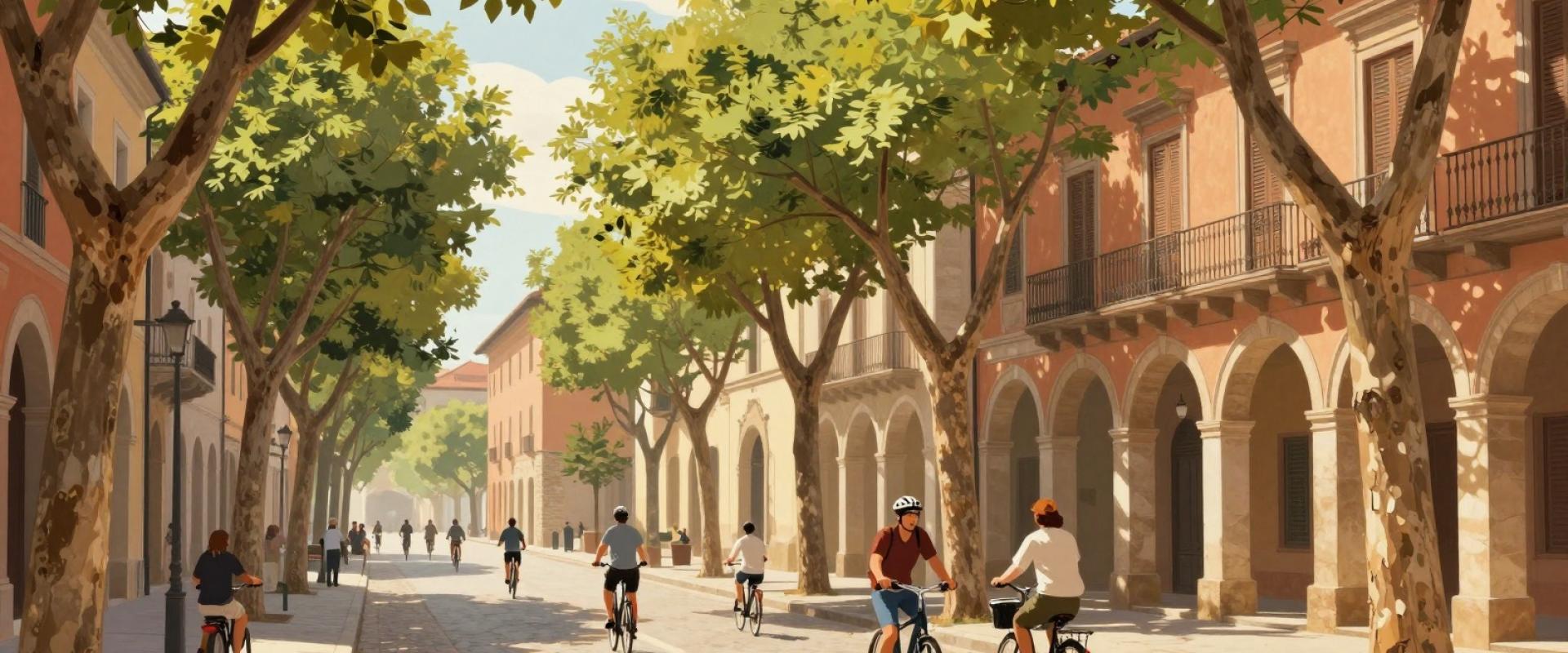
Pedaling Through the Heart of the Renaissance
“Chi va piano, va sano e va lontano.” Go slow. Go safe. Go far.
This proverb is not merely a saying in Ferrara; it is the operating system. The city claims the title of Italy’s most bike-friendly destination, boasting a higher density of bicycles per capita than any other region in the country. Upon arriving by train from Bologna, the shift in atmosphere is immediate. You do not hear the roar of engines; instead, you witness a synchronized glide of cyclists moving with practiced ease toward the university and the historic center. This is a city that runs on two wheels.
The historic core is entirely car-free. Wide, flat streets replace noisy traffic with a quiet hum, creating an environment where exploration feels less like a chore and more like a conversation with history. Over one hundred kilometers of protected paths weave through the urban core and extend into the countryside, ensuring that safety and efficiency meet leisure in every turn. The nine-kilometer ring of intact Renaissance walls serves as the city’s ceremonial border, welcoming cyclists for its full length. This paved loop offers a unique vantage point of architectural heritage, allowing palaces and piazzas to reveal themselves without fatigue.
Locals treat cycling as a daily habit, not a tourist novelty. The gentle terrain suits riders of all skill levels, from seasoned pros to casual sightseers. Here, infrastructure shapes culture. You immerse yourself in the Renaissance era at a natural, relaxed pace, navigating a landscape where the past and present move in harmony.
Gazing at Diamonds and Dragons
Pedaling through Ferrara feels less like commuting and more like gliding through a living museum. The city’s car-free sanctuary allows you to glide silently past architectural marvels, the only sound being the wind in your ears and the rhythm of your own breathing. Over 100 kilometers of flat, protected paths make navigation instinctive, even for those who rarely ride. You do not need to be an athlete to enjoy this; the wide, gentle routes welcome everyone with open arms.
Two architectural giants define the skyline, offering a study in stark contrasts. The Palazzo dei Diamanti dazzles with its facade of 8,504 limestone blocks, each cut at a precise angle to catch the sun like scattered diamond dust. Just a short ride away, the Castello Estense looms with four cylindrical towers and a deep moat, evoking the stern security of a medieval fortress rather than a home. One structure whispers of artistic refinement; the other shouts of defensive strength. Both anchor the city’s identity, visible from nearly every corner.
Encircling this historic heart is the nine-kilometer ring of intact Renaissance walls. These fortifications are fully accessible to cyclists, creating a seamless loop that connects past and present. Riding along this circuit offers a continuous panorama of history, where every turn reveals a new layer of the city’s UNESCO-listed heritage. Here, time slows down. The pace of the ride matches the rhythm of the stones, blending art, architecture, and movement into a single, fluid experience. While the palace represents elegance, the castle embodies power. Both structures anchor the city’s rich past, visible from every pedal stroke.
Wheels Ready for the Road
Ferrara doesn’t just allow cycling; it breathes it. This city moves on two wheels more than any other in Italy, supported by over 100 kilometers of flat, protected paths. You can ride the full nine-kilometer circuit around the intact Renaissance walls without ever hitting a car. The historic center remains strictly car-free, making navigation effortless and safe for all riders.
E-bikes are widely available at local shops, perfect for those who want to explore without excessive sweat. Staff at rental outlets often recommend specific routes that bypass the busiest tourist traps, guiding you toward quieter, more authentic experiences. Prices typically start around €10 per day for a standard bike. E-bikes may cost slightly more depending on the season, but the investment is worth it for the added comfort.
Booking in advance during peak summer months is wise. Demand spikes quickly, and last-minute availability is rare. The infrastructure connects the train station directly to the university and city center efficiently. This seamless network ensures you spend less time waiting and more time exploring. Ferrara’s bike-friendly reputation is earned through practical design, not just tourism marketing. You will find plenty of parking racks near major palaces and museums. The flat terrain is ideal for beginners and families alike. Enjoy the freedom of the open road in true Italian style.
Beyond the Walls: The Po Delta Escape
Ferrara’s reputation for cycling is well-earned, but the true adventure begins the moment you leave the historic center. Rentals cost roughly €10 a day, offering access to over 100 kilometers of protected paths that stretch far beyond the city limits. You start on a nine-kilometer loop along intact Renaissance walls, a UNESCO-listed route that provides a unique vantage point on Este family history. The historic core remains strictly car-free, ensuring a safe, flat ride past iconic landmarks like the Palazzo dei Diamanti.
Leaving the urban density behind, you follow dedicated cycle paths into the Po Delta Park. This vast wetland sanctuary offers a stark contrast to the stone palazzos you just left. Within an hour of riding from the city center, you can spot flamingos and cormorants among the reeds. The air here carries the distinct scent of damp earth and pine, a sensory shift that marks the transition from culture to conservation.
Bring a picnic from the local market; the riverside spots are ideal for lunch. The blend of history and wild nature makes Ferrara a standout destination. Time slows down in this corner of Italy. Join me next time for another hidden corner of Italy—ciao for now!