







- Admission
- Free admission
- Hours
- Open 24/7 (public street)
- Where
- Ferrara, Emilia-Romagna
- Directions
- Directions
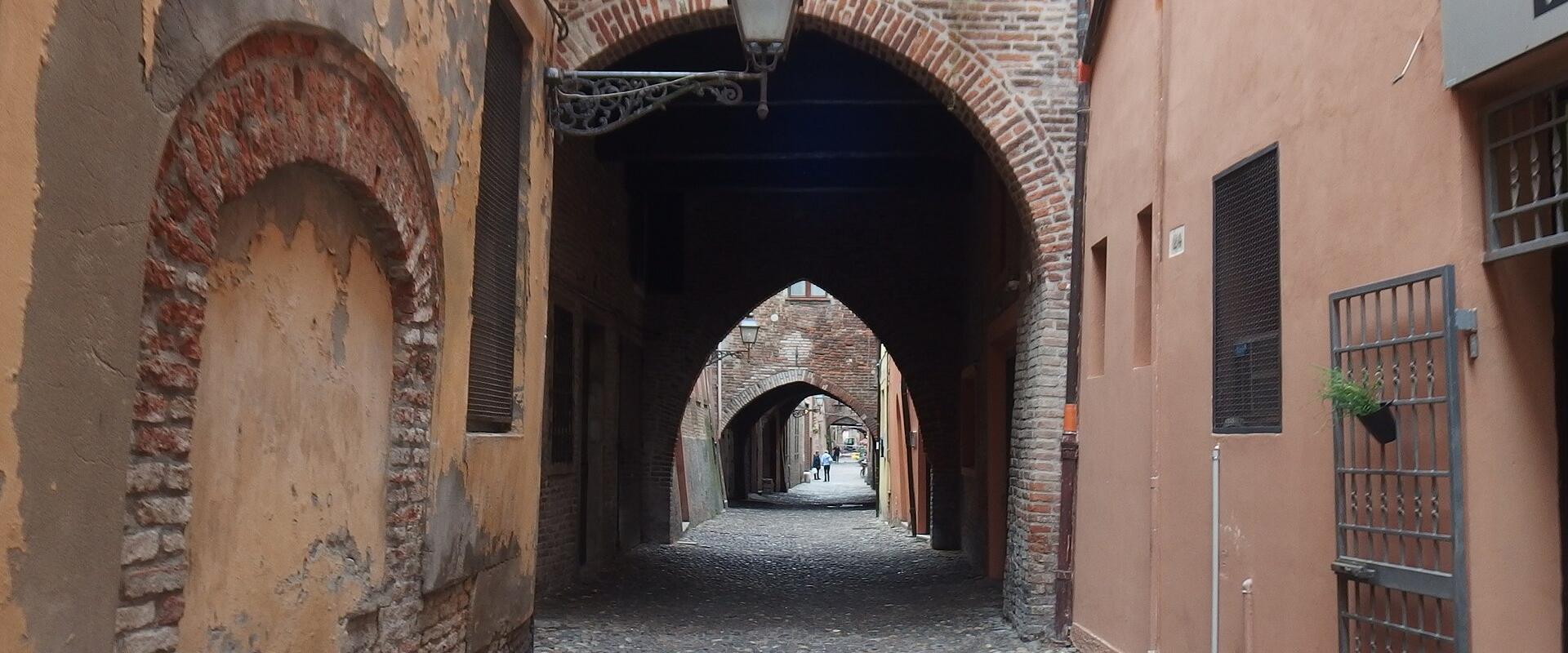
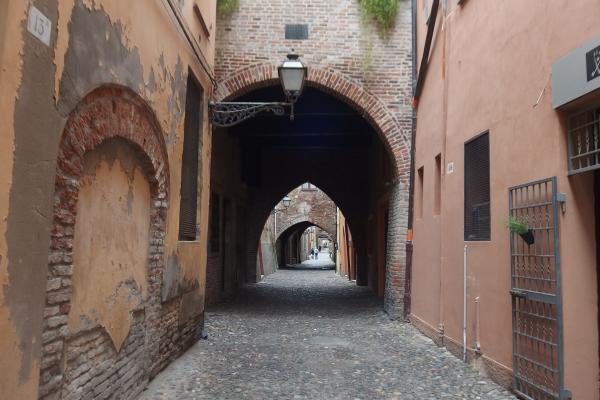
Via delle Volte, or the Street of Arches, is a narrow, atmospheric medieval thoroughfare in Ferrara, Italy. Running east-west between Via Capo delle Volte and Via Giuoco del Pallone, this cobblestone path offers visitors a tangible connection to the city's earliest urban development. Dating back to the early Middle Ages, the street originally served as the central axis of Ferrara's linear growth along the Po di Volano river branch.
The area's defining feature is its system of overhead vaults, constructed primarily in the 13th and 14th centuries. These flying arches create covered passages that once connected merchant homes and workshops to river-side warehouses and docks. This three-dimensional architectural solution facilitated efficient transport of goods while protecting travelers from muddy riverbanks and potential theft. Although the river course shifted in 1152, the street retained its commercial significance, with exposed brick facades and historic alleys preserving a distinct medieval ambiance.
Today, the shortened route connects the foot of Piazza Verdi to the Church of San Paolo. The street holds notable cultural weight, having been depicted in Giorgio Bassani's novel The Garden of the Finzi-Continis, which references its complex history. Visitors can explore the area freely as part of the medieval center itineraries, such as "Il centro medievale." The site remains an open public space, allowing for an evocative walk through ancient times without admission fees or specific opening hours. It is a unique example of early medieval urban planning, offering a quiet, historic contrast to Ferrara's later Renaissance grid.
Ferrara was ruled for centuries by the Este family, who turned it into one of the great courts of Renaissance Italy, and in the late fifteenth century the city was doubled in size with a new planned quarter to the north, the Addizione Erculea, one of the first examples of modern town planning in Europe. That contrast between the tight medieval lanes of the south, like Via delle Volte, and the broad, straight streets of the north is one of the pleasures of a walk through the city, which is listed by UNESCO.
Close by, the streets of the former Jewish ghetto, such as Via Mazzini, keep synagogues and memories of a community that Bassani wrote about. Ferrara is famously a city of bicycles, and its almost complete circuit of Renaissance walls, about nine kilometres long, can be walked or cycled on a raised path shaded by trees.
Categories
More photos coming soon
Hours & Fees
- Open
- Open 24/7 (public street)
- Admission
- Free admission
Hours and prices change, especially out of season. Check with the venue before you go.
Nearby Attractions
Other places to visit in Ferrara
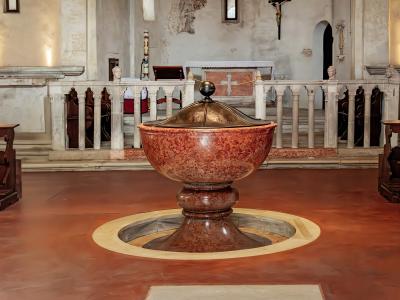
Battistero di San Giovanni
Romanesque baptistery with 12th-century frescoes
Architectural Monuments · Historic Churches
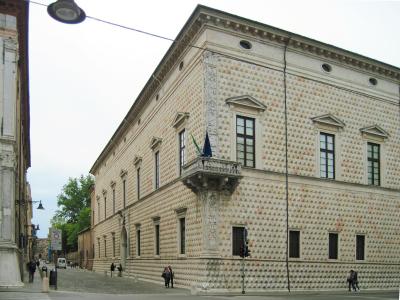
Palazzo dei Diamanti (Galleria Estense)
Renaissance palace with diamond-shaped facade
Architectural Monuments · Art Museums
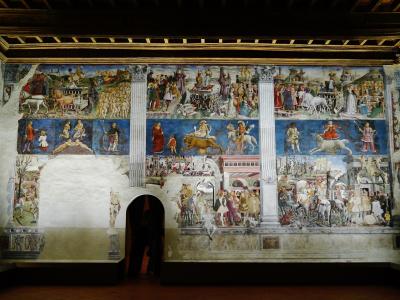
Palazzo Schifanoia
15th-century palace with frescoed rooms
From €9 Art Museums · Cultural Tours
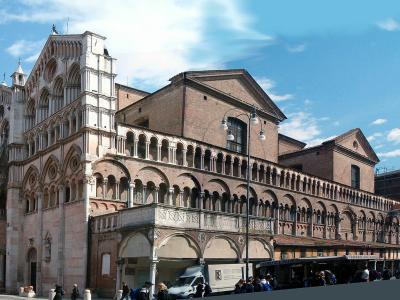
Ferrara Cathedral (Duomo)
12th-century Romanesque cathedral with free entry
Free Architectural Monuments · Historic Churches
Questions people ask
Quick Facts
Best Time to Visit
Visit in April to June or September to October for mild weather and fewer crowds.