







- Admission
- Free admission
- Hours
- Open 24/7
- Where
- Catania, Sicily
- Directions
- Directions
Via Etnea is Catania’s main boulevard, a long, straight street that runs north from the Piazza del Duomo toward Mount Etna and is a central hub for shopping, dining and people-watching. It is historically significant as the city’s grand axis. After the devastating earthquake of 1693, which destroyed much of eastern Sicily, and the eruption of Etna in 1669 that had already swamped part of the city with lava, Catania was rebuilt on a new plan with broad, straight streets, so that it could withstand future disasters and give room for escape. Via Etnea was the spine of that plan, and its straight line toward the volcano is deliberate: at the end of the street, framed by the buildings, the cone of Mount Etna rises on the northern horizon, sometimes capped with snow and often trailing a plume of smoke.
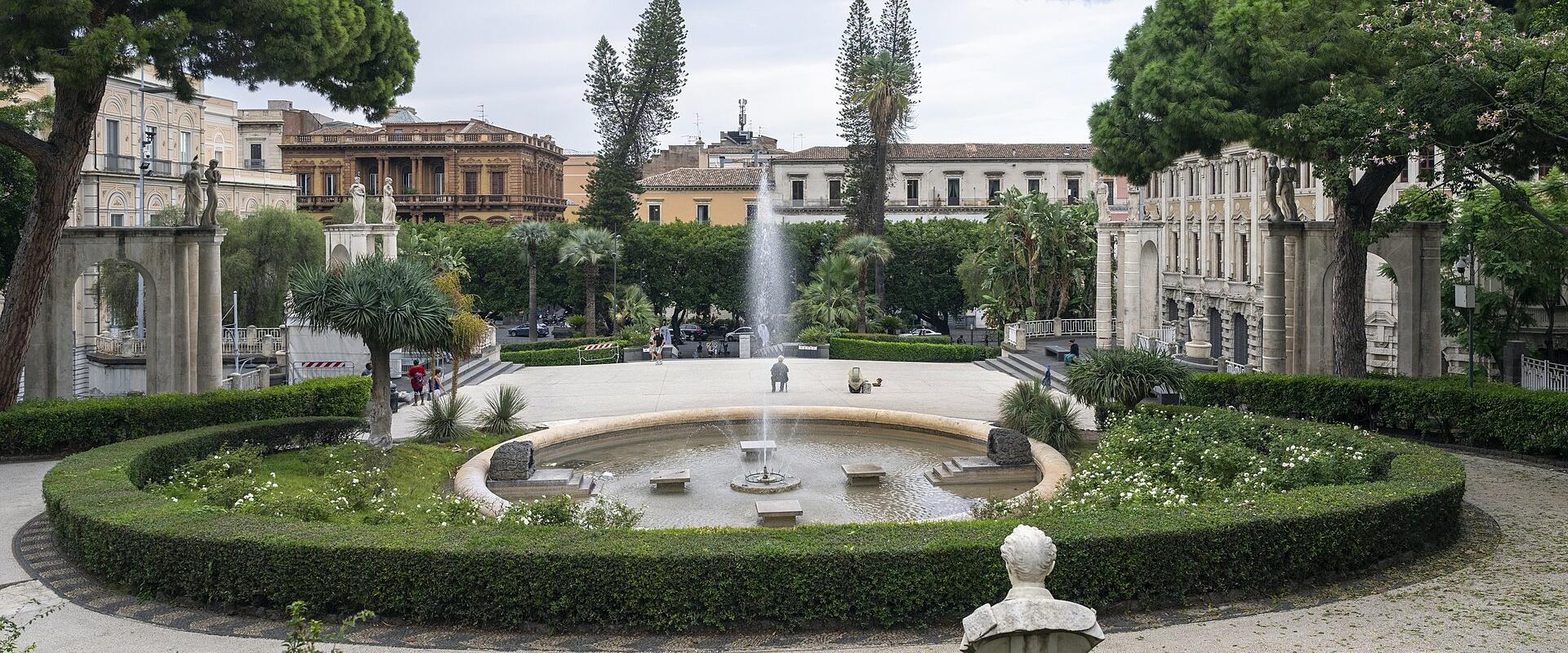
The street runs from the historic Piazza del Duomo, where the Fountain of the Elephant marks the center of the old town, up through a series of squares toward Villa Bellini, a hillside public garden, and farther toward the northern suburbs. Its distinctive lava-stone paving, dark gray and polished by traffic, and the elegant Baroque architecture along both sides give the street a character shaped by the volcano that threatens it. Many of the palaces and churches are built of dark lava stone trimmed with pale limestone, creating a strong contrast of black and white that is typical of Catania. The Collegiata church, with its curved facade, is one of the finest Baroque buildings on the route.
As an open public street, Via Etnea offers free access to all visitors. There are no opening hours or admission fees, as it functions as a lively thoroughfare rather than a ticketed attraction. The lower stretch, near the cathedral, is busiest, and parts of it are closed or restricted to traffic at certain hours, which makes walking comfortable. The street is lined with cafes, shops and historic buildings, allowing visitors to immerse themselves in the daily life of Catania. Pastry shops sell the city’s specialties, such as arancini, granita with brioche in summer and cannoli, and a stop for a granita in the shade is part of the Catanian routine.
Along the way, there are many places worth a detour. Piazza Università, with its university buildings and the Palazzo dei Chierici, is close to the start, and the Roman Amphitheatre, partly excavated and partly hidden under the buildings, is at Piazza Stesicoro, a short distance along. The Teatro Massimo Bellini, the city’s grand opera house named after the composer born in Catania, stands in a square just off the street, and the Fish Market is a short walk behind the cathedral.
Walking along Via Etnea provides a tangible connection to the city’s resilience and artistic heritage, and it is an essential starting point for exploring Catania. The combination of architectural grandeur, volcanic geography and vibrant street life makes it a memorable destination. The late afternoon and early evening are the best times, when Catanians take their passeggiata and the lava stone glows in the low light. The street gives a profound insight into the cultural and social fabric of Sicily’s second-largest city.
Categories
More photos coming soon
Hours & Fees
- Open
- Open 24/7
- Admission
- Free admission
Hours and prices change, especially out of season. Check with the venue before you go.
Nearby Attractions
Other places to visit in Catania
Castello Ursino
13th-century Swabian fortress and lava-surviving civic mu...
Archaeological Museums · Castles & Fortresses
Chiesa di San Benedetto
Early 18th-century Baroque church in Catania
Art Museums · Cultural Tours
Grotta del Gelo
Natural ice cave with stalactites under Etna
Cave Exploring · Geological Sites
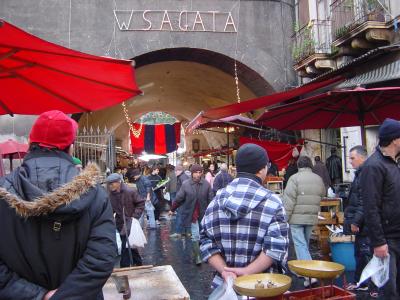
Mercato di Pesce (Fish Market)
Historic fish market with marble stalls
Free Historic Districts · Local Cuisine
Questions people ask
Quick Facts
Best Time to Visit
Visit between April and June or September and October for mild temperatures and fewer crowds.