







- Where
- Catania, Sicily
- Directions
- Directions
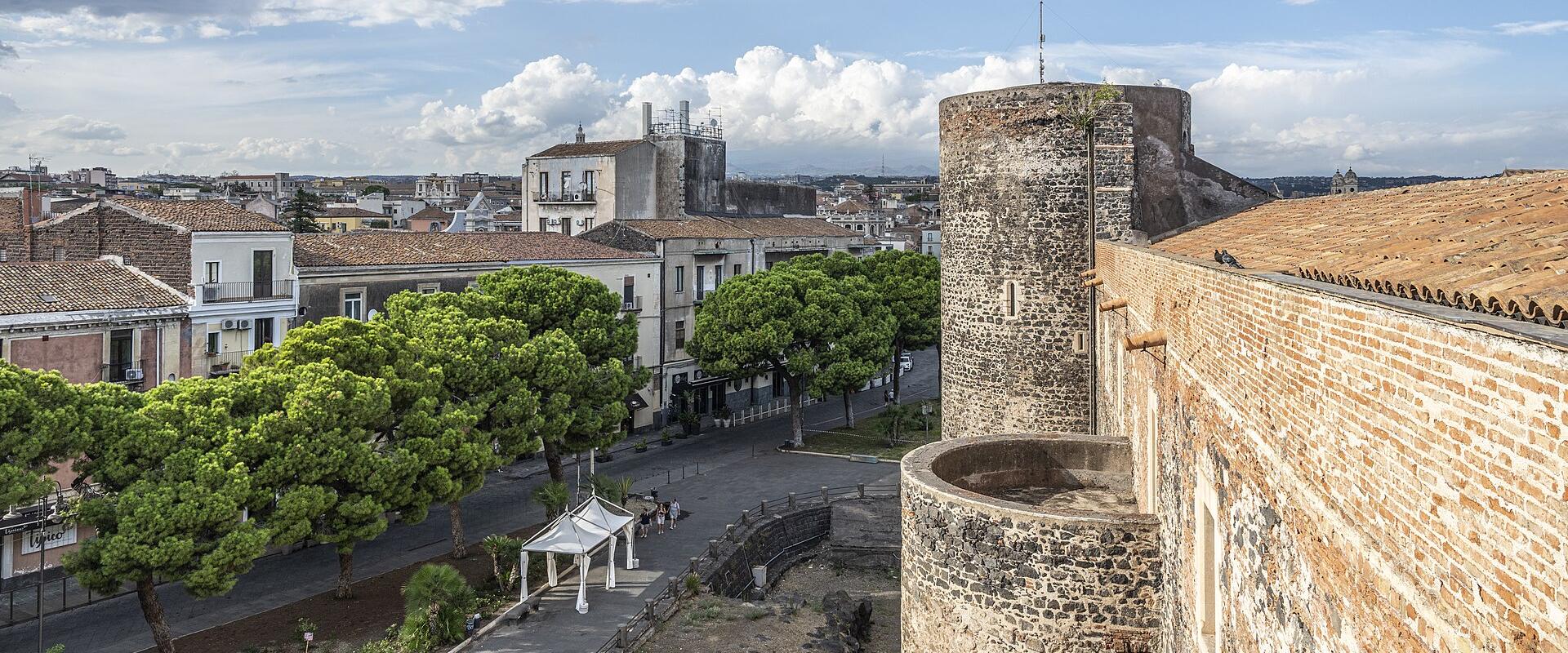
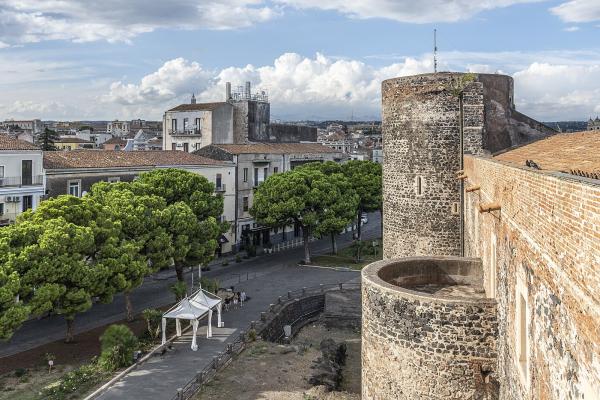
Castello Ursino is a thirteenth-century Swabian fortress in the centre of Catania, and it houses the city's Civic Museum. Frederick II, ruler of the Holy Roman Empire and king of Sicily, ordered it built from around 1239 as part of a network of royal castles. It has a square plan with a large round tower at each corner and further towers along the walls, and its severe, solid design is typical of Frederick's military architecture. At the time it stood on a rocky cliff beside the sea, protecting the harbour.
The most remarkable thing about the castle's story is what happened to its setting. In 1669 a huge eruption of Mount Etna sent lava across Catania, filling the harbour and surrounding the castle. The fortress survived, but the sea retreated and the castle is now inland, with the lava forming the ground around it. That explains why it seems to sit oddly far from the water today, and the dark volcanic stone near its walls is a reminder of the event. The medieval parliament of Sicily met in the castle at times, and it later served as a prison and a barracks before becoming a museum, and it is among Catania’s oldest surviving buildings.
Today, the Civic Museum holds a broad collection that began with the private collections of the Biscari family and with the Benedictine monastery of the city. The displays include prehistoric tools, Greek and Roman sculpture, inscriptions, mosaics, ceramics, medieval art and paintings, and they give a sense of the long human presence on the slopes of Etna. Sculptures from Roman Catania are well represented, and the city has other Roman remains in the area, such as the Amphitheatre in Piazza Stesicoro. Visitors can walk through the halls and courtyard and up to the upper levels, from which the view over the roofs of the city is good.
The castle's setting is close to the old centre. The Cathedral and Piazza del Duomo are a short walk away, the fish market is nearby, and the botanical garden and the university quarter are not far. The surrounding square is open and lively in the evenings.
Opening hours and ticket prices change, so check local tourism resources or the museum's official site before going. Allow about an hour and a half. The castle suits visitors interested in medieval history, volcano stories and archaeology. Its stout towers, plain walls and the contrast with the busy modern streets around it make it one of the most memorable monuments of the city.
Categories
More photos coming soon
Nearby Attractions
Other places to visit in Catania
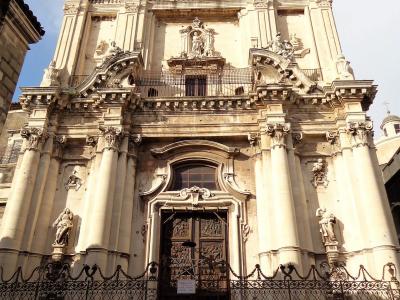
Chiesa di San Benedetto
Early 18th-century Baroque church in Catania
Art Museums · Cultural Tours
Grotta del Gelo
Natural ice cave with stalactites under Etna
Cave Exploring · Geological Sites
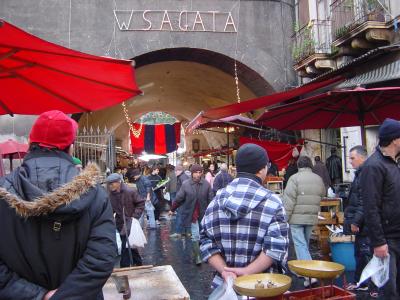
Mercato di Pesce (Fish Market)
Historic fish market with marble stalls
Free Historic Districts · Local Cuisine
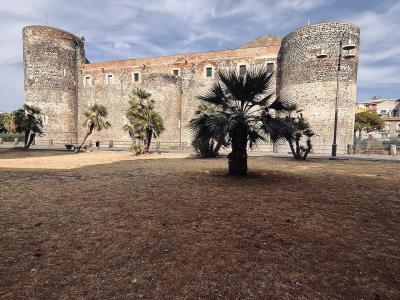
Museo Civico Castello Ursino
Medieval fortress housing diverse archaeological collections
Archaeological Museums · Castles & Fortresses
Questions people ask
Quick Facts
Best Time to Visit
Visit between April and June or September and October for mild temperatures and fewer crowds.