







- Where
- Modena, Emilia-Romagna
- Directions
- Directions
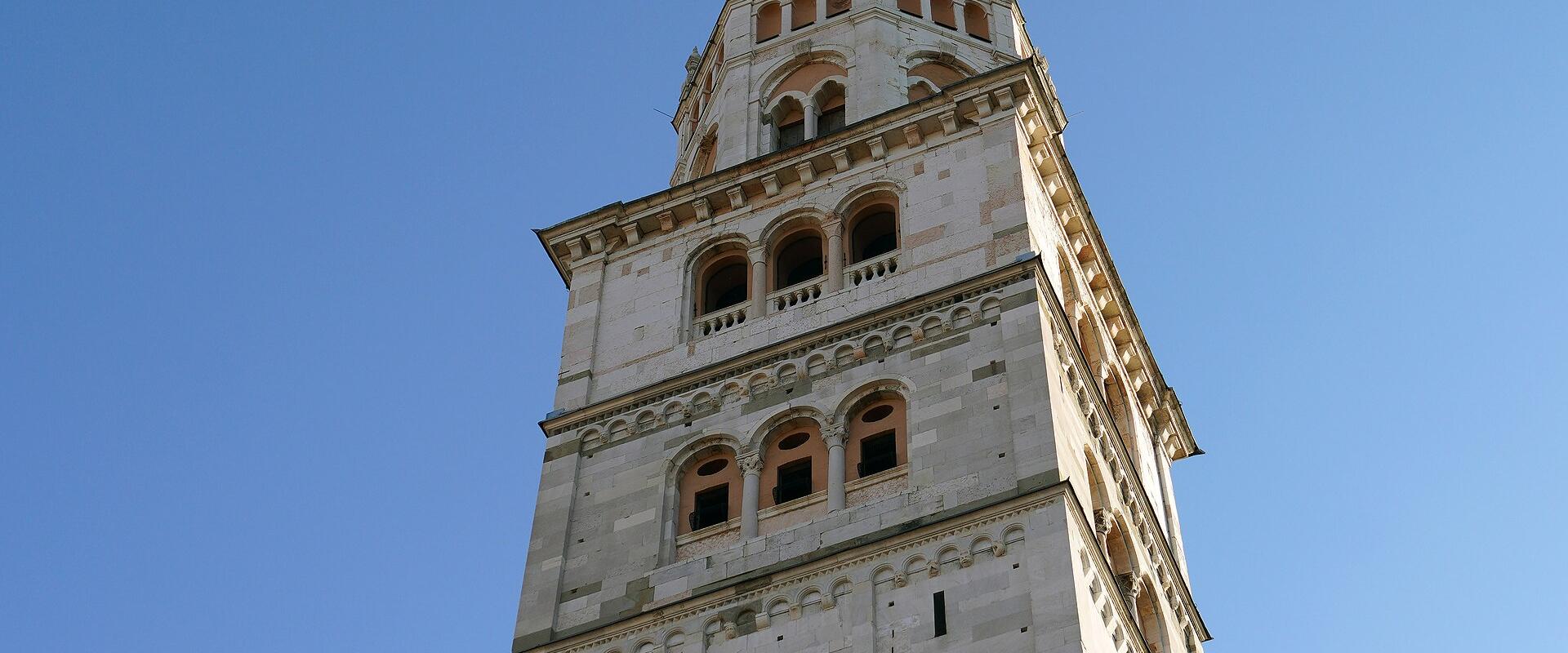
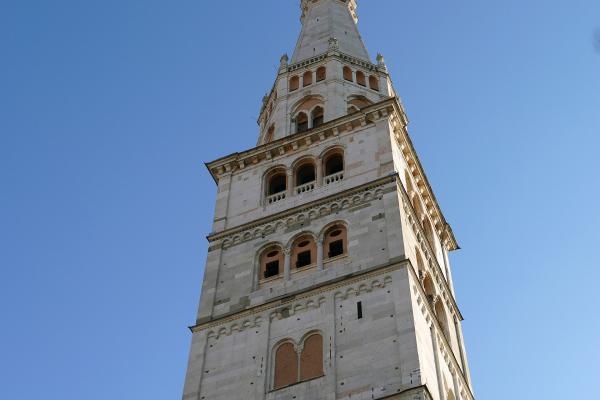
The Torre Ghirlandina is the bell tower of Modena Cathedral and the symbol of the city, a slender, soaring tower of pale stone that rises beside the cathedral on Piazza Grande and can be seen from far across the Emilian plain. It is about eighty-six metres tall, and it has been a UNESCO World Heritage site since 1997, together with the cathedral and the square, as an outstanding example of Romanesque architecture and of the way a medieval city expressed its identity in stone. The tower is a symbol of the commune, the free city, as much as of the church, and for centuries it served both as the bell tower of the cathedral and as the civic tower, where watchmen kept watch, bells called citizens to assembly, and the city’s treasures were stored.
Its construction began at the same time as the cathedral, around 1099, under the architect Lanfranco, and the lower parts of the tower are Romanesque, in plain, powerful masonry with narrow windows and arched openings that grow wider as the tower rises. The upper section, the octagonal spire and the loggia beneath it, was added in the early 14th century, completed in 1319 by the Campionesi masters, whose leader Arrigo da Campione designed the Gothic crown. The tower takes its name from the two marble balustrades at the top, which look like garlands, ghirlande in Italian, and the delicate openwork of the spire contrasts with the severity of the base. The effect of the whole is of increasing lightness as the eye moves up.
Inside the tower, there are rooms of interest. The Sala dei Torresani, the room of the tower-keepers, has 13th-century frescoes, and it was where the guardians who watched for fires and enemies lived. The Sala della Secchia, the Bucket Room, has a copy of an old wooden bucket, the secchia, that is the subject of a famous story. In 1325, after the Battle of Zappolino, the men of Modena carried off a bucket from a well in Bologna as a trophy, and they kept it in the tower as a symbol of victory. The episode inspired the poet Alessandro Tassoni to write a mock-heroic poem called La secchia rapita, the stolen bucket. Visitors can see the replica and learn the story, which shows the rivalry of the Emilian cities.
The tower can be climbed on a guided or ticketed route, up a narrow staircase of a couple of hundred steps, to a level near the top from which there are views of Modena’s red roofs and the surrounding plain, and in clear weather as far as the Apennines. Opening times vary with the season and are generally split between the morning and afternoon, with longer hours on weekends, so check the schedule. A climb takes about an hour. The tower stands next to the Basilica di San Geminiano and the Duomo di Modena (Modena Cathedral), in the Piazza Grande, a short walk from Strada San Pietro, and the Museo Ferrari, devoted to the car-maker whose roots are in Modena, is a few kilometres away. The tower suits anyone interested in medieval history and in views, and it is a good place to begin a visit to Modena.
More photos coming soon
Nearby Attractions
Other places to visit in Modena
Basilica di San Geminiano
UNESCO Romanesque cathedral in Modena
Free Architectural Monuments · Historic Churches
Duomo di Modena (Modena Cathedral)
UNESCO Romanesque cathedral with Ghirlandina tower
Architectural Monuments · Historic Churches
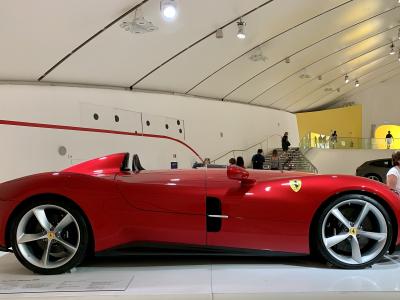
Museo Ferrari
Ferrari museum in Modena showcasing Enzo Ferrari's legacy...
History & Heritage · Museums & Culture
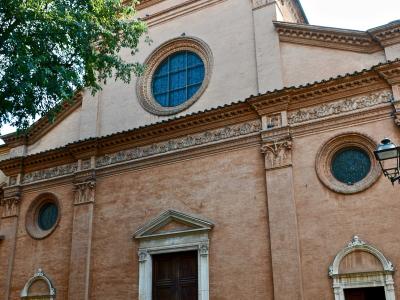
Strada San Pietro
16th-century Renaissance church with Begarelli terracottas
Architectural Monuments · Historic Churches
Questions people ask
Quick Facts
Best Time to Visit
Visit between April and June or September and October for mild temperatures and fewer crowds.