







- Admission
- Free main nave
- €3 Presbytery/Sacristy route
- Where
- Modena, Emilia-Romagna
- Directions
- Directions
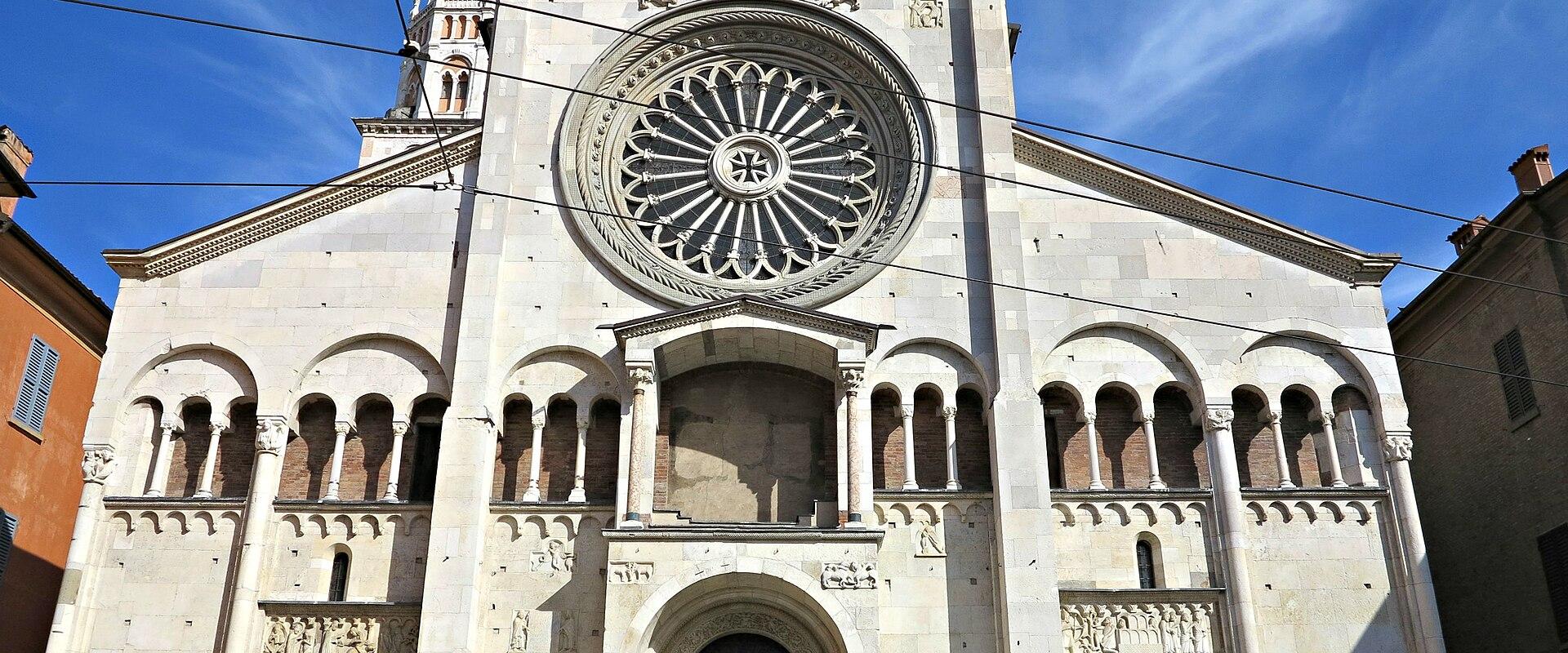
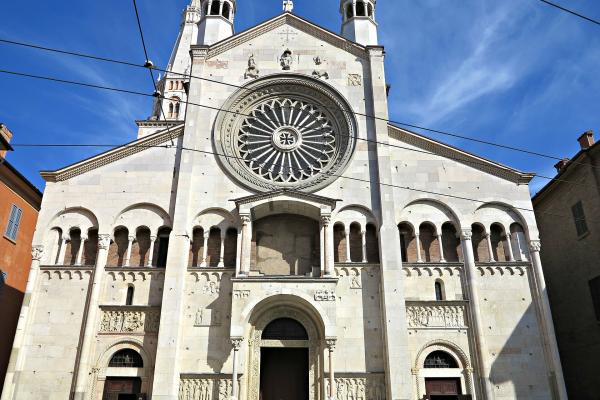
The Basilica di San Geminiano is a name sometimes given to the cathedral of Modena, officially the Cattedrale Metropolitana di Santa Maria Assunta e San Geminiano, at Corso Duomo, in the centre of the old city. It is dedicated to the Virgin Mary in her Assumption and to Saint Geminianus, the bishop and patron saint of Modena, whose tomb lies in the crypt. Together with the Torre Ghirlandina, the cathedral’s bell tower, and the Piazza Grande, the square beside it, it has been a UNESCO World Heritage site since 1997, and it is regarded as one of the greatest works of Romanesque architecture in Europe. This is the same building as the Duomo di Modena, and the two names refer to one monument.
The story of the cathedral begins in 1099, when the foundation stone was laid for a new church over the tomb of Saint Geminianus, and the work was entrusted to the architect Lanfranco, whose name is recorded in an inscription. The sculptor Wiligelmo, one of the first great artists of medieval Italy, carved the figures and reliefs of the facade. The church was consecrated in 1184, though work continued for some time, and in the 13th century the Campionesi masters, a family of stonemasons from Campione on Lake Lugano, added the great rose window and other features. The result is a monumental building of pale stone with a simple, harmonious form.
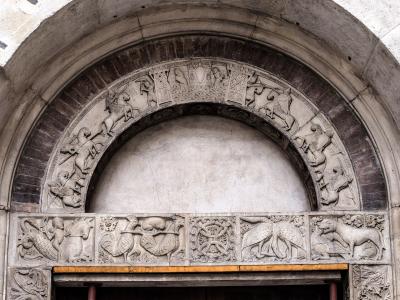
The sculpture is the glory of the exterior. Across the lower part of the facade, Wiligelmo carved four large panels with scenes from the Book of Genesis, among them the creation of Adam and Eve, the expulsion from Eden, the story of Cain and Abel and the building of Noah’s ark, which are among the oldest and most powerful narrative reliefs of the Romanesque. The figures are bold and expressive, with strong gestures and simple, rounded forms. The side portals are also important: the Porta dei Principi has more reliefs by Wiligelmo and his school, and the Porta della Pescheria, on the north side, has a remarkable archivolt that shows King Arthur and his knights rescuing Queen Guinevere, among the earliest depictions of the Arthurian legend in Italy.
General entry to the main nave is free, so visitors can appreciate the interior, which is austere, with high arches and a raised choir above the crypt, separated from the nave by a stone screen, the pontile, decorated with carved scenes. A separate ticket is required for the route through the presbytery and sacristy, which offers elevated views of the interior and the rose window. The Cathedral is an active church, so modest dress is expected and visits may be limited during services such as Mass. The route through the Presbytery and Sacristy is the one that needs the ticket. It is a short walk from Modena Train Station, and local bus lines serve the centre, with parking at the Parcheggio del Centro. In Emilia-Romagna it is a major stop. Nearby are the Torre Ghirlandina, the Strada San Pietro and the Museo Ferrari, a few kilometres away. The cathedral suits anyone interested in medieval sculpture and architecture.
Categories
More photos coming soon
Admission Fees
- Admission
- Free main nave; €3 Presbytery/Sacristy route
Hours and prices change, especially out of season. Check with the venue before you go.
Nearby Attractions
Other places to visit in Modena
Duomo di Modena (Modena Cathedral)
UNESCO Romanesque cathedral with Ghirlandina tower
Architectural Monuments · Historic Churches
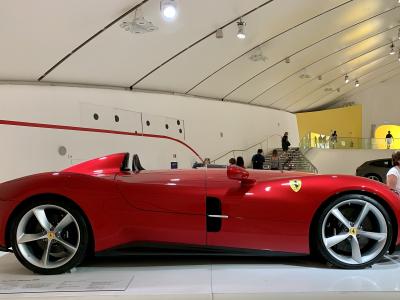
Museo Ferrari
Ferrari museum in Modena showcasing Enzo Ferrari's legacy...
History & Heritage · Museums & Culture
Strada San Pietro
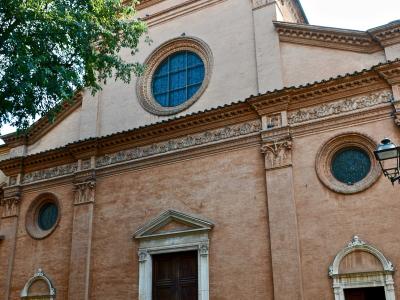
16th-century Renaissance church with Begarelli terracottas
Architectural Monuments · Historic Churches
Teatro Comunale di Modena
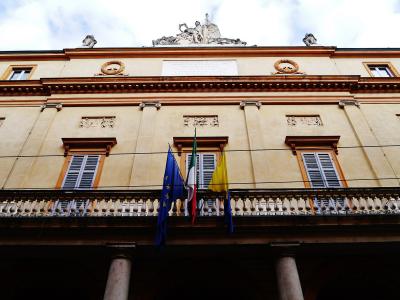
1841 opera house in Modena
Museums & Culture
Questions people ask
Quick Facts
Best Time to Visit
Visit between April and June or September and October for mild temperatures and fewer crowds.