







- Admission
- €7 full (since 1 Jul 2026)
- €2 EU citizens aged 18–25; free under 18 and on the first Sunday of the month. Timed tickets via the Musei Italiani website/app or on site
- Hours
- Daily 9:00–19:00, last entry 18:30; closed 25 Dec and 1 Jan. No tourist entry during Mass...
- Where
- Rome, Lazio
- Directions
- Directions
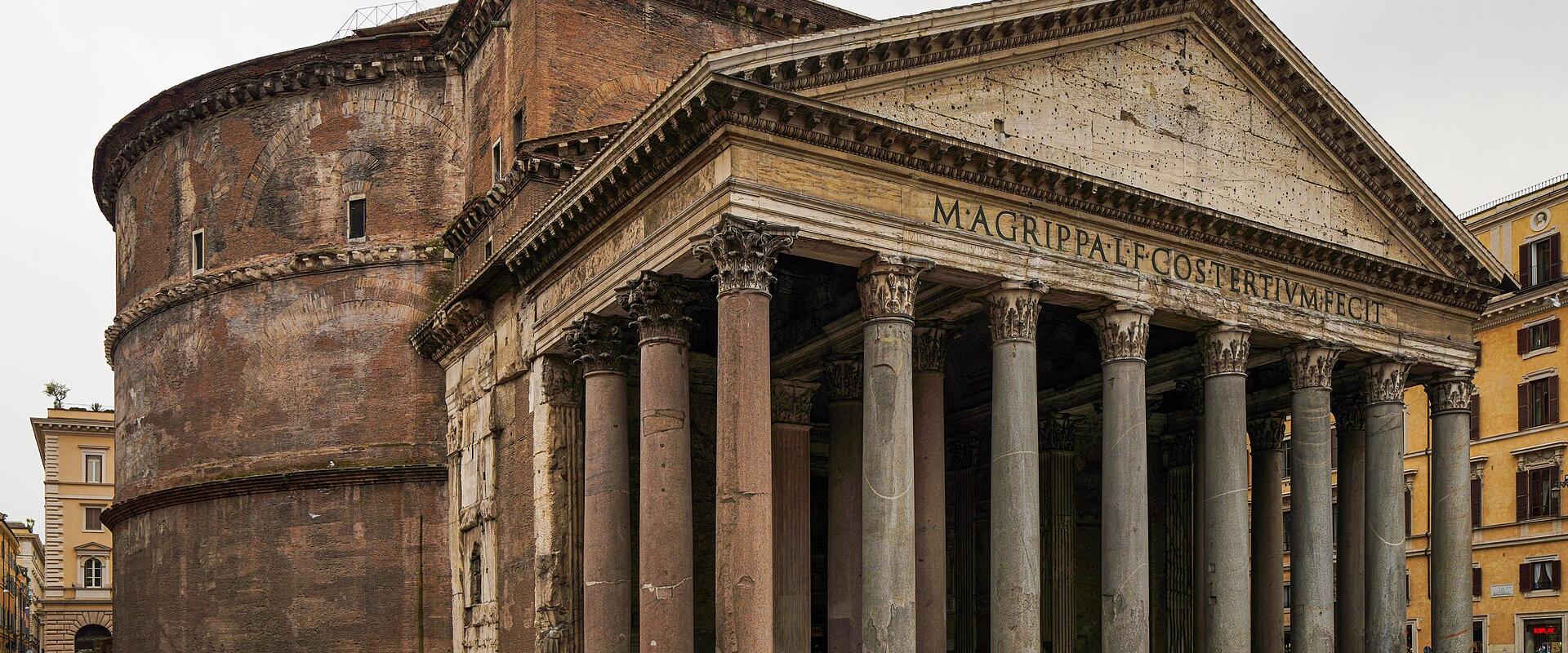
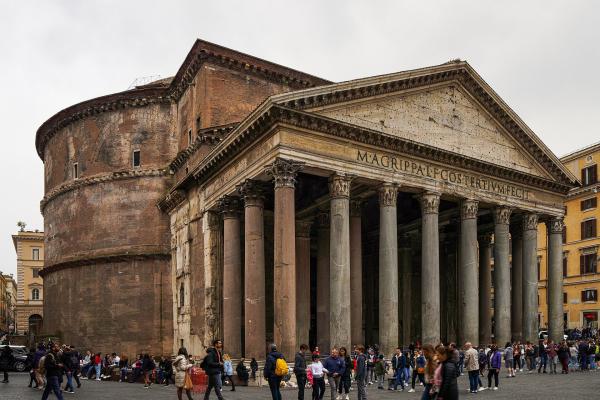
The Pantheon in Piazza della Rotonda is the best-preserved building of ancient Rome and has been in use for almost 1,900 years. The first temple on the site was built by Marcus Agrippa in the 20s BC, which is why the inscription across the front names him. That building burned down, and the present one was built under Emperor Hadrian and probably dedicated around AD 126. The name means "all the gods" in Greek, though how the Romans used the building is still debated.
The porch has 16 monolithic columns of grey and pink Egyptian granite with Corinthian capitals. Through the bronze doors is a single round hall. The dome is 43 metres across inside, the same as the height from floor to top, so a sphere would fit exactly within the room. It is still the largest unreinforced concrete dome in the world. The Romans made the upper part lighter with lighter stone in the concrete and with sunken coffers, and left an opening at the top, the oculus, about 9 metres wide and open to the sky. A disc of sunlight moves across the coffers and walls during the day; when it rains, water falls onto the marble floor and drains away through small holes.
On 13 May 609 Pope Boniface IV consecrated the building as the church of St Mary and the Martyrs, and its use as a church is the main reason it was not stripped like other Roman monuments. It is still a church. Raphael is buried inside, as are the first two kings of unified Italy, Victor Emmanuel II and Umberto I, Queen Margherita, the painter Annibale Carracci and the composer Arcangelo Corelli.
Since July 2023 the Pantheon charges for entry; the full price rose from €5 to €7 on 1 July 2026. EU citizens aged 18–25 pay €2, under-18s go in free, and entry is free for everyone on the first Sunday of the month. It is open daily from 9:00 to 19:00, with last entry at 18:30, and closed only on 25 December and 1 January. Tickets are sold for time slots through the Ministry of Culture's Musei Italiani website and app, and at desks and machines on site; there is no separate skip-the-line ticket. Mass is celebrated on Saturdays at 17:00 and Sundays at 10:30. Ticket sales stop an hour before, and during Mass only worshippers go in, free. A visit takes about half an hour.
The square in front has a fountain with an Egyptian obelisk. Piazza Navona is about five minutes' walk west and the Trevi Fountain about ten minutes east.
More photos coming soon
Hours & Fees
- Open
- Daily 9:00–19:00, last entry 18:30; closed 25 Dec and 1 Jan. No tourist entry during Mass (Sat 17:00, Sun 10:30) or in the hour before.
- Admission
- €7 full (since 1 Jul 2026); €2 EU citizens aged 18–25; free under 18 and on the first Sunday of the month. Timed tickets via the Musei Italiani website/app or on site.
Hours and prices change, especially out of season. Check with the venue before you go.
Nearby Attractions
Other places to visit in Rome
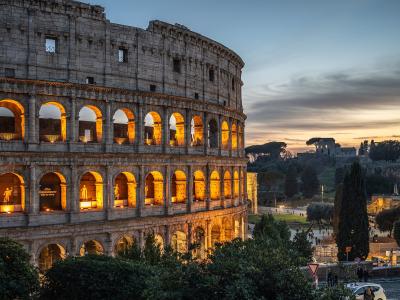
The Colosseum
Largest ancient amphitheater, built 70-80 AD
Ancient Ruins · Architectural Monuments
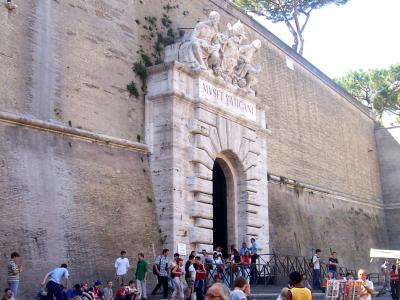
Vatican Museums
Papal museums housing Renaissance masterpieces
From €5 History & Heritage · Museums & Culture
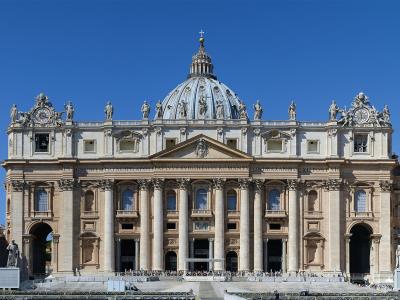
Vatican City (St. Peter's Basilica)
Renaissance basilica on Saint Peter's burial site
Architectural Monuments · Art Museums
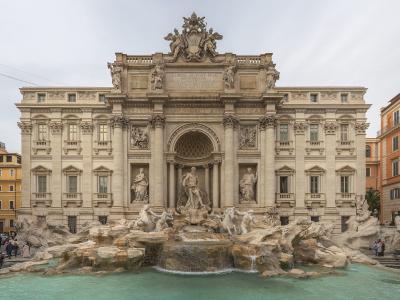
Trevi Fountain
18th-century Baroque fountain in Rome
From €2 Architectural Monuments · Historic Fountains
Questions people ask
Quick Facts
€7 full (since 1 Jul 2026)
€2 EU citizens aged 18–25; free under 18 and on the first Sunday of the month. Timed tickets via the Musei Italiani website/app or on site.
Best Time to Visit
Visit in April to June or September to October for mild temperatures and fewer crowds.