







- Where
- Palermo, Sicily
- Directions
- Directions
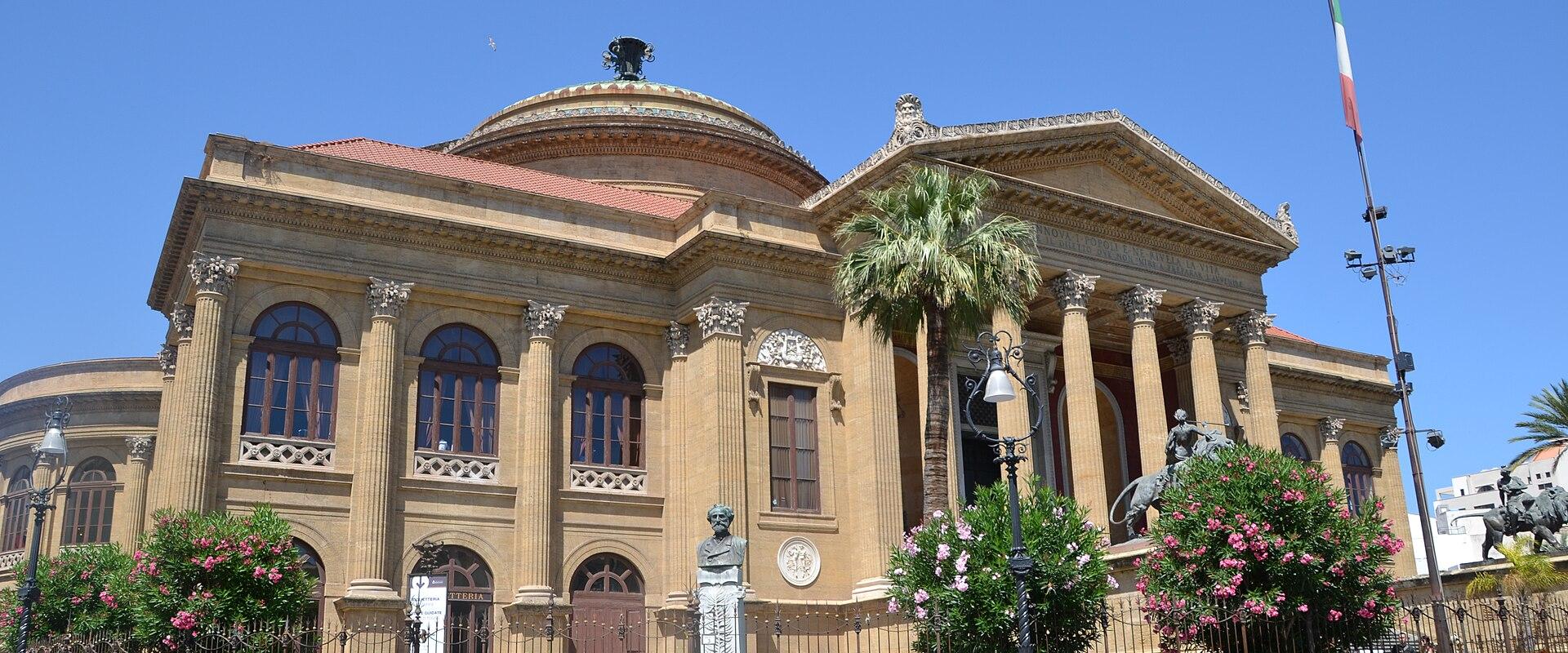
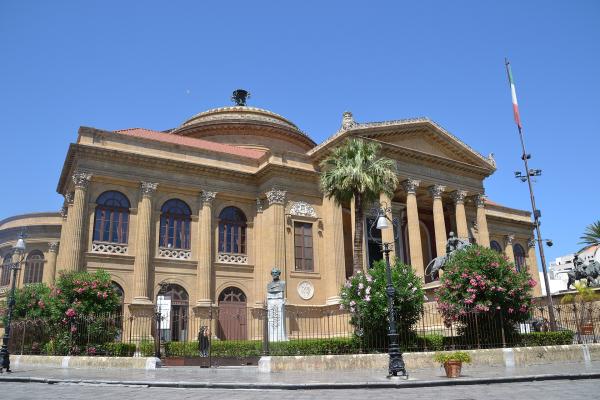
Teatro Massimo is the largest opera house in Italy and one of the biggest in Europe, and it dominates Piazza Verdi in central Palermo, in Sicily, at the point where the old city meets the 19th-century avenues. The building was designed by Giovan Battista Filippo Basile, who won the competition for it in the 1860s, and after his death it was completed by his son Ernesto. Construction took more than two decades, and it opened on 16 May 1897 with Verdi’s Falstaff, a fitting choice for a theatre that sits in a square named after the composer.
The style is neoclassical, with echoes of ancient Greek and Roman temples. A broad flight of steps flanked by bronze lions leads up to a portico of Corinthian columns, crowned by a large dome. The scale was meant to announce the ambitions of a Sicilian capital in the new Italian state, and the building has the weight and ornament of that moment, with a richly decorated horseshoe auditorium of tiered boxes in red and gold. The ceiling is painted, and parts of it can be opened for ventilation, a clever detail among many in the design.
The theatre had a long and difficult history in the 20th century. It was closed for restoration in 1974 and stayed shut for more than two decades, a stretch that became a symbol of bureaucratic delay in the city. It reopened in 1997 after a lengthy renovation, and it has since become a lively centre of Palermo’s cultural life, hosting opera, ballet and concerts. The repertoire ranges from Sicilian-set works such as Cavalleria Rusticana to classics of the ballet stage like The Sleeping Beauty. The steps are also familiar from cinema, since the final scene of The Godfather Part III was filmed here.
There are two ways to visit. Guided tours take you through the foyer, the auditorium, the royal box and some backstage areas on days without rehearsals, and they are the best way to appreciate the interior if you are not attending a performance. Seeing an opera or ballet in the auditorium is more memorable still, and the acoustics and sightlines can be enjoyed even from the upper galleries. The theatre is close to Via Maqueda, the Quattro Canti and the markets of the old city, so it makes an easy addition to a day of walking in Palermo. It suits music lovers, architecture enthusiasts and anyone who wants to see a more formal side of the city.
Categories
More photos coming soon
Nearby Attractions
Other places to visit in Palermo
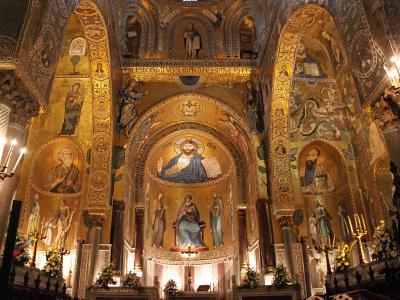
Palatine Chapel (Cappella Palatina)
12th-century Norman chapel with Byzantine mosaics
Architectural Monuments · Historic Churches
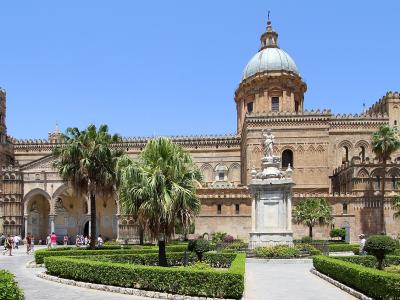
Palermo Cathedral (Cattedrale di Palermo)
UNESCO site blending Norman, Islamic, and Gothic styles
Architectural Monuments · Cultural Tours
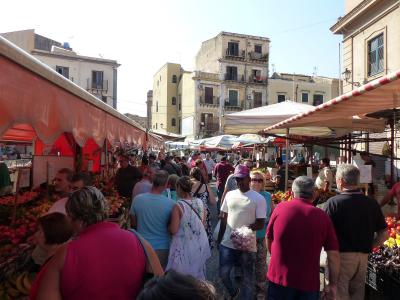
Ballarò Market
Historic open-air market in Palermo's historic center
Historic Districts · Local Cuisine
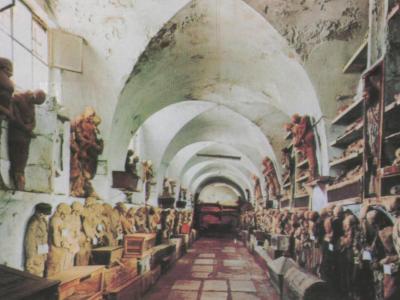
Catacombs of the Capuchins
Underground burial site with mummified monks
Cultural Tours · Educational Sites
Questions people ask
Quick Facts
Best Time to Visit
Visit in April to June or September to October for mild temperatures and fewer crowds.