







- Where
- Lecce, Apulia
- Directions
- Directions
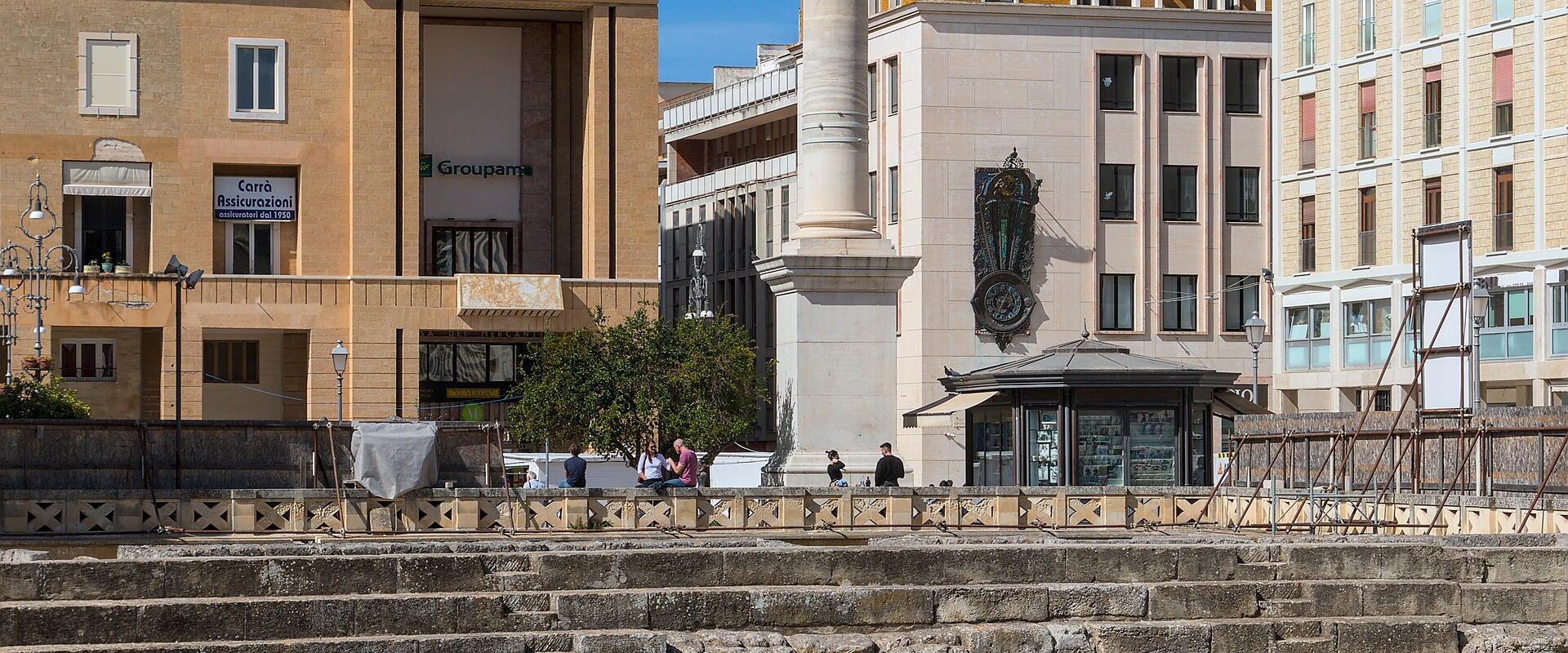
The Roman Amphitheatre of Lecce lies, half sunk below street level, in Piazza Sant’Oronzo, the main square of the old town, and it is the most visible reminder that the Baroque city of Lecce was built over the Roman town of Lupiae. The monument was discovered by chance in 1901, when workmen were digging foundations for a bank building on the square, and the excavation that followed uncovered a large part of the seating and the arena. It is generally dated to the 2nd century AD, a little later than the Augustan period that some sources suggest, and its name in antiquity is linked to the city of Lupiae, a prosperous town on the Via Traiana road and the Adriatic coast of Puglia.
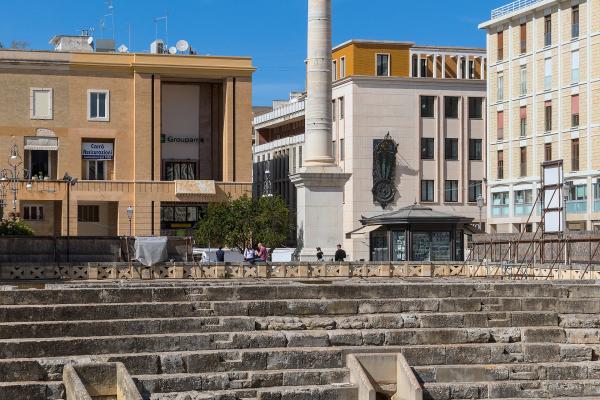
The amphitheatre was a large building, designed to hold perhaps twenty-five thousand spectators, and it had an elliptical plan with tiers of seats and arched corridors beneath them. Only part of it has been excavated, because much of the structure lies under the buildings and streets around the square, so what is visible is a section of the ellipse, with rows of stone seats, vaulted passages and a portion of the arena floor. On the podium wall, reliefs show gladiators and wild animals, a vivid reminder of the shows that took place in the arena, which included gladiator fights and hunts. Because the visible part is sunk about ten metres below the modern square, you look down into it from the pavement, which gives a striking view of two eras side by side.
The square itself is part of the experience. In its centre stands a tall Roman column, brought from Brindisi, where it marked the end of the Appian Way, and topped with a statue of Saint Oronzo, the city’s patron saint, who is believed to have converted the area to Christianity. Opposite the amphitheatre, the Sedile, a small building that once housed the town council, adds a Renaissance touch. A visit is short, typically half an hour or less, since you can see most of the site from the railing and a lower viewing area. A guided tour can be more informative.
The amphitheatre fits into a walk through central Lecce. A short distance away are the Lecce Cathedral (Cattedrale di Santa Maria Assunta), the Basilica di Santa Croce with its richly carved facade, the Palazzo dei Celestini, the Palazzo del Seminario and the Arco di Trionfo, which the Lecce people call Porta Napoli. It suits anyone interested in the Roman past, in the layering of a city’s history, or in Baroque Lecce, and it is best seen in the evening when the stone glows in the light, or in the morning when the square is quiet.
Categories
More photos coming soon
Nearby Attractions
Other places to visit in Lecce
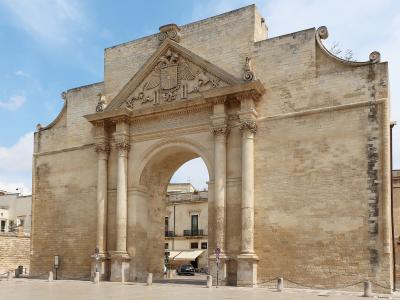
Arco di Trionfo (Arch of Triumph)
1548 Renaissance gate honoring Emperor Charles V
Architectural Monuments · Historic Districts
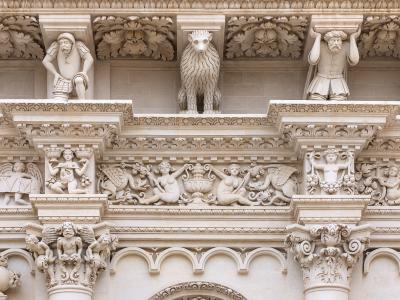
Basilica di Santa Croce
Lecce's Baroque masterpiece with intricate stone carvings
Architectural Monuments · Historic Churches
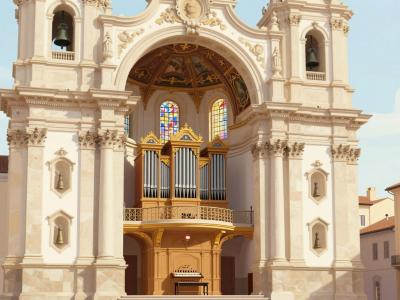
Lecce Cathedral (Cattedrale di Santa Maria Assunta)
Baroque cathedral built from local limestone
Architectural Monuments · Historic Churches
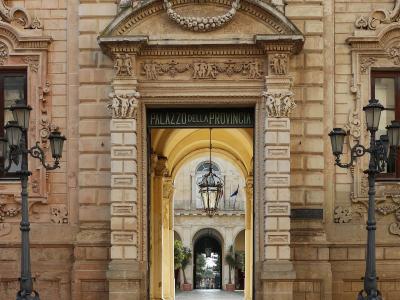
Palazzo dei Celestini
17th-century Baroque palace on Via Umberto I
Architectural Monuments · Historic Palaces
Questions people ask
Quick Facts
Best Time to Visit
Visit between April and June or September and October for mild temperatures and fewer crowds.