







- Where
- Perugia, Umbria and Marche
- Directions
- Directions
The Rocca Paolina is a sixteenth-century papal fortress in Perugia that survives mainly as an underground complex of old streets and vaults beneath the modern city centre. It was commissioned by Pope Paul III, of the Farnese family, after Perugia rebelled against papal taxes in the so-called Salt War of 1540. The architect Antonio da Sangallo the Younger designed it, and it was built from 1540 to 1543 to dominate the city and remind its people of papal power. The site chosen was the quarter that belonged to the Baglioni, the powerful family that had ruled Perugia, and their palaces, towers and houses were demolished or buried in the foundations.
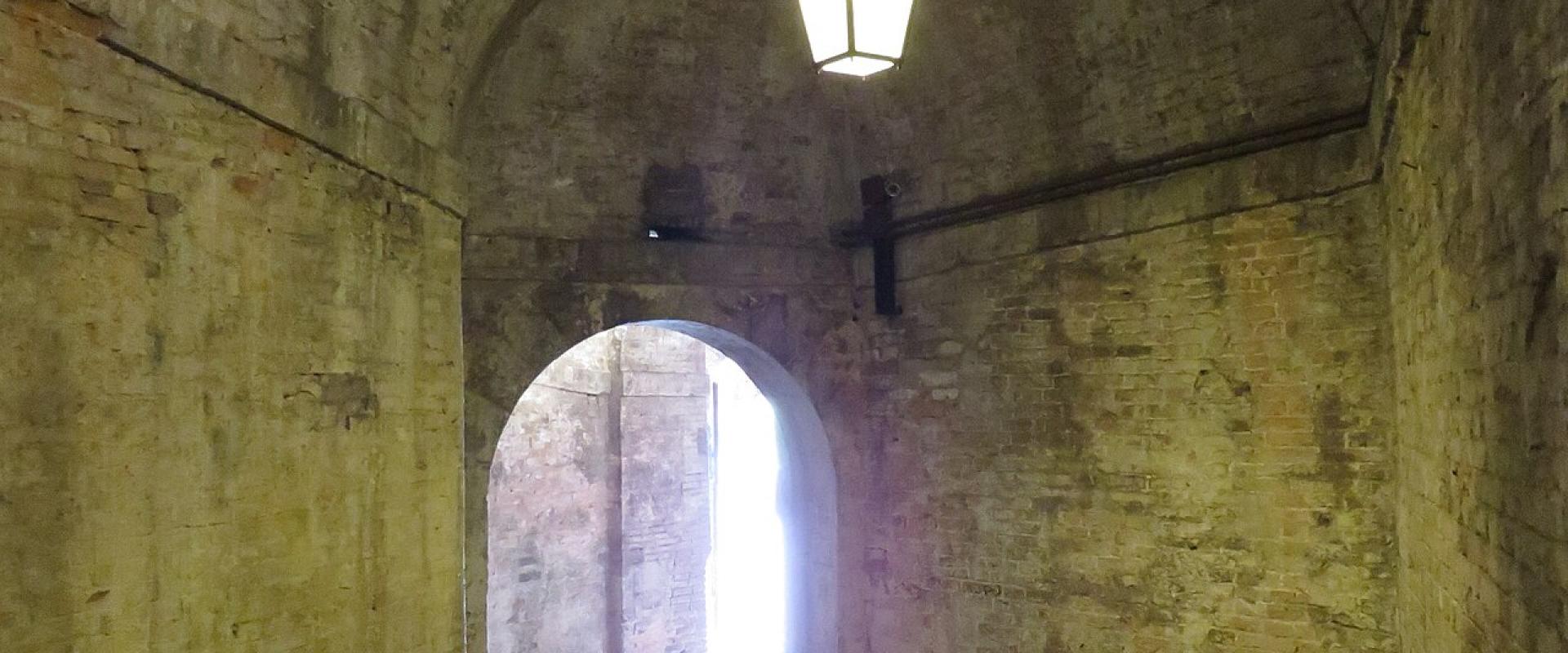
This is the unusual part of the story. Rather than clear the ground, the builders used the existing streets and buildings as a base, filling and vaulting them to carry the fortress. As a result, whole sections of a medieval neighbourhood remain preserved beneath the walls, with their street layout, doorways, arches and the remains of houses. The fortress stood for three centuries, and it was hated by the Perugians. When Perugia joined the new Italian state in 1860, the people demolished the upper parts of the Rocca and the site was converted to civic use. A large public building and the main square were built on top of it, and what remained of the lower structure was left as a series of underground spaces.
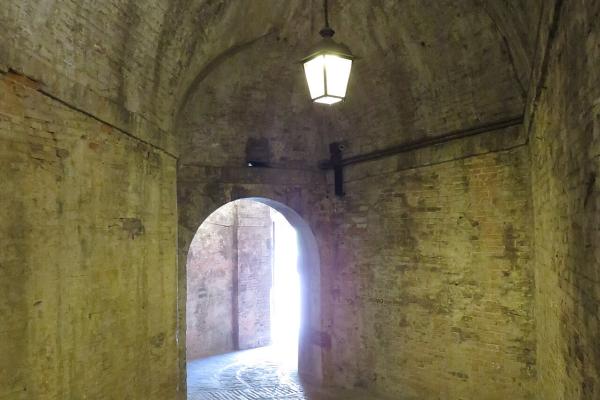
Today the visit is a walk through this buried quarter. Escalators carry visitors down from the lower town and up toward the centre, which makes the Rocca a practical shortcut as well as a historic site. Along the way you pass vaulted streets, atmospheric passageways, the foundations of houses and the line of an old thoroughfare, Via Bagliona. One of the highlights is a section of the ancient Etruscan wall and the Etruscan Porta Marzia, a gate that was incorporated into the fortress base and later reassembled here. Roman remains are also visible, and the layers of Perugia’s past, Etruscan, Roman, medieval and Renaissance, can be traced in a short walk.
The underground setting has a distinctive atmosphere, with dim lighting, cool air and echoing spaces. It is also used for exhibitions and events, and there are information panels explaining the history.
The Rocca is easy to reach, because it sits right below Piazza Italia, at the top of the old town's slope, and the walk up from the lower town by the escalators is a relaxing way to arrive in the centre. It is free to pass through and a quick visit takes twenty to thirty minutes. Wear shoes with grip, as the floors can be damp, and combine the visit with the Fontana Maggiore, Piazza IV Novembre and the medieval streets nearby.
Categories
More photos coming soon
Nearby Attractions
Other places to visit in Perugia
Etruscan Arch (Arco Etrusco)
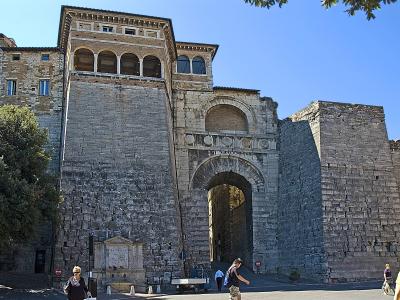
Etruscan city gate with the Roman inscription Augusta Perusia
Free Architectural Monuments · Historic Gates
Etruscan Well (Pozzo Etrusco)
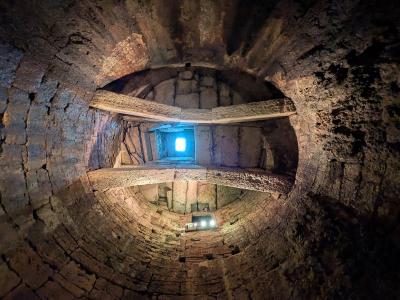
Etruscan well beneath Perugia's old town
Architectural Monuments · Historic Districts
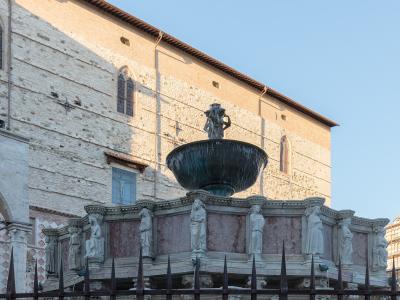
Fontana Maggiore
Medieval marble fountain with bronze basin in Perugia
Architectural Monuments · Historic Fountains
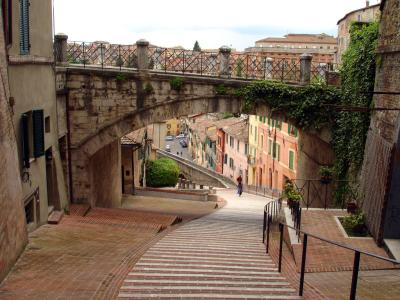
Medieval Streets of the Historic Center
Medieval streets and arches in Perugia's historic center
Historic Districts · Historic Towns
Questions people ask
Quick Facts
Best Time to Visit
Visit between April and June or September and October for mild temperatures and fewer crowds.