







- Where
- Perugia, Umbria and Marche
- Directions
- Directions
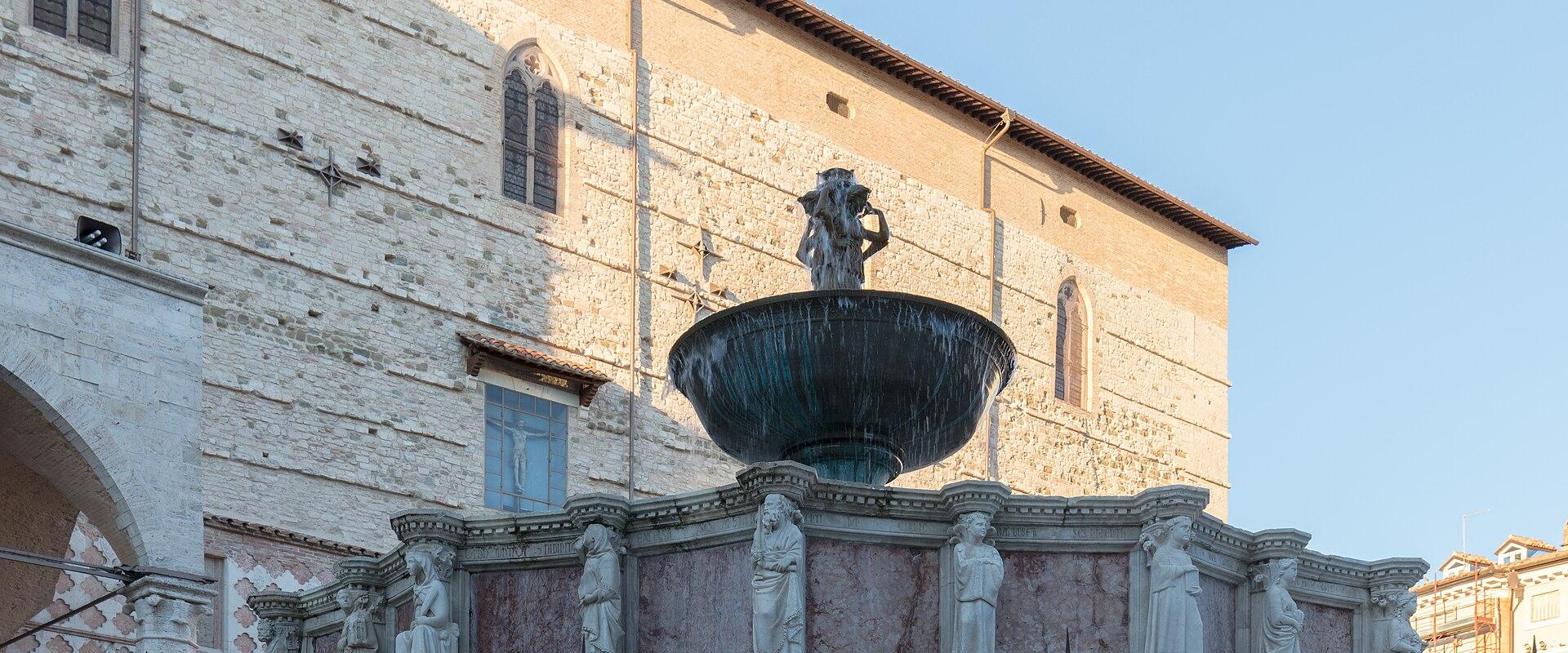
The Fontana Maggiore, the Great Fountain, is the symbol of Perugia and one of the masterpieces of medieval sculpture in Italy, and it stands in the centre of Piazza IV Novembre, between the Cathedral of San Lorenzo and the Palazzo dei Priori, the medieval town hall. It was built between 1275 and 1277, at a time when Perugia was a prosperous and ambitious commune, to celebrate the arrival of running water in the town. The water came by a new aqueduct, some four kilometres long, from springs on Mount Pacciano, and it was an engineering feat of the age, as it worked by forced pressure ducts, without the need for pumps, which was a significant advance in medieval infrastructure. The fountain was designed by Frà Bevignate da Cingoli, a monk of the Silvestrine order and an architect, together with Boninsegna Veneziano, the hydraulic engineer who solved the problem of bringing water to the hill.
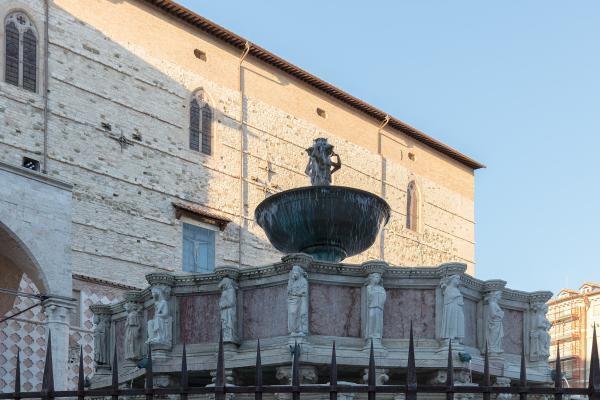
The sculpture is the work of two of the greatest artists of the age. Nicola Pisano and his son Giovanni Pisano carved the marble reliefs that cover the fountain, which are among the finest works of the early Italian Gothic. The monument has the form of a series of polygonal basins, one above the other, in a stepped design that rises to the centre. The lower basin has twenty-five faces, with fifty panels of low relief, which show a rich variety of subjects, among them the labours of the months, the signs of the zodiac, the liberal arts, scenes from the Old Testament, such as Adam and Eve, fables of Aesop, the story of Romulus and Remus and the symbols of Perugia and Rome. The upper basin has statues of saints, biblical figures and local heroes, standing at the corners, in a rhythm of figures around the structure.
At the top, a bronze basin, which crowns the fountain, is supported by a group of three bronze figures, the Three Graces or Nymphs, the work of the master Rosso Padellaio, also called Rubeus, who cast them in 1277, and from the centre of this basin the water rises and flows into the lower basins. The sculpted program is a kind of encyclopaedia in stone, which presents the medieval vision of the world, with the work of man and the seasons, the knowledge of the arts and the stories of the Bible and history all together. For the citizens of Perugia, the fountain was a symbol of civic pride and a source of pride in the commune’s power.
The fountain can be seen at any time, and the square is free and public, though the fountain itself is protected by a barrier, and the original panels have been replaced by copies in some places for conservation, so that the originals can be seen in the Galleria Nazionale dell’Umbria. A good look at the reliefs takes at least twenty minutes, and the carving can be best seen in the morning light. The square has a lively atmosphere, with students and visitors sitting on the cathedral steps. Nearby are the Medieval Streets of the Historic Center, with their arches and steep lanes, and the Rocca Paolina, and the Cascata delle Marmore, the waterfall, lies farther away. The fountain suits those interested in medieval art, engineering and history.
More photos coming soon
Nearby Attractions
Other places to visit in Perugia
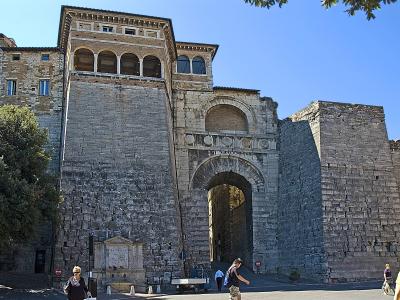
Etruscan Arch (Arco Etrusco)
Etruscan city gate with the Roman inscription Augusta Perusia
Free Architectural Monuments · Historic Gates
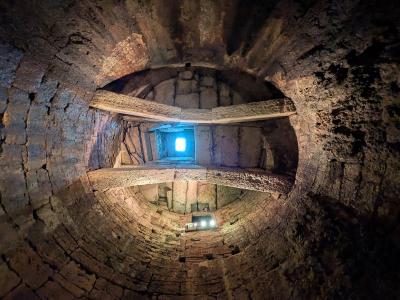
Etruscan Well (Pozzo Etrusco)
Etruscan well beneath Perugia's old town
Architectural Monuments · Historic Districts
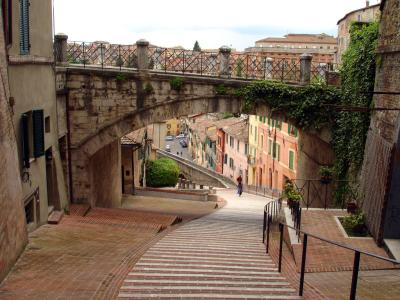
Medieval Streets of the Historic Center
Medieval streets and arches in Perugia's historic center
Historic Districts · Historic Towns
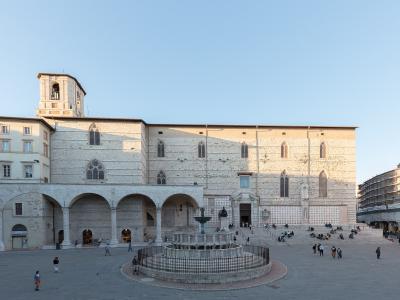
Piazza IV Novembre
Historic forum site with Fontana Maggiore
Free Architectural Monuments · Historic Districts
Questions people ask
Quick Facts
Best Time to Visit
Visit between April and June or September and October for mild temperatures and fewer crowds.