







- Admission
- Free admission
- Hours
- Open at all hours
- Where
- Palermo, Sicily
- Directions
- Directions
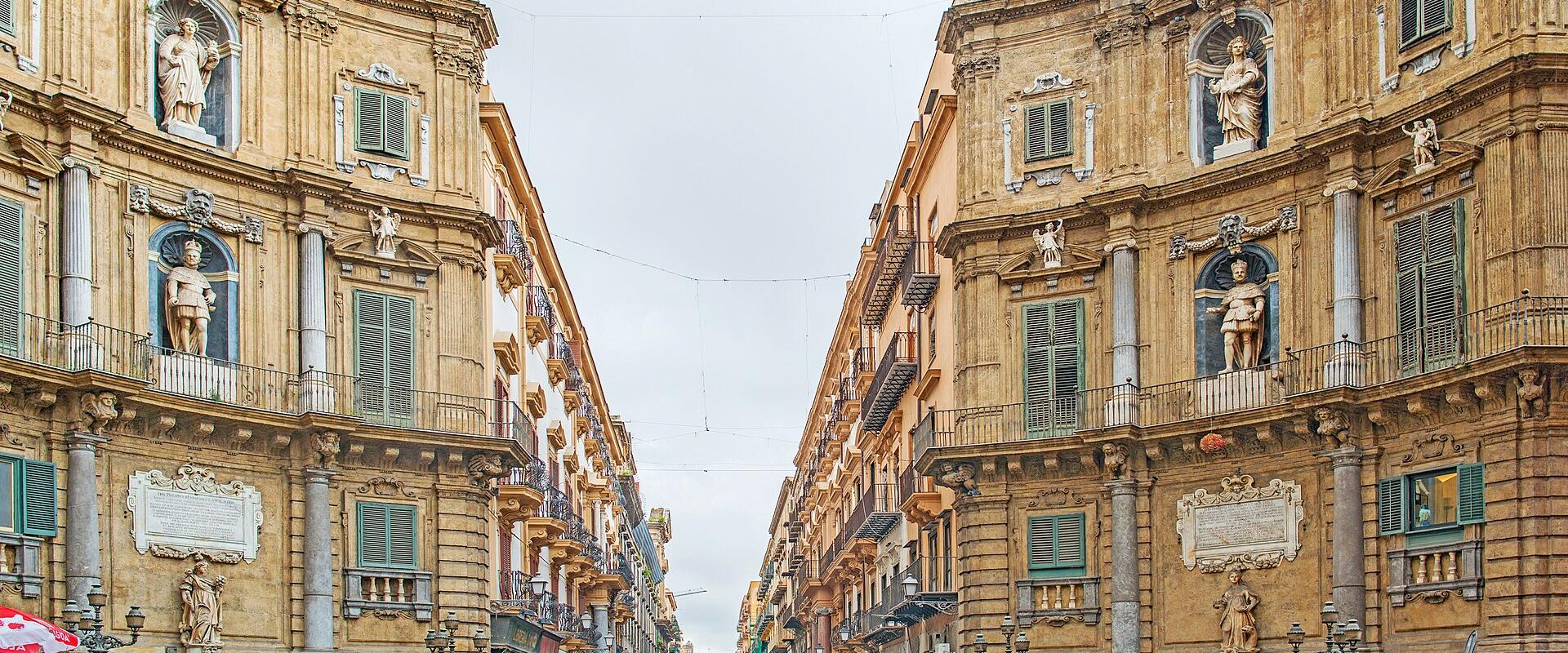
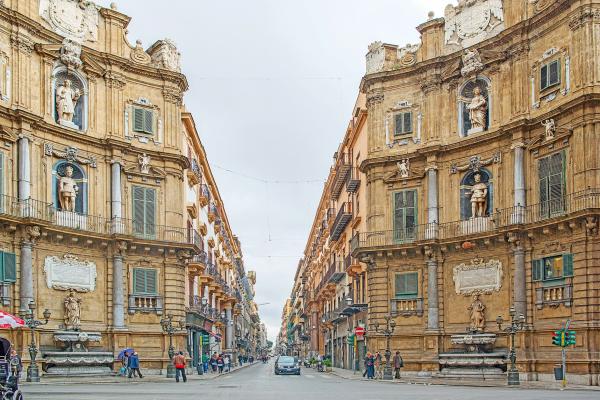
Quattro Canti, officially Piazza Vigliena, is the small octagonal crossroads at the center of Palermo where the city’s two main streets meet at right angles. Via Maqueda crosses Via Vittorio Emanuele, which follows the line of the ancient Cassaro, and the intersection divides the old city into four quarters: Kalsa, La Loggia, Capo and Albergheria. Each corner is cut back into a concave facade, so the four buildings together form an eight-sided space that opens in all directions. The Palermitans have long called it the Teatro del Sole, the Theater of the Sun, because at different hours of the day the sun lights each of the facades in turn.
The plan was part of an urban scheme carried out under the Spanish Viceroy, the Duke of Villena, in the early 17th century. Work ran from 1609 to about 1620, giving Palermo its first grand, planned Baroque space and a symbol of the Spanish administration of Sicily. The design is generally credited to Giulio Lasso, with sculptors adding statues and decoration over the following years, and the result is a layered Baroque stage set rather than the work of a single hand.
Each facade follows the same plan in three tiers. At street level, a fountain is set in a niche, with a statue representing one of the four seasons. In the middle tier are statues of the Spanish kings, the kings of Spain, who ruled Sicily, among them Charles V and Philip II, Philip III and Philip IV, while in the upper tier stand the patron saints of the four quarters of Palermo’s old city: Christina, Ninfa, Olivia and Agatha. Columns, balustrades and carved stonework run from base to cornice, giving a sense of height even though the buildings are not tall. The statues are often weathered, and it is worth looking closely.
The piazza is open at all hours and free, and the experience is primarily visual and atmospheric. Because it sits on a busy junction, the crowd ebbs and flows throughout the day, with locals, shoppers, tour groups and traffic crossing in all directions. Early morning is quietest, and evening gives dramatic light when streetlamps come on. The adjacent Piazza Pretoria, a few steps away, has the large Fountain of Shame, adding another Baroque stop to the same walk.
Quattro Canti works best as a starting point for exploring the historic center. From here, you can walk north toward the Cathedral and the Royal Palace, or south toward the markets of Ballarò and Vucciria, and several churches lie within a few minutes’ walk. Visitors should be mindful of traffic, since the crossroads is shared with vehicles and scooters. It suits anyone interested in Sicilian Baroque architecture and in how Spanish rule shaped the layout of the city, even if the stop itself takes only a few minutes.
More photos coming soon
Hours & Fees
- Open
- Open at all hours
- Admission
- Free admission
Hours and prices change, especially out of season. Check with the venue before you go.
Nearby Attractions
Other places to visit in Palermo
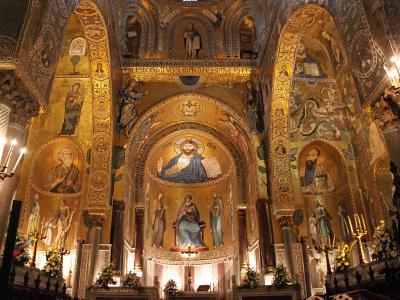
Palatine Chapel (Cappella Palatina)
12th-century Norman chapel with Byzantine mosaics
Architectural Monuments · Historic Churches
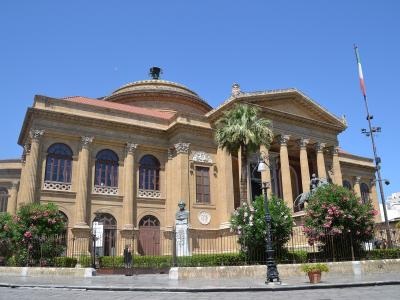
Teatro Massimo
Italy's largest opera house in Palermo
History & Heritage · Museums & Culture
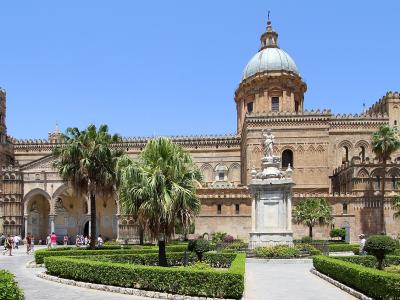
Palermo Cathedral (Cattedrale di Palermo)
UNESCO site blending Norman, Islamic, and Gothic styles
Architectural Monuments · Cultural Tours
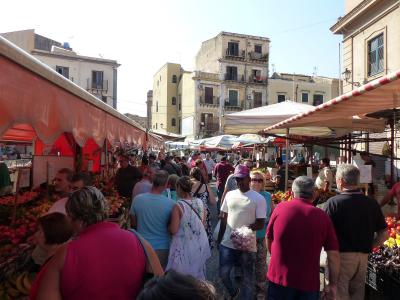
Ballarò Market
Historic open-air market in Palermo's historic center
Historic Districts · Local Cuisine
Questions people ask
Quick Facts
Best Time to Visit
Visit in April to June or September to October for mild temperatures and fewer crowds.