







- Where
- Mantua, Lombardy
- Directions
- Directions
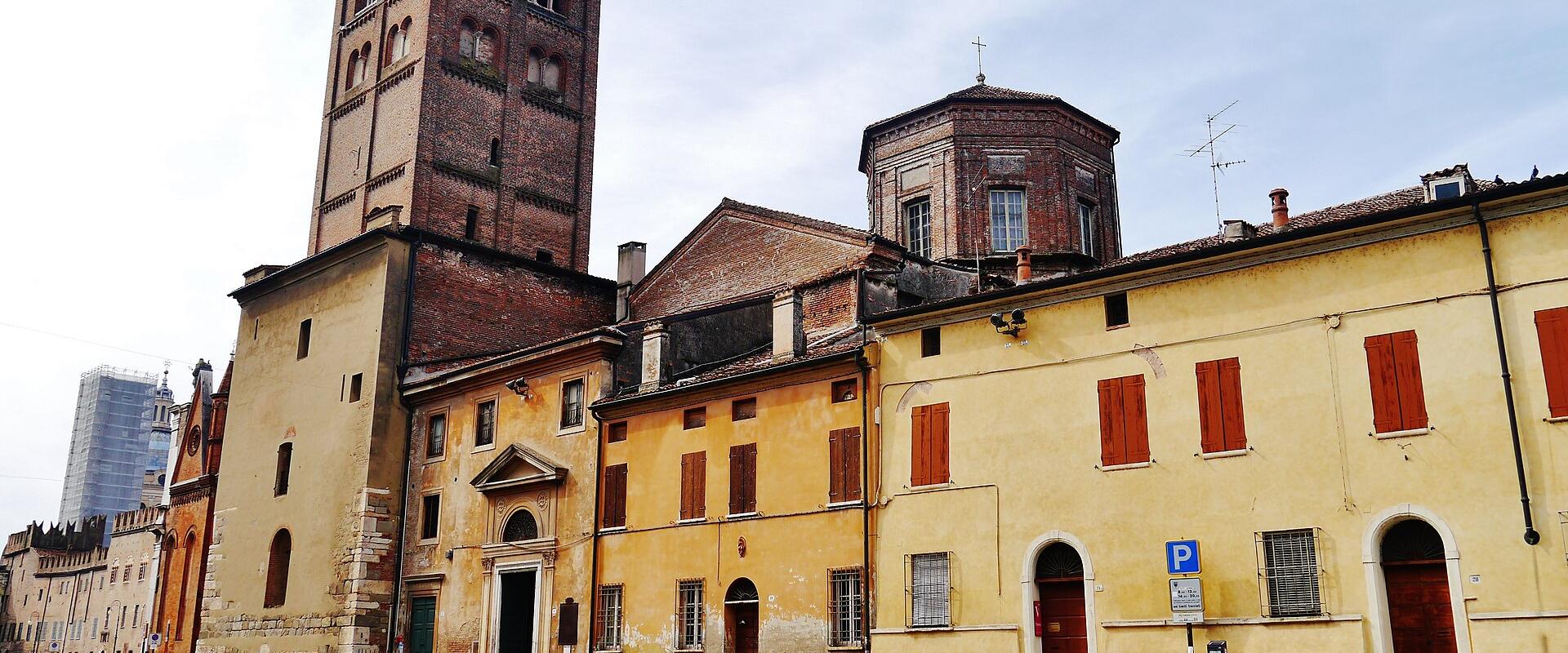
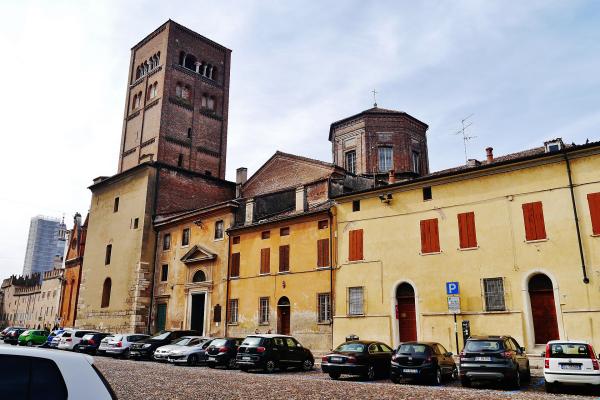
Piazza Sordello is the oldest and most important square of Mantua, in Lombardy, and it is the monumental centre of the old city, a survival from the late Middle Ages, surrounded by the palaces that tell the story of the Gonzaga family. It is named after Sordello da Goito, a 13th-century troubadour poet born near Mantua, who is mentioned by Dante in the Purgatorio, where he greets Virgil, a fellow Mantuan, with an embrace. The square corresponds to the oldest nucleus of the city, within the boundaries of the Roman town and later the medieval one, in a position that was safe from the floods of the Mincio lakes that surround Mantua on three sides. It is thought that the layout of the square and the streets nearby preserves the lines of the Roman decumanus and cardo, the main axes of a Roman town, and the cobblestones and the old facades give it an ancient feeling.
The square owes its present look to the medieval and Gonzaga periods. In the 13th century, the Bonacolsi family ruled Mantua and built their palaces here, until in 1328 Luigi Gonzaga seized power in a coup, which ended their rule and began the Gonzaga dynasty, which lasted nearly four centuries, until 1707. During the 15th and 16th centuries, the Gonzaga transformed the area into a grand display of power, with their enormous residence, the Ducal Palace, on the north-eastern side, which grew into one of the largest palace complexes in Europe, with hundreds of rooms, courtyards and gardens. Inside is the Camera degli Sposi, the Bridal Chamber, with frescoes by Andrea Mantegna, one of the masterpieces of Renaissance painting.
Other landmarks line the square. The Cathedral, the Duomo, faces the palace, with a Baroque facade of the 18th century that hides a Romanesque bell tower and an interior redesigned by Giulio Romano in the 16th century, with a richly decorated nave. The Palazzo Castiglioni, formerly the Palazzo Bonacolsi, built in 1281, on the western side, is a medieval palace with battlemented towers, next to the Palazzo Acerbi and the Bonacolsi Chapel, which has 14th-century Giotto-style paintings, among them the Torre della Gabbia, the Tower of the Cage, where prisoners were once held in a cage hung from the wall. The Bishop’s Palace, the Palazzo del Vescovo, stands on one side. Casa del Rigoletto, the house associated with Verdi’s opera Rigoletto, which is set in Mantua and based on a play by Victor Hugo, is close by, and a statue of the jester stands nearby. The square, in the shape of a long rectangle, sets these buildings together in a stage-like space.
The square is open at all times, with free access, and it is the best place to start a visit to Mantua because of its logistical position and the proximity of the major attractions. It is a place to sit at a cafe, watch the light change on the stone, and enjoy the evening. The Ducal Palace and the Cathedral have their own opening hours and tickets, so check them. Nearby are the Castello di San Giorgio, the Basilica di Sant’Andrea and the Duomo di Mantova, while Palazzo Te, the Museo Civico di Palazzo Te and the Isola del Te lie on the other side of the town. The square suits those interested in Renaissance history and art, and the atmosphere is especially good in the evening.
Categories
More photos coming soon
Nearby Attractions
Other places to visit in Mantua
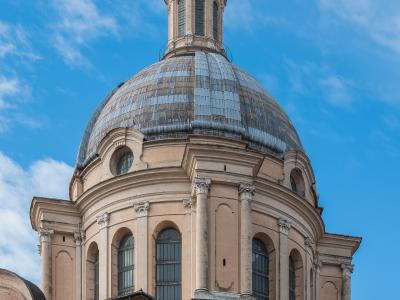
Basilica di Sant'Andrea
15th-century Renaissance co-cathedral by Alberti
Architectural Monuments · Historic Churches
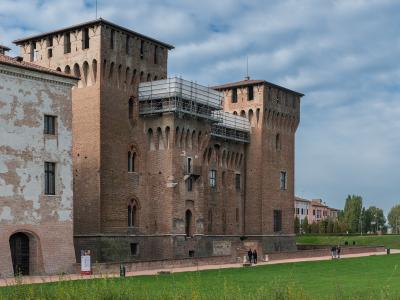
Castello di San Giorgio
15th-century Gonzaga palace with Camera degli Sposi frescoes
Castles & Fortresses · Historic Palaces
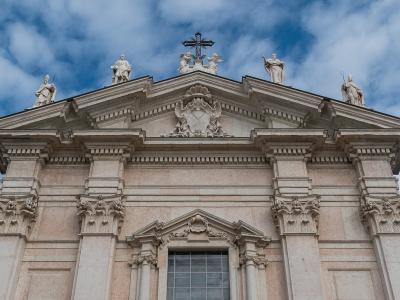
Duomo di Mantova
Gothic cathedral of St. Peter the Apostle
Architectural Monuments · Historic Churches
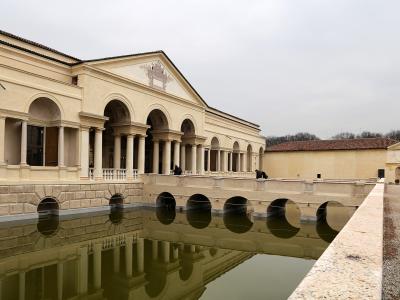
Isola del Te
Renaissance palace with frescoes by Giulio Romano
Art Museums · Cultural Tours
Questions people ask
Quick Facts
Best Time to Visit
Visit between April and June or September and October for mild temperatures and fewer crowds.