







- Admission
- Varies by exhibition.
- Hours
- Daily 8:30am-7:30pm
- Where
- Verona, Veneto and the Dolomites
- Directions
- Directions
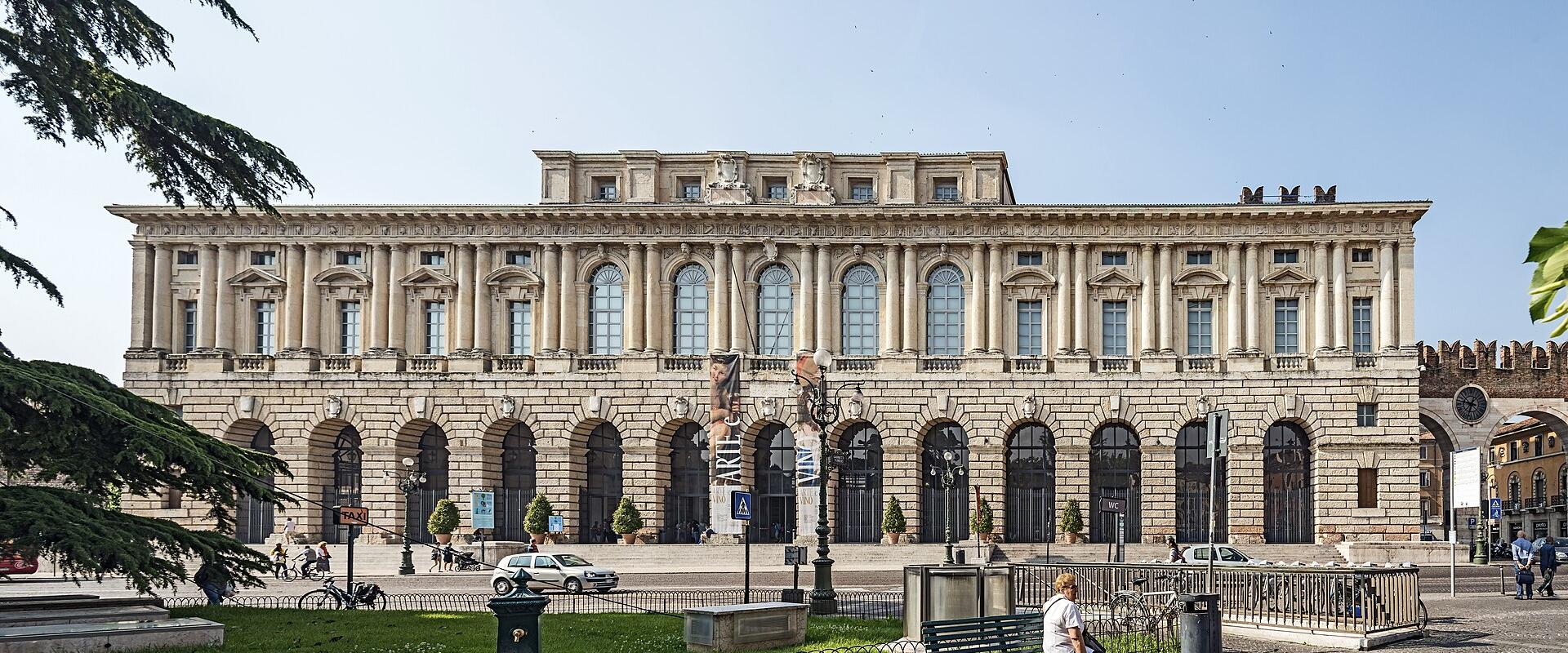
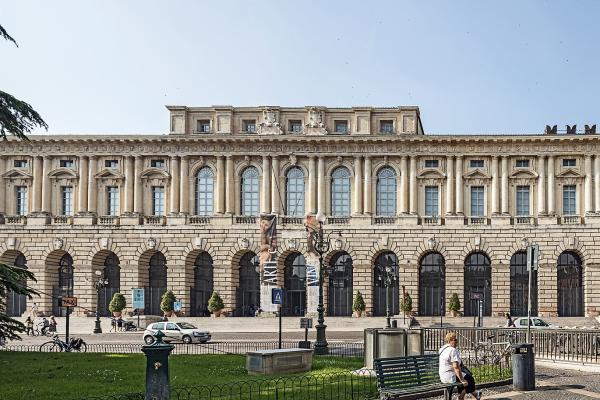
The Palazzo della Gran Guardia is a large palace on the south side of Piazza Bra, the great square of Verona, directly beside the Arena. The name means the Palace of the Grand Guard, because it was designed as a guardhouse and assembly hall for troops. It is a prominent building in the centre of Verona, in Italy, and it forms part of the architectural frame of the square, with its long front of arches facing the Roman amphitheatre across the open space.
The palace has a long and unusual history. It was begun in 1610 to the design of the architect Domenico Curtoni, in a late Renaissance style, with a monumental ground-floor loggia of large arches, and its first purpose was to house the town's military assembly. Money and politics interrupted the work, however, and the building was left unfinished for two centuries. It was completed in the early nineteenth century, under the Austrian rulers who followed the Napoleonic era, and the Austrian garrison used it as a military barracks and assembly hall. The architectural character of the facade, with its series of arches and a central pediment, reflects both the late Renaissance design and the neoclassical taste of the completion. The combination of two periods is a feature of Verona’s architecture.
Today, the building functions primarily as an exhibition centre. It hosts major art exhibitions, cultural events, and temporary installations, and its large open hall offers a versatile space for displaying large-scale artworks and sculptures. Visitors can explore the current exhibitions, which often feature contemporary art, historical retrospectives and international cultural exchanges, so the programme changes through the year. While there is no permanent collection, the palace is a good place to see a major show, and it is worth checking the programme during a visit to the city. The loggia, which is open to the public, is also a sheltered place to rest, with a view of the Arena.
The location is the main attraction. Piazza Bra is the largest square in the historic centre, and the pink-and-white stone Arena, the Roman amphitheatre built in the first century, which still hosts an opera festival each summer, rises on one side, while the Liston, a wide pedestrian promenade with cafes, runs along the other. The Palazzo Barbieri, the town hall, and the Portoni della Bra, a medieval gate, close the square. Verona’s old centre is compact, and Piazza delle Erbe, Juliet's House and the Roman Theatre are all within a short walk.
Today, the palace is easy to reach by local bus or on foot from the train station, and exhibitions have ticket prices that vary. Allow an hour for an exhibition, and take time to see the loggia from the square in the evening, when the lights come on.
Categories
More photos coming soon
Hours & Fees
- Open
- Daily 8:30am-7:30pm
- Admission
- Varies by exhibition.
Hours and prices change, especially out of season. Check with the venue before you go.
Nearby Attractions
Other places to visit in Verona
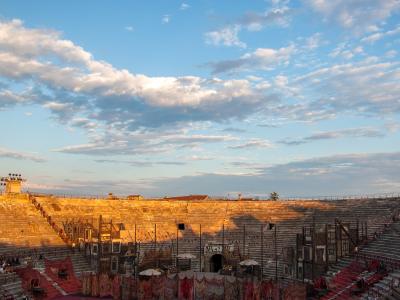
Arena di Verona
1st-century Roman amphitheatre, opera stage every summer
From €3 Ancient Ruins · Architectural Monuments
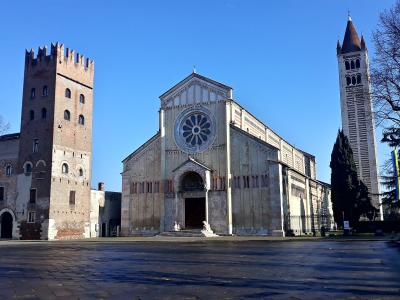
Basilica di San Zeno Maggiore
Romanesque masterpiece with Mantegna triptych
Architectural Monuments · Historic Churches
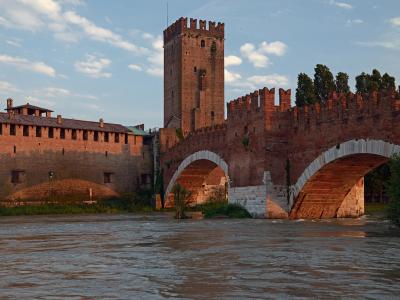
Castelvecchio Museum
14th-century Gothic castle housing history and anthropology
Architectural Monuments · Art Museums
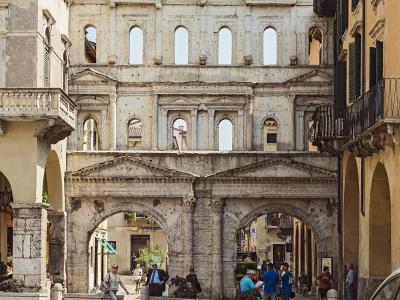
Corso Porta Borsari
Ancient Roman gate on Verona's main street
Free Architectural Monuments · Historic Districts
Questions people ask
Quick Facts
Best Time to Visit
Visit between April and June or September and October for mild temperatures and fewer crowds.