







- Where
- Verona, Veneto and the Dolomites
- Directions
- Directions
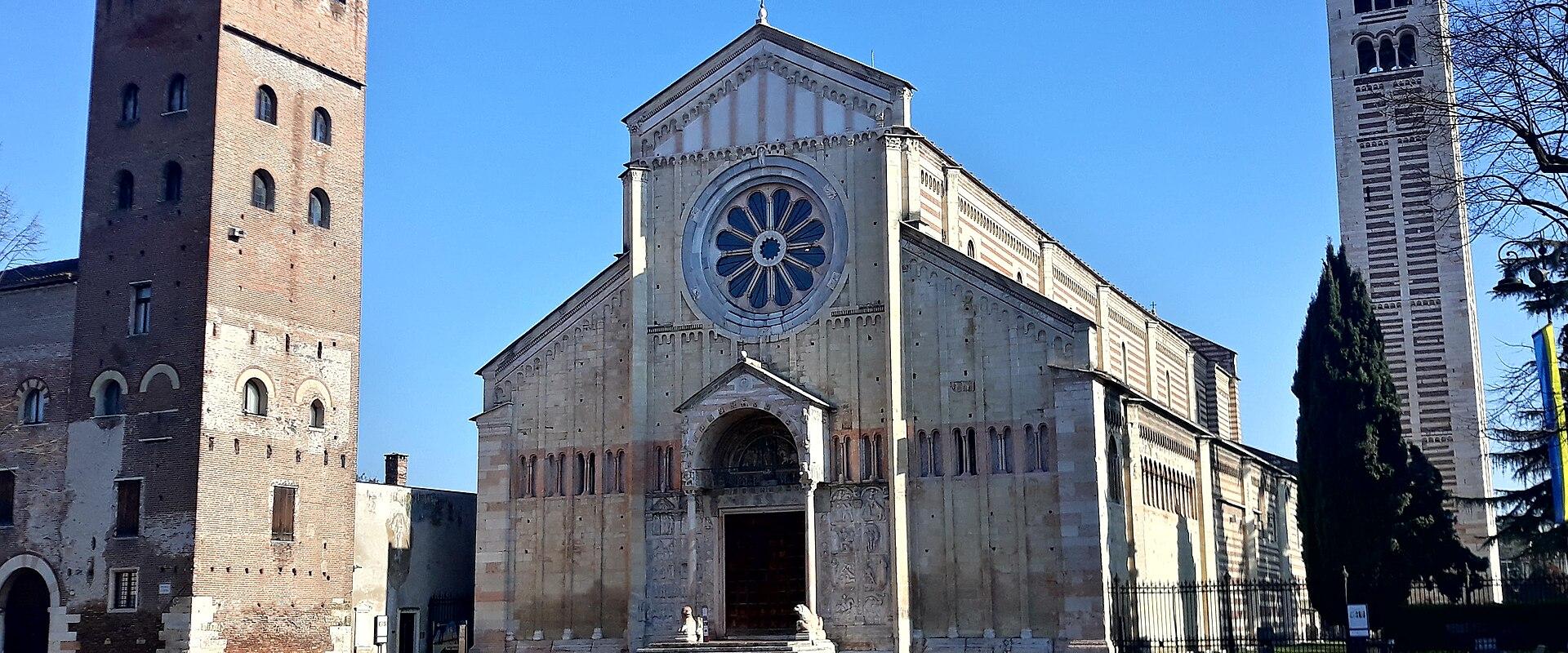
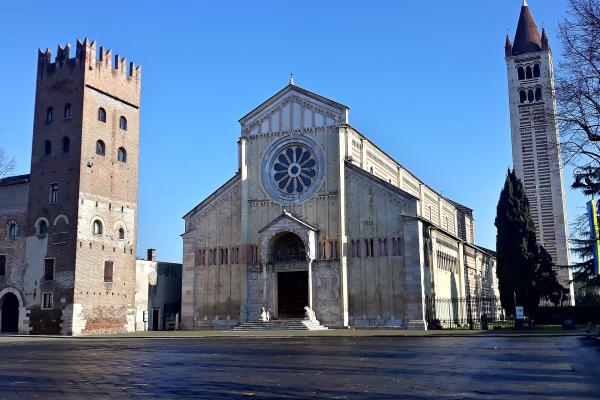
The Basilica di San Zeno Maggiore stands in a quiet square on the western side of Verona, a little away from the Arena and the busy centre, and it is regarded as one of the finest Romanesque churches in northern Italy and one of Italy’s most significant places of worship. It is dedicated to Saint Zeno, the patron saint of the city, a bishop of the fourth century who is believed to have come from Africa and who is buried in the crypt. The present church was built between the ninth and the thirteenth centuries, though its dominant form dates from the eleventh and twelfth centuries, and its harmony of proportions is the first thing visitors notice.
The facade is a study in warm colour and simple lines. Layers of pale tufa stone alternate with bands of brick, and a tall central portico, supported by two stone lions, leads into the church. Above it is a large rose window known as the Wheel of Fortune, a carved wheel with figures rising and falling around its rim, a reminder of the instability of human fortunes. On either side of the portal, panels of sculpture by the master Nicholaus and his workshop show scenes from Genesis and the life of Christ, and the bronze doors beneath are decorated with forty-eight small panels in a rough, vigorous style. They were made in the eleventh and twelfth centuries and are considered a top example of European Romanesque sculpture.
Inside, the church has a nave and two aisles, and above them a wooden ceiling shaped like the keel of an upturned ship, made in the fourteenth century in the Gothic period. The walls carry medieval frescoes, in layers, and a raised choir stands above the crypt. The most celebrated artwork is the altarpiece by Andrea Mantegna, painted in the 1450s, with the Virgin and Child and saints in a classical setting, which was a landmark of the early Renaissance. Napoleon's troops took the side panels to France, and the predella panels remain in museums there, so the panels in the church are copies. A statue of a smiling San Zeno, carved in painted stone, is a favourite with visitors.
The cloister next to the church is a peaceful place, with arcades and tombs, and the adjoining tower is a reminder that the abbey was once a major power. Mantegna’s altarpiece and the doors alone justify a visit.
Visitors should dress modestly and speak quietly. Check the opening hours and ticket arrangements, which often combine the church with other Verona churches. It is a pleasant walk along the river from the Castelvecchio. Combined with Juliet’s House and the Arena, it fits into a day in Verona, and Verona’s old streets are best on foot. The best light on the facade is in the morning.
Categories
More photos coming soon
Nearby Attractions
Other places to visit in Verona
Arena di Verona
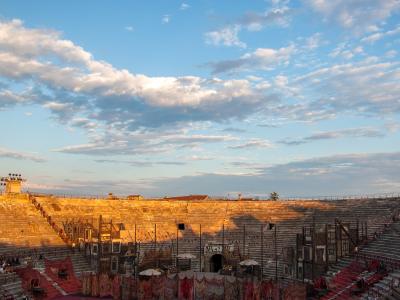
1st-century Roman amphitheatre, opera stage every summer
From €3 Ancient Ruins · Architectural Monuments
Castelvecchio Museum
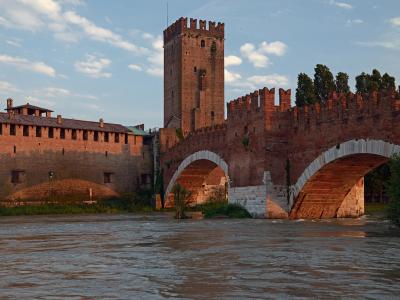
14th-century Gothic castle housing history and anthropology
Architectural Monuments · Art Museums
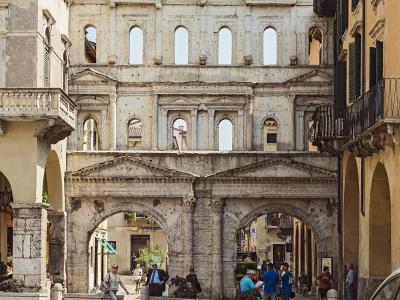
Corso Porta Borsari
Ancient Roman gate on Verona's main street
Free Architectural Monuments · Historic Districts
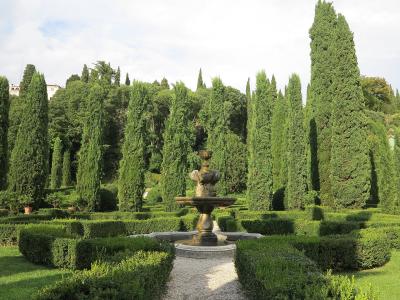
Giusti Garden
Historic Italian garden blending nature and art
From €9 Botanical Gardens · Historic Palaces
Questions people ask
Quick Facts
Best Time to Visit
Visit between April and June or September and October for mild temperatures and fewer crowds.