







- Where
- Lecce, Apulia
- Directions
- Directions
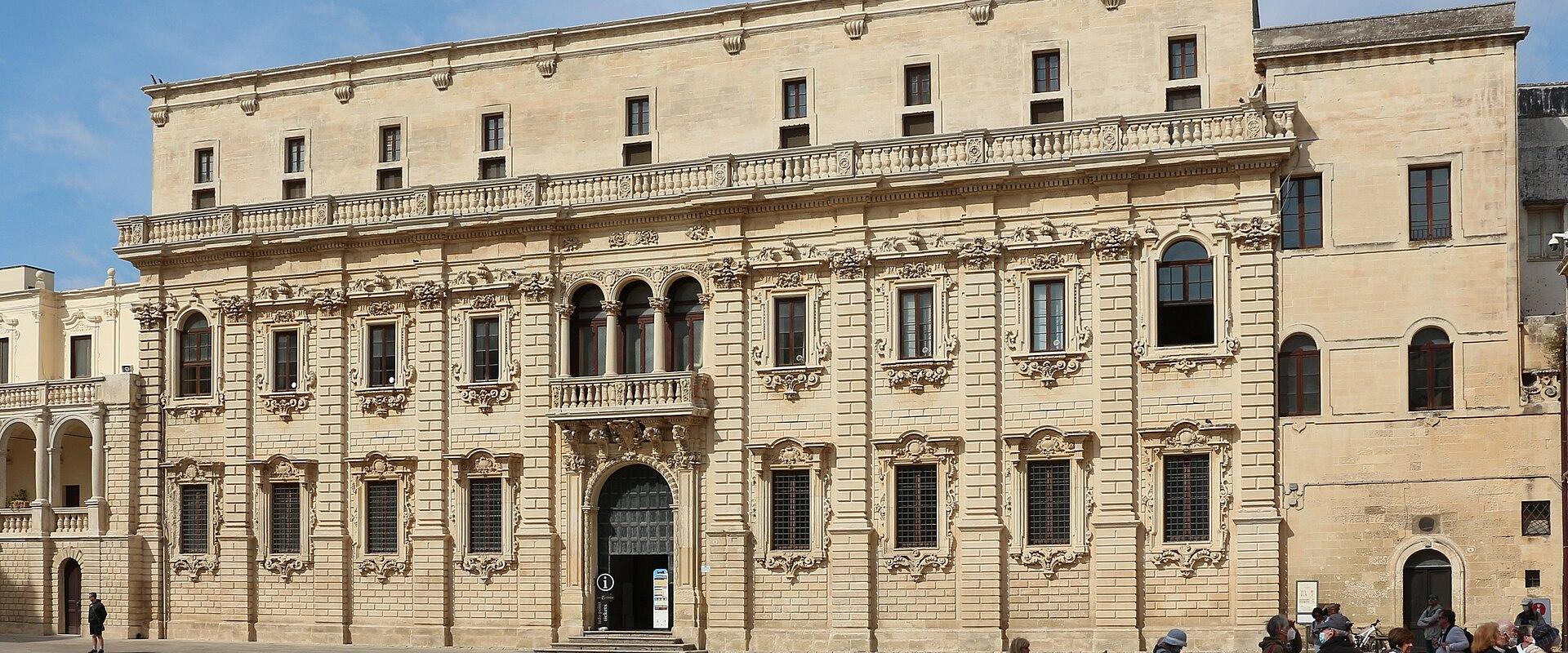
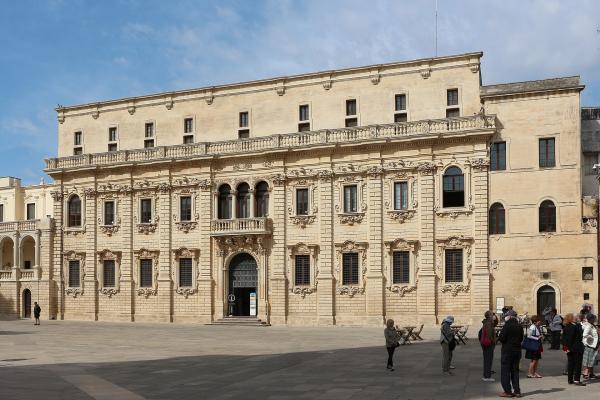
The Palazzo del Seminario stands at Piazza Duomo 5, in Lecce, on the closed square of the cathedral, and it forms part of the architectural ensemble that makes this one of the most beautiful squares in Italy. It is the seminary of the diocese, a large Baroque building that was built to train priests, and it stands opposite the cathedral, with the bishop’s palace and the bell tower. The palace was built between 1694 and 1709, in the golden age of the Lecce Baroque, by the architect Giuseppe Cino, a pupil of the great Giuseppe Zimbalo, for Bishop Michele Pignatelli, who wished to give the diocese a seminary worthy of the city. The building follows the style typical of Lecce, in which the soft local stone, pietra leccese, is carved with an exuberance of ornament, and it combines a restrained facade with richly decorated details.
The facade has an elegant portal with a balcony, framed by decoration, and a regular row of windows in the pale stone, while at the centre the building opens onto a fine courtyard, the cloister, which is one of the most charming features of the complex. The cloister is surrounded by arcades with columns, and at its centre stands a well, the pozzo, which is richly decorated with carved ornament, a masterpiece of Baroque stonework by Cino. The atmosphere in the cloister is serene, shaded and calm, a world away from the busy streets, and it is a good place to sit and appreciate the architecture. The proportions are harmonious, and the play of light on the carved stone adds to the pleasure.
Today the complex is a hub for understanding the region’s ecclesiastical history and artistic heritage. It houses the chapel, the contemporary sacred art gallery on the ground floor, and above all the Diocesan Museum of Sacred Art, the Museo Diocesano d’Arte Sacra, which displays works of art from the churches of the diocese. The collection includes paintings, sculptures, silver, vestments and liturgical objects, ranging from the Middle Ages to the 18th century, and it gives a good picture of the religious devotion and the artistic production of Salento. The museum also holds temporary exhibitions, and the seminary has a library, with old books and manuscripts.
The cloister is open to visitors at set hours, usually in the morning and again in the late afternoon and evening, with longer hours in summer, while the Diocesan Museum has its own schedule, generally open on weekdays except Mondays, so check the current opening times and any admission arrangements. A visit takes about an hour. The palace is part of the cathedral complex, so it is natural to combine it with the Lecce Cathedral (Cattedrale di Santa Maria Assunta) and its bell tower, and other sights nearby include the Basilica di Santa Croce, with its famous facade, the Palazzo dei Celestini, the Arco di Trionfo and the Roman Amphitheater of Lecce. The site is also reached by bus, with a stop at Porta Rudiae. The palace suits those interested in Baroque architecture and religious art, and its cloister is a quiet corner that many visitors miss.
Categories
More photos coming soon
Nearby Attractions
Other places to visit in Lecce
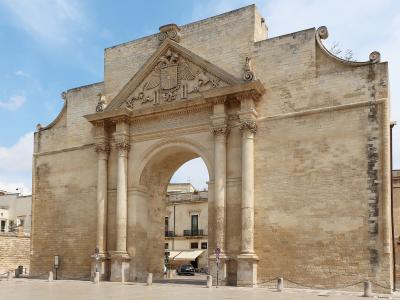
Arco di Trionfo (Arch of Triumph)
1548 Renaissance gate honoring Emperor Charles V
Architectural Monuments · Historic Districts
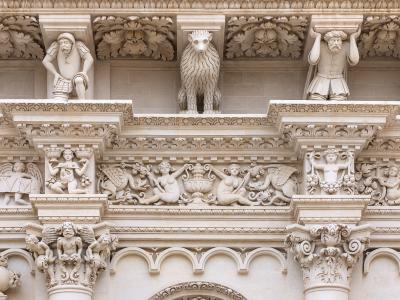
Basilica di Santa Croce
Lecce's Baroque masterpiece with intricate stone carvings
Architectural Monuments · Historic Churches
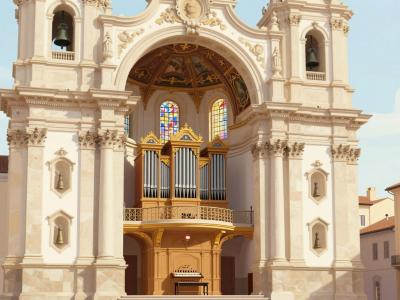
Lecce Cathedral (Cattedrale di Santa Maria Assunta)
Baroque cathedral built from local limestone
Architectural Monuments · Historic Churches
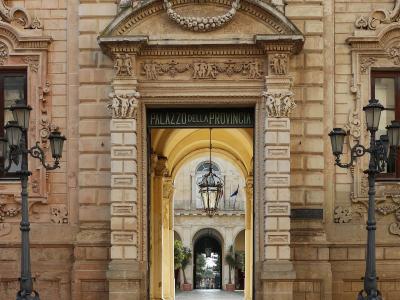
Palazzo dei Celestini
17th-century Baroque palace on Via Umberto I
Architectural Monuments · Historic Palaces
Questions people ask
Quick Facts
Best Time to Visit
Visit between April and June or September and October for mild temperatures and fewer crowds.