







- Where
- Siracusa, Sicily
- Directions
- Directions
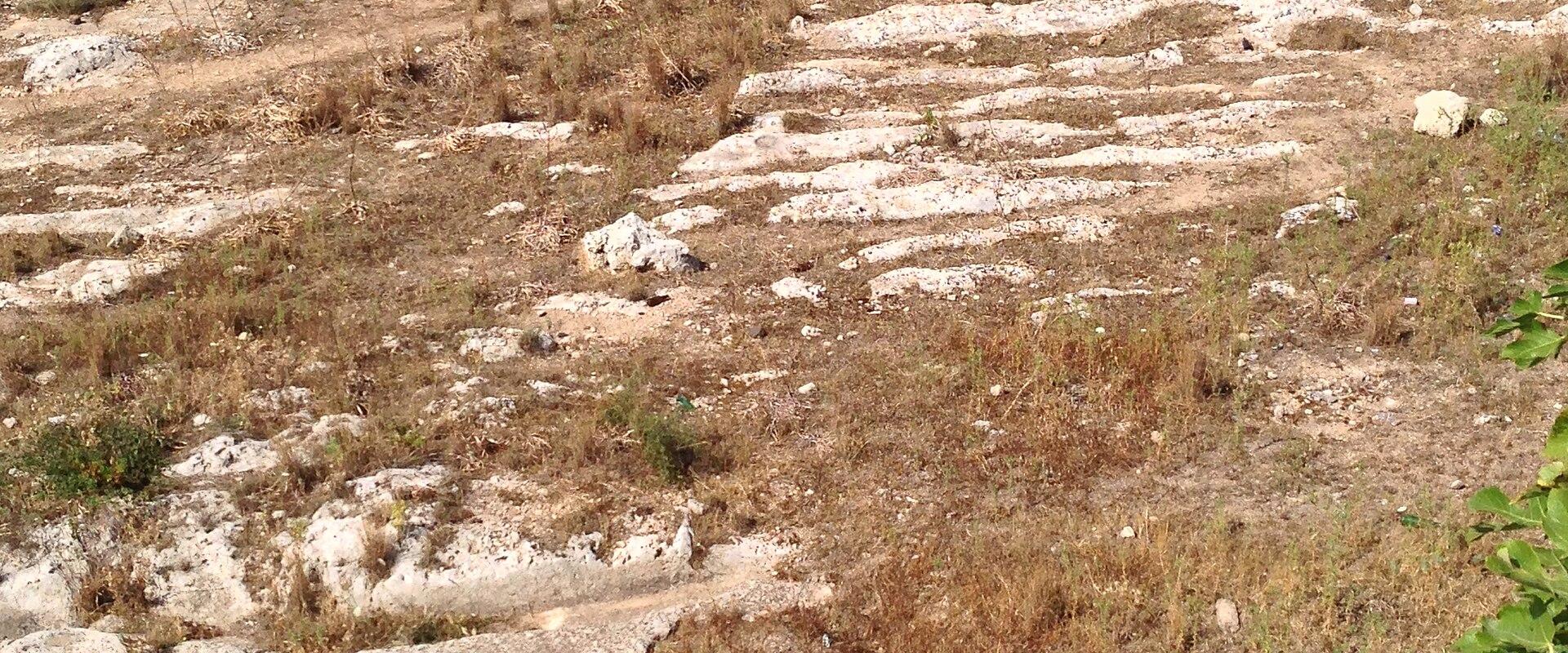
The Grotticelli Necropolis is a large Greek and Roman burial ground, cut into the rock, within the Archeological Park of Neapolis, on the edge of the Neapolis Archaeological Park in Syracuse, in south-eastern Sicily, Italy, and it is one of the most evocative ancient sites in the city. It lies at the bottom of the Latomia di Santa Venera, one of the old limestone quarries from which the Greeks cut the stone to build their city, and it is reached by a scenic stairway that descends from the road. The place takes its name from the little caves, the grotticelle, which are the openings of the tombs in the rock face. The quarry itself is now a sheltered, green hollow, planted with citrus and olive trees, in which the pale stone walls rise on all sides, so that the setting is peaceful and almost secret, in contrast to the busy area around the Greek Theatre.
The necropolis was in use for centuries. Syracuse, which was founded by Greek settlers from Corinth in the 8th century BC, grew into one of the most powerful cities of the ancient Mediterranean, and its people buried their dead in cemeteries outside the town, along the roads. In this area, the Hellenistic and Roman inhabitants carved tombs directly into the rock of the quarry walls, creating a true city of the dead, with galleries, chambers and rows of niches, and the site was excavated entirely in the rock of the Santa Venera quarry. Some of the tombs are simple recesses and others are elaborate chambers with architectural fronts, columns and pediments, imitating the facades of temples and houses. In some, you can see the loculi, the burial niches, in which the bodies were placed.
The walls are adorned with small square niches, in which votive pictures of the deceased, painted or carved tablets, were set, and these offer a moving glimpse into the funerary practices of the ancient people of Syracuse, who remembered their dead with images and offerings. Among the monuments in the area is a Roman building with niches, called a columbarium, which tradition, based on a story told by the Roman writer Cicero, calls the Tomb of Archimedes, the great mathematician who lived in Syracuse and was killed in the Roman siege of 212 BC. Cicero wrote that he found Archimedes’ tomb overgrown with brambles, and this monument is a popular candidate, though scholars doubt the identification. Whether or not it is the tomb, the site conveys a sense of the many layers of the city’s past.
The necropolis is at Viale Teracati, inside the archaeological area, and it is open during the same hours as the park, generally from the morning until an hour before sunset on most days, with shorter hours on Sundays and holidays, so check before going. The tickets for the Neapolis park generally include it, and a visit takes about half an hour. Stout shoes are useful because of the steps and the uneven ground, and in summer, a hat and water are needed. The necropolis is a short walk from the Greek Theatre, the Roman Amphitheatre and the Ear of Dionysius in the Parco della Neapolis, and the Museo Archeologico Regionale Paolo Orsi is nearby, while Ortygia Island, with the Piazza Duomo, the Duomo di Siracusa, the Fontana di Artemide and the Castello Maniace, lies across the water. The Temple of Apollo on Ortygia is another ancient site. During the Classical Plays season, the site closes earlier. The necropolis suits anyone with an interest in the ancient world.
Categories
More photos coming soon
Nearby Attractions
Other places to visit in Siracusa
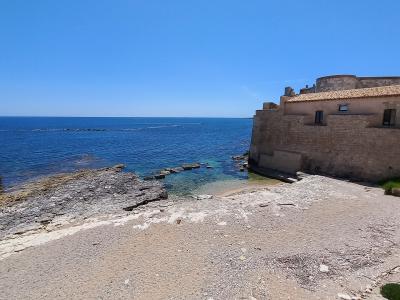
Castello Maniace
Byzantine fortress with 18m high walls
Architectural Monuments · Castles & Fortresses
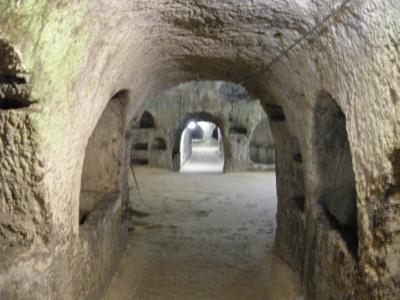
Catacombs of San Giovanni
Sicilian catacombs with monumental rotundas
Archaeological Museums · Historic Cemeteries
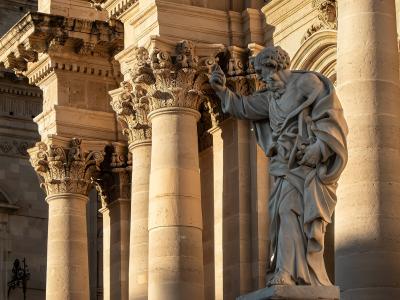
Duomo di Siracusa (Cathedral of Syracuse)
Baroque cathedral built on a Greek temple
Ancient Ruins · Architectural Monuments
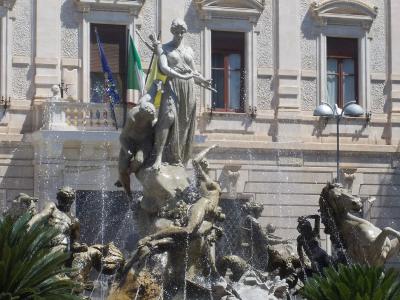
Fontana di Artemide
1907 fountain depicting Artemis and Alpheus myth
Historic Fountains · Public Statues
Questions people ask
Quick Facts
Best Time to Visit
Visit between April and June or September and October for mild temperatures and fewer crowds.