







- Where
- Siracusa, Sicily
- Directions
- Directions
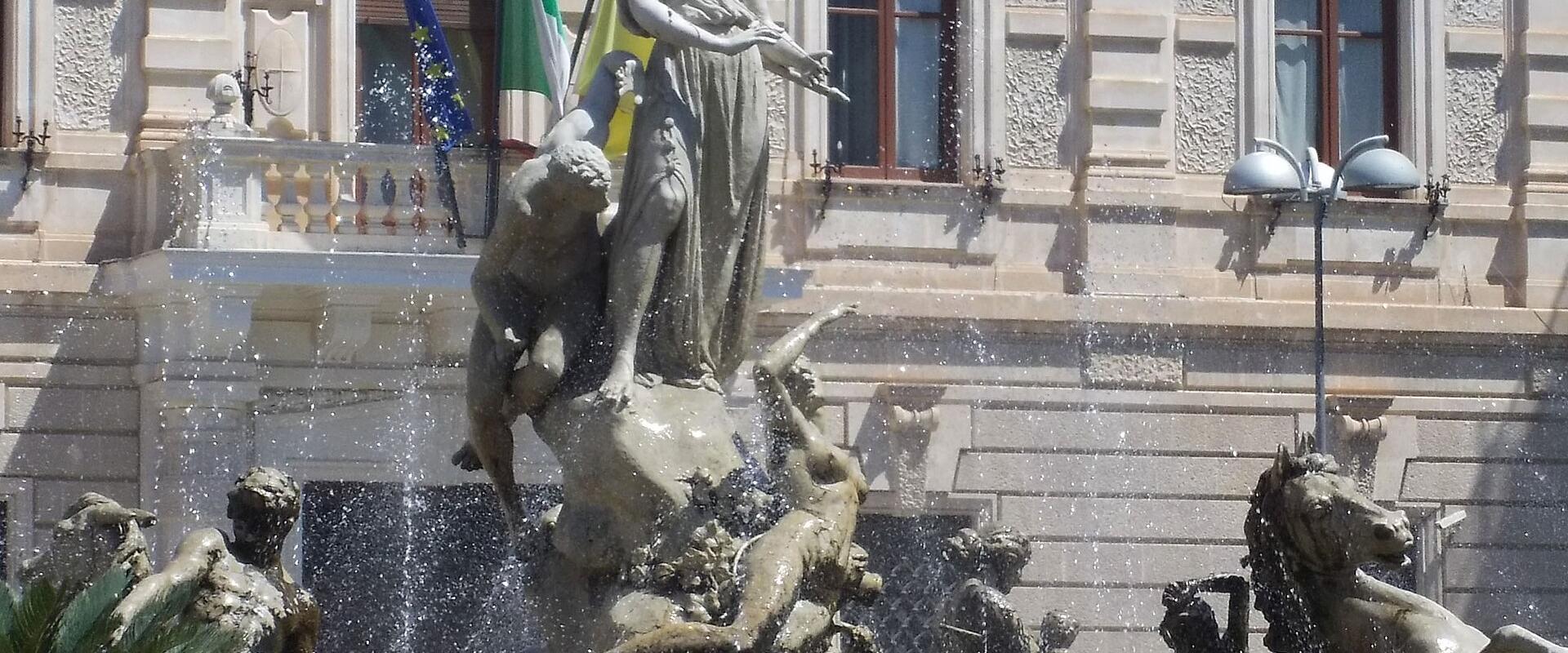
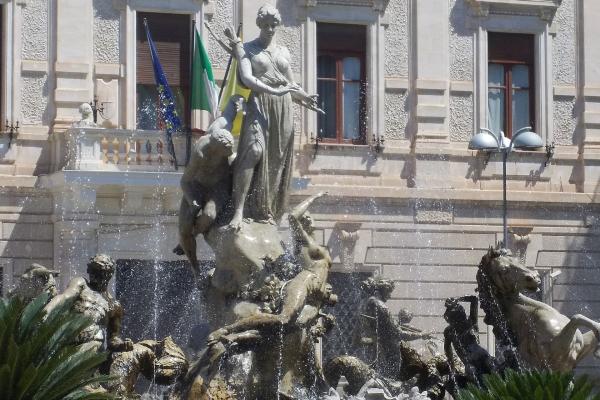
The Fontana di Artemide stands in Piazza Archimede, the main square of Ortygia, the old island centre of Syracuse in Sicily. It is a bronze and stone fountain made between 1906 and 1907 by the sculptor Giulio Moschetti, and it is one of the best examples of early twentieth-century public sculpture in the city. The square itself is named for Archimedes, the mathematician born in Syracuse, and it forms a natural meeting point at the junction of the island's main streets.
The fountain tells a story from Greek myth that is closely bound to the place. The central figure is Artemis, the goddess of the hunt, who is shown with the river god Alpheus and with the nymph Arethusa, known in Italian as Aretusa. According to the myth, Alpheus fell in love with Arethusa and pursued her across the sea from Greece. To save her from Alpheus’s advances, Artemis changed her into a spring, which rose on Ortygia, while Alpheus mingled his waters with hers. The island's famous freshwater spring, the Fountain of Arethusa, a short walk away on the seafront, is the real-life setting of that story, so the sculpture in the square works as a retelling of the island's founding legend. The group is surrounded by sea creatures, tritons and horses, which give the basin a lively, rippling look.
Moschetti was working in the taste of the Liberty period, when sculptors liked to bring classical subjects to life with flowing, naturalistic forms, and the fountain shows that approach. It is a late addition to an island that has been inhabited since Greek colonists arrived in the eighth century BC, and it makes a deliberate link between modern Syracuse and its ancient mythology.
As an open public square, the fountain has no opening hours or fee, and you can see it at any time. The piazza is a lively social space, with cafes, restaurants and historic buildings around it, and in the evening it fills with people strolling down to the waterfront. Piazza Duomo, with the cathedral built into an ancient Greek temple, lies just beyond, and Castello Maniace stands at the island's southern tip.
Exploring the fountain takes only a few minutes, so it is best seen as part of a longer walk around Ortygia. The principal archaeological sites of Syracuse, including the Greek Theatre and the Ear of Dionysius, a limestone quarry cave with unusual acoustics, are on the mainland side in the Neapolis Archaeological Park, and they make a good contrast with this modern interpretation of the old myths. Sit at a cafe table in the late afternoon and watch the light change on the stone.
Categories
More photos coming soon
Nearby Attractions
Other places to visit in Siracusa
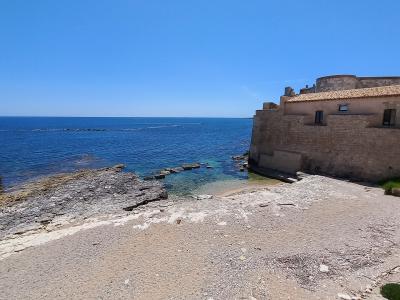
Castello Maniace
Byzantine fortress with 18m high walls
Architectural Monuments · Castles & Fortresses
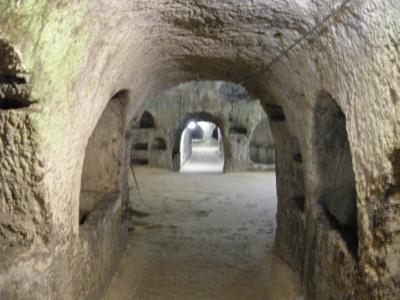
Catacombs of San Giovanni
Sicilian catacombs with monumental rotundas
Archaeological Museums · Historic Cemeteries
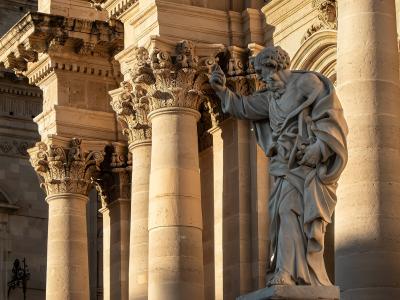
Duomo di Siracusa (Cathedral of Syracuse)
Baroque cathedral built on a Greek temple
Ancient Ruins · Architectural Monuments
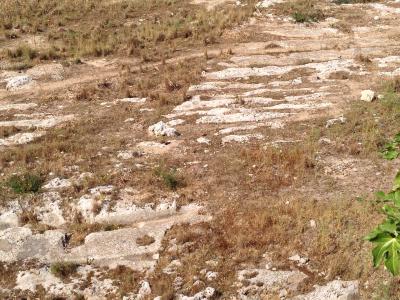
Grotticelli Necropolis
Rock-cut Greek and Roman necropolis in Siracusa
Ancient Ruins · Cultural Tours
Questions people ask
Quick Facts
Best Time to Visit
Visit between April and June or September and October for mild temperatures and fewer crowds.