







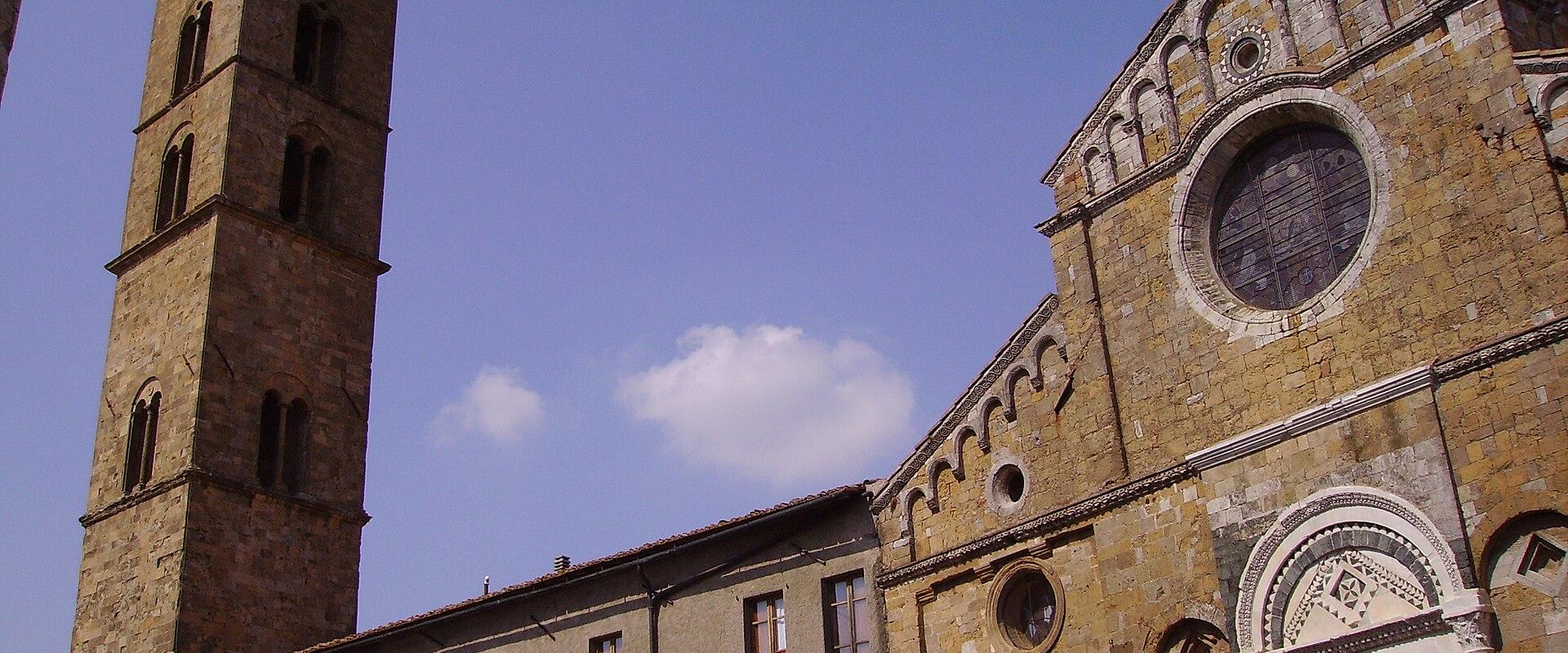
Duomo di Volterra (Cathedral of Santa Maria Assunta)
12th-century Romanesque cathedral with Tuscan marble bands
- Where
- Volterra, Tuscany
- Directions
- Directions
The Duomo di Volterra, officially the Cattedrale di Santa Maria Assunta, is the principal Roman Catholic cathedral in Volterra, Italy, and the seat of the bishop. It stands on Piazza San Giovanni, a few steps from the main civic square, Piazza dei Priori, in the center of the hill town, alongside the octagonal baptistery, a 13th-century building with a striped marble exterior. Volterra, ancient Velathri, was one of the great cities of the Etruscans, and it sits on a high ridge in the Tuscan hills, with long views over the countryside, so the cathedral’s setting is a quiet corner in a walled town that is among the most atmospheric in Tuscany.
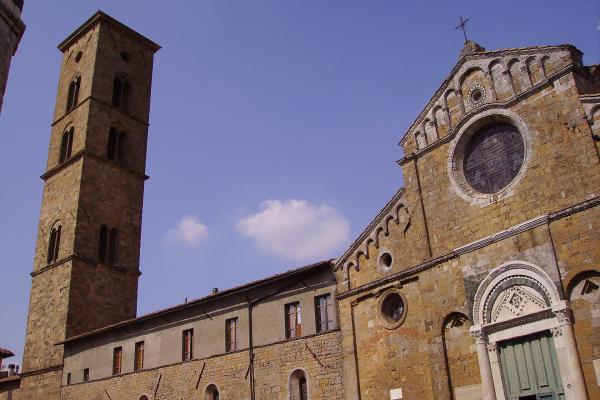
The building is constructed in the Romanesque style, with an exterior adorned with typical Tuscan bands of alternating white and green marble, although this cladding is only partial. The facade, of the 13th century, is influenced by the Pisan Romanesque, with columns and arches, and is relatively simple compared to the great cathedrals of Pisa and Siena. The site has a long religious history, with a church dedicated to Saint Mary existing there as early as the 9th century, and the cathedral grew out of that foundation.
The current structure was rebuilt following a devastating earthquake in 1117 that destroyed much of the town. It was consecrated by Pope Calixtus II in 1120, marking the establishment of the present-day edifice. In the Renaissance, the interior was remodeled, which explains why it has a very different feel from the plain exterior. Visitors entering the cathedral encounter a space that reflects the architectural resilience of the region, blending Romanesque solidity with later modifications, notably a magnificent carved and gilded wooden coffered ceiling from the 16th century, a long nave with columns, and altars along the sides. The interior houses religious artifacts and artworks that contribute to the spiritual atmosphere of the site, including a medieval polychrome wooden group of the Deposition, a group of life-size figures of the 13th century, and works by Tuscan artists from the 15th and 16th centuries.
It is advisable to check local tourism resources for current schedules, as access may be restricted during mass or special liturgical celebrations. Modest dress is expected, and a visit takes about half an hour. The experience of visiting the Duomo di Volterra offers a tangible connection to the medieval history of Tuscany.
The cathedral is a central landmark in Volterra’s historic center, complementing visits to the Etruscan wells and the ancient city walls. Piazza dei Priori, with its medieval Palazzo dei Priori, is one of the best-preserved medieval squares in Italy, and a few steps away stands the Pinacoteca Civica, an art gallery with paintings by Rosso Fiorentino and other Tuscan masters. The town is also famous for its alabaster, worked in small workshops, and for its view from the terrace at the Piazza dei Priori. The combination of architectural beauty and historical significance makes the cathedral an essential stop for those exploring the hill town.
Categories
More photos coming soon
Nearby Attractions
Other places to visit in Volterra
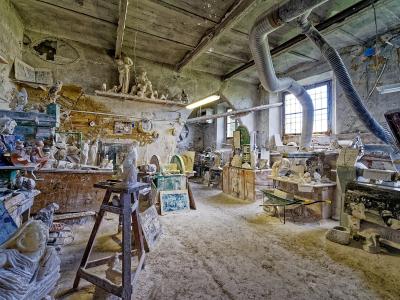
Alabaster Workshops
Ecomuseum preserving Volterra's ancient alabaster craft
History & Heritage · Museums & Culture
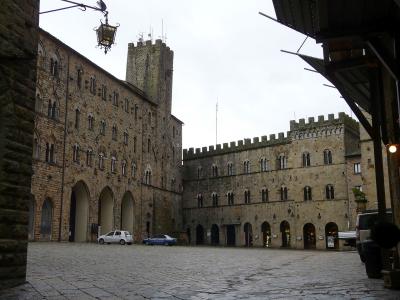
Piazza dei Priori
Volterra's main square with Italy's oldest town hall
Historic Districts · Historic Palaces
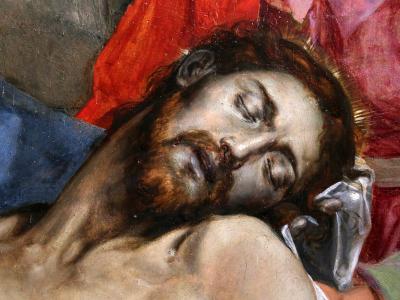
Pinacoteca Civica
Renaissance art in Palazzo Minucci-Solaini
History & Heritage · Museums & Culture
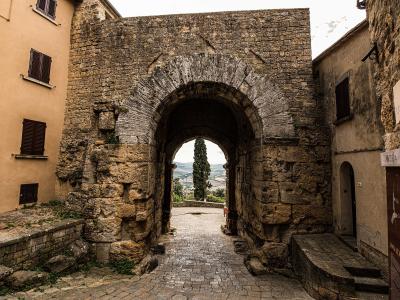
Porta all'Arco
3rd-century BCE Etruscan gate with three stone heads
Ancient Ruins · Architectural Monuments
Questions people ask
Quick Facts
Best Time to Visit
Visit between April and June or September and October for mild temperatures and fewer crowds.