







- Where
- Volterra, Tuscany
- Directions
- Directions
The Ecomuseum of Alabaster in Volterra preserves the history of the craft that has defined this hill town in Tuscany for more than two thousand years. It stands at Via dei Sarti 1, in the old centre, and it tells the story of alabaster, the soft, translucent stone that is quarried in the hills around the town and carved into vases, lamps, sculptures and ornaments. The craft has been central to the local economy since Etruscan times, when the people of Volterra, then called Velathri, carved the stone into funerary urns, and it grew to a major industry by the eighteenth century, when workshops exported their products across Europe.
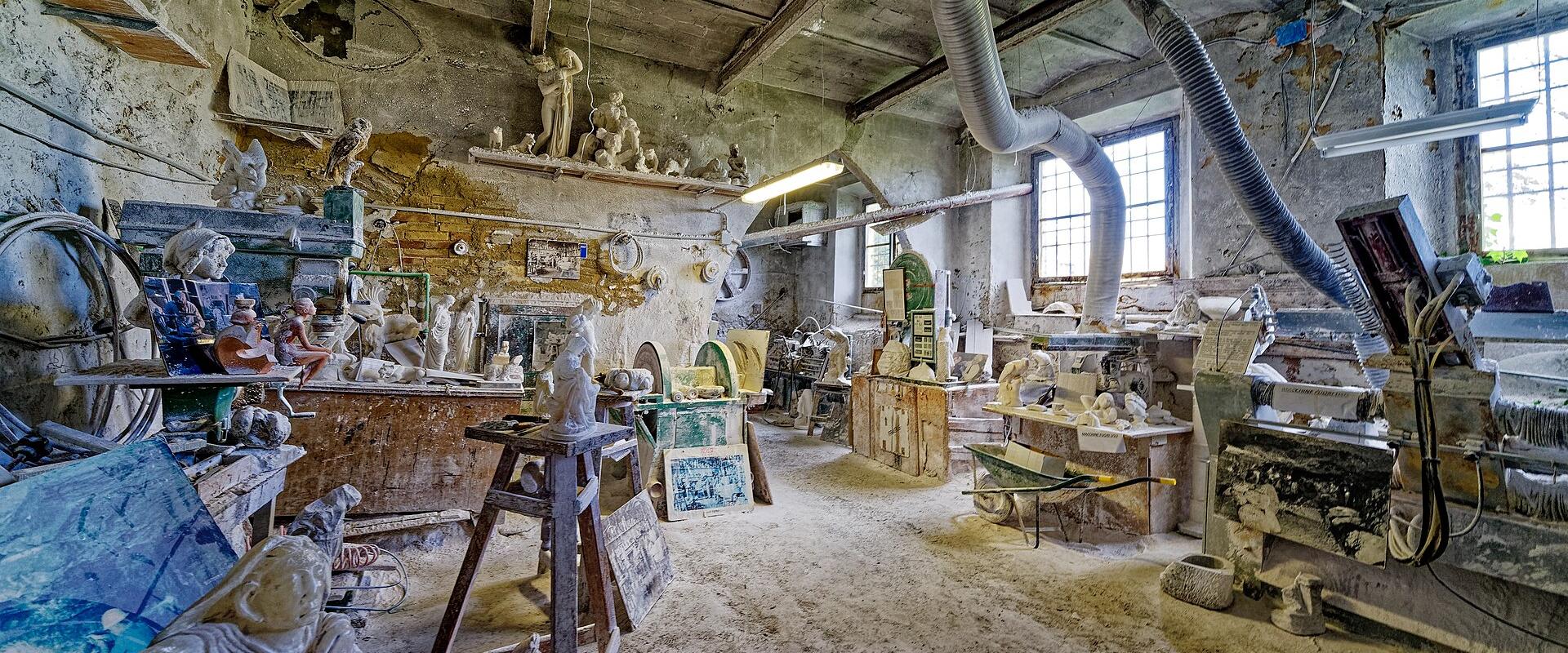
The exhibition is divided into three sections. The first explains the geological origins of alabaster, a form of gypsum that formed in lagoons millions of years ago, and the techniques of extraction and processing. It features a reconstructed old workshop with pole lathes, wooden machines driven by a foot-operated pole and a cord, which were used to turn the stone into vases and other round shapes, and it shows how the craftsman worked with chisels, rasps and polishing powders. The tools are displayed as they were left, and the setting gives a feeling of the labour and the dust of the trade.
The second section follows the historical development of alabaster working from antiquity to the modern era. It displays artefacts such as Etruscan urns, with lids carved with reclining figures, medieval capitals and vases, and works from the Renaissance and the eighteenth century, when a large production of statuettes and lamps, often in a neoclassical style, arrived on the market. This historical context helps visitors understand the material's importance in art and daily life across the millennia, and shows how craft traditions changed with fashion.
The third section looks at the contemporary scene, with modern designs by artists and designers, who have given alabaster new forms, in lamps, tableware and sculpture. This makes the visit a link between the past and the workshops in the town's streets today, where craftsmen still carve and sell alabaster. A walk through Volterra shows dozens of shops, some of which allow visitors to watch artisans at work, and it is worth stopping in one to see the stone worked on a lathe.
The museum is a compact visit of about an hour. Opening days and hours vary by season, with a different schedule in winter, from November to March, and some days of the week closed, so check locally. For those who want to buy, choose pieces from a workshop that explains the origin of the stone, since some souvenirs are imitations made of other materials. Volterra’s main sights, the Piazza dei Priori, the Etruscan museum and the Roman theatre, are all within a few minutes' walk.
More photos coming soon
Nearby Attractions
Other places to visit in Volterra
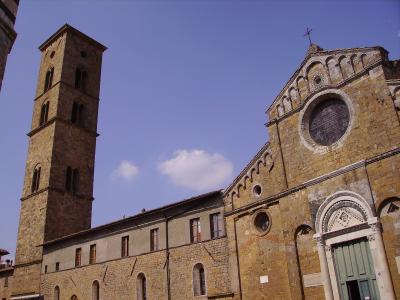
Duomo di Volterra (Cathedral of Santa Maria Assunta)
12th-century Romanesque cathedral with Tuscan marble bands
Architectural Monuments · Historic Churches
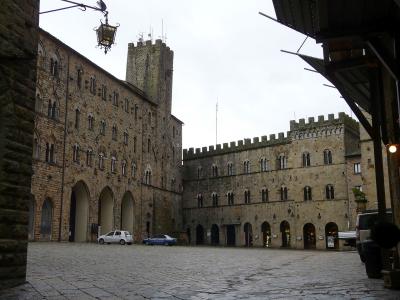
Piazza dei Priori
Volterra's main square with Italy's oldest town hall
Historic Districts · Historic Palaces

Pinacoteca Civica
Renaissance art in Palazzo Minucci-Solaini
History & Heritage · Museums & Culture
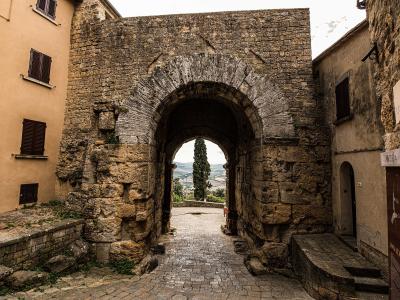
Porta all'Arco
3rd-century BCE Etruscan gate with three stone heads
Ancient Ruins · Architectural Monuments
Questions people ask
Quick Facts
Best Time to Visit
Visit between April and June or September and October for mild temperatures and fewer crowds.