







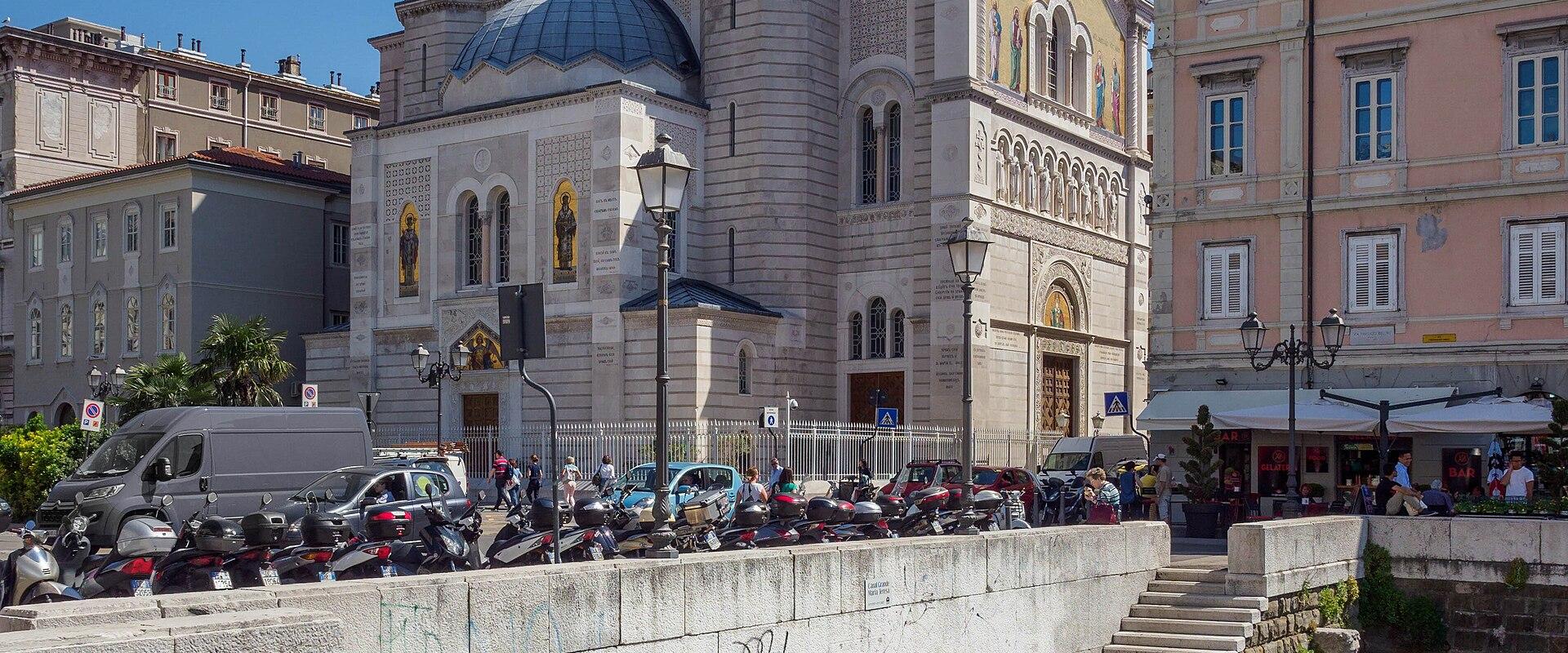
Serbian Orthodox Church of San Spiridione
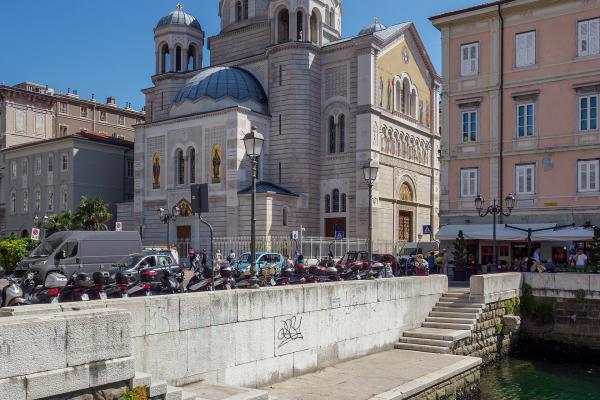
Blue-domed Serbian Orthodox church on the Canal Grande
- Where
- Trieste, Friuli Venezia Giulia
- Directions
- Directions
The church of San Spiridione, the Serbian Orthodox Church of the Holy Trinity and St Spyridon, stands beside the Canal Grande in the Borgo Teresiano, the eighteenth-century grid of streets laid out north of the old town. Its blue domes and gilded mosaics make it one of the most recognisable buildings in Trieste and a reminder of how many different communities made the city's fortune after it became a free port in 1719.
Orthodox merchants, Greek and Serbian, settled in Trieste in growing numbers in the eighteenth century, and the Orthodox community was formally established in 1748. A first church of San Spiridione was built on this site in 1753. The Greek and Serbian communities later went their separate ways, the Greeks building their own church of San Nicolò on the seafront, and the Serbian community decided to replace the old building with a much larger one. The present church was built in the 1860s to a design by the Milanese architect Carlo Maciachini. It was his first major work, before he went on to design the Monumental Cemetery in Milan.
The church has a Greek-cross plan in a neo-Byzantine style. A large central dome rises above four smaller corner towers, all with blue roofs, and mosaics decorate the outside walls with figures of saints. Inside, the walls are painted in oils to look like mosaic, the light is low and golden, and a carved iconostasis separates the nave from the sanctuary. Its icons were painted in Russia in the nineteenth century. The church still serves Trieste's Serbian Orthodox parish, with regular liturgies.
The church faces the water halfway along the canal, between Ponte Rosso and the Rive, and the best view of it is from the opposite quay or from the bridge, with the domes reflected in the canal. It is a working church, so visits fit around services, and visitors should dress modestly and keep quiet inside. It suits anyone interested in religious art, in the Byzantine tradition, or in Trieste's history as a meeting point of Latin, Slavic and Greek worlds. A visit takes little time and combines naturally with the canal, Ponte Rosso, the Catholic church of Sant'Antonio Taumaturgo at the canal's head and a coffee in one of the old cafés nearby.
More photos coming soon
Nearby Attractions
Other places to visit in Trieste
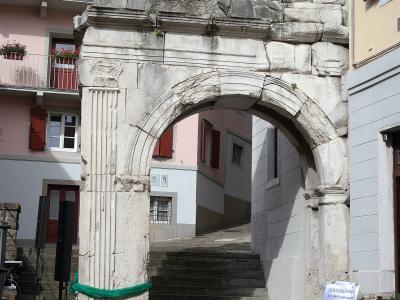
Arco di Riccardo
1st-century Roman arch in Trieste's old town lanes
Ancient Ruins · Historic Districts
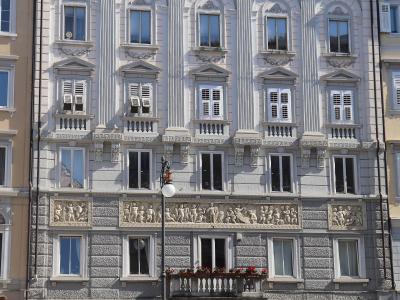
Borgo Teresiano
Habsburg-era merchant quarter with canals
Architectural Monuments · Harbor Views
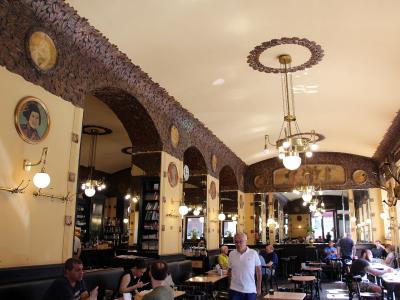
Caffè San Marco
1914 Viennese Secession café, James Joyce hub
Food & Gastronomy · History & Heritage
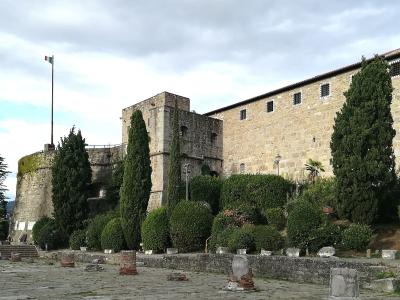
Castello di San Giusto
Medieval fortress housing a civic museum in Trieste
Archaeological Museums · Castles & Fortresses
Questions people ask
Quick Facts
Best Time to Visit
Visit between April and June or September and October for mild temperatures and fewer crowds.