







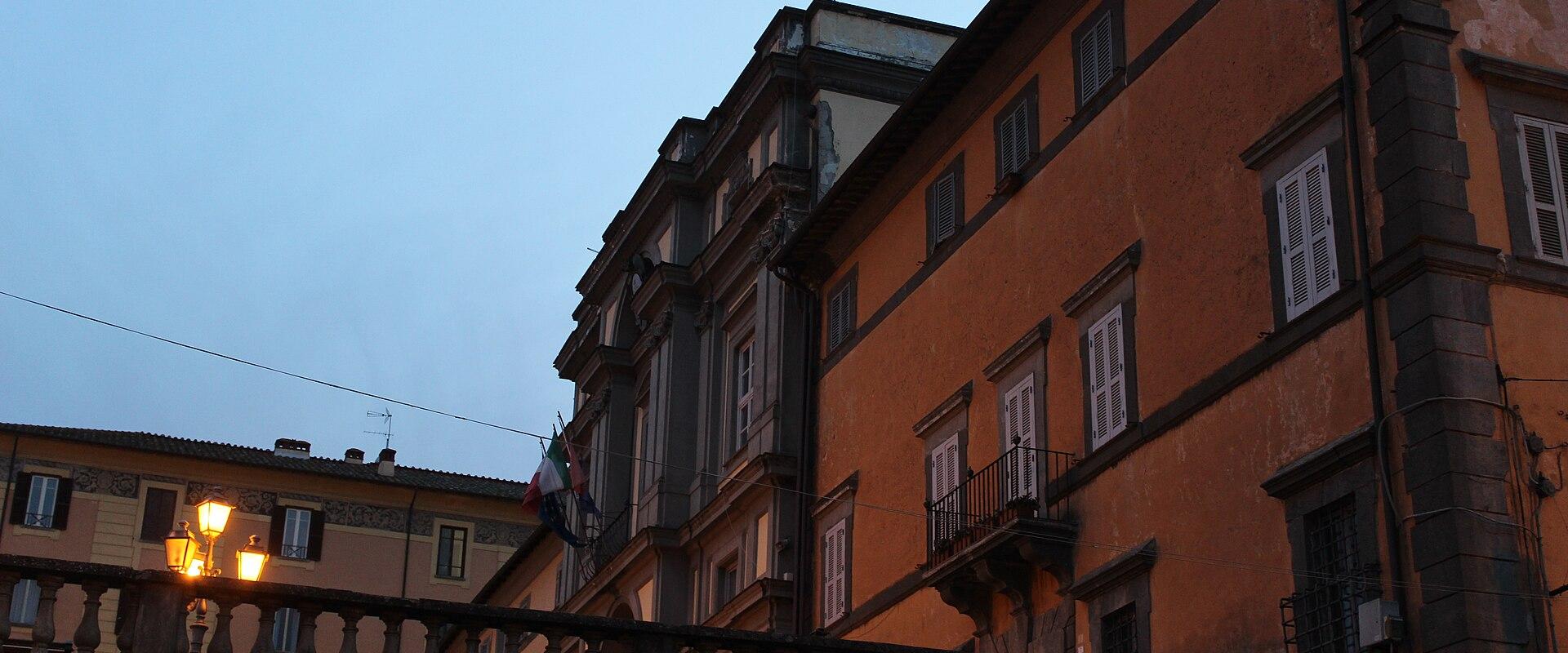
Bracciano grew up around its castle on a spur above Lake Bracciano. The lake fills a volcanic basin formed by eruptions of the Sabatini volcanic district, and its almost circular shape, about 160 metres above sea level and with a surface of around 57 square kilometres, is easy to recognise. Because the lake feeds Rome's water supply, a tradition that goes back to the aqueduct built under the emperor Trajan, motorboats are banned, and the shores are protected as part of a regional natural park. The result is a lake that feels calm, used by sailing clubs, swimmers and electric or sail-powered boats.
The town's recorded history is dominated by the Orsini, a Roman noble family who held it from the late Middle Ages. The Castello Orsini-Odescalchi was built in its present form from about 1470 by Napoleone Orsini, replacing an earlier fortress. It is a classic Renaissance castle of the Quattrocento, with round towers, thick walls, a courtyard and a series of grand rooms. In 1560 Paolo Giordano I Orsini, who had married Isabella de' Medici two years earlier, received the title of Duke of Bracciano, and the castle was modernised for the couple's visit, with the painter Taddeo Zuccari hired to fresco the main room. In 1696 the Odescalchi family bought the property, and they still own it. The castle is open to visitors with guided tours of its rooms, which hold frescoes, period furniture, a collection of arms and armour and a small museum. Opening times change through the year, so check the castle's official website before going. In 2006 the castle drew worldwide attention as the setting for a celebrity wedding.
The old town below the castle is a pleasant place to wander. Narrow lanes and stairways lead between small squares, and the collegiate church of Santo Stefano and a number of fountains sit within the historic centre. The best views of the castle are from the lake shore and from the town's lanes, where its towers rise above the rooftops. A promenade runs along the water below the town, with a pebbly beach of dark volcanic sand, small bathing areas and boat hire.
The lake is the main outdoor attraction. In summer people swim, sail, windsurf and take excursions on non-motorised boats, and the surrounding hills offer walking and cycling paths. The lake shore towns of Anguillara Sabazia and Trevignano Romano, each with its own old centre and lakeside promenade, are easy to combine with Bracciano by car or local bus. The smaller crater lake of Martignano lies close to the east.
Lake fish is the local speciality. Coregone, a type of whitefish introduced into the lake, is served grilled or fried, and local restaurants also offer pasta, wild boar and Lazio's usual cuisine. Wine from the surrounding hills and local olive oil complete the menu.
Bracciano is well connected for a day trip. The FL3 urban railway line from Rome reaches the town in about 55 minutes, and the station is a short walk from the lake, though the castle is uphill. By car, the town is roughly 30 kilometres from the edge of Rome. Summer weekends can be busy, particularly in July and August, while spring and autumn are calmer and good for castle visits and shore walks. Winters are mild but cool at the lake, and swimming is out of the question.
Best time to visit
May to September for swimming and boat trips on the lake; April and October for castle visits and quieter lakeside walks.
What to see in Bracciano
Our picks first.
Bracciano by interest
The same sights, grouped by what you came for.
Planning a visit to Bracciano
Good to know
- Currency
- EUR
- Language
- Italian
Quick Facts
Book your stay
Questions people ask
More places in Lazio
Lazio
Rome
Capital of Italy blending ancient ruins with vibrant modern culture
Lazio
Sperlonga
Coastal town in Lazio with Roman villa, sea grotto, and sandy beaches
Lazio
Viterbo
Medieval papal city in Lazio known for thermal baths and Etruscan roots
Lazio
Terracina
Ancient Roman coastal town with Monte Sant'Angelo and historic center